Z-plasty penile scar revision in Busan Seomyeon — release what the scar is holding.
At Urogyn in Busan Seomyeon, one minute from Seomyeon Station Exit 7, a classic plastic-surgery technique transposes small triangular flaps to lengthen and reorient a scar — releasing a contracture that limits length, causes curvature on erection, or creates a web. A quick outpatient procedure under local anesthesia, performed by a board-certified urologist with 15+ years of reconstructive experience. Pricing is individually quoted by scar complexity.
What men describe to our Busan urologists before a scar revision.
- There is a tight band from an old circumcision or surgery, and it pulls when I get an erection.
- The shaft bends toward the scar — not from the inside, but because the skin will not stretch.
- It feels shorter than it used to, as if something is holding it back rather than missing.
- A previous repair left a scar running in the wrong direction and it catches every time.
- Will the scar disappear, or am I trading one line for another?
All five come up at our Busan Seomyeon clinic, and each describes tension rather than absent tissue. The sections below explain what the Z geometry does, why reorienting a scar releases what it was holding back, who it suits and who it does not, and the six things that decide how the small flaps heal.
What does Z-plasty do for a penile scar?
Z-plasty is a plastic-surgery technique in which two small triangular flaps are cut either side of a scar and transposed, lengthening the scar line and turning its direction. At Urogyn Men's Clinic in Busan Seomyeon a board-certified urologist performs it under local anaesthesia as an outpatient procedure to release a contracture that was limiting length, bending the shaft on erection, or forming a web — with the price quoted after assessment because scars vary so widely.
What it does is release tethering; what it does not do is lengthen the shaft. A tight linear band behaves like a rope, and turning the line of pull frees the length the scar was holding back rather than creating new length. Curvature caused by internal plaque is a different problem — that is Peyronie disease, assessed separately. Where the skin deficit is larger than a band, a VY advancement flap in Busan is the better tool, and the lengthening hub compares all five routes.
"Z-plasty at our Busan clinic is most effective for linear scar bands — it converts width into length and breaks up a straight, tethering line. Broad scar fields may need additional techniques, which I determine during examination. It's about releasing what the scar is holding back."
— Dr. Moon Hyeon-chang, Director
Four indications for Z-plasty in Busan.
Z-plasty in Busan solves problems caused by tight, linear, or poorly-oriented scars. These are the typical scenarios.
Scar contracture
A tight scar band that shortens tissue or tethers the penis, released by transposing flaps to gain length along the scar axis.
Penile webbing
A web of skin (often penoscrotal) corrected by breaking up the straight web edge with transposed flaps, exposing concealed length.
Curvature from a scar
Acquired curvature caused by an asymmetric scar, corrected by releasing and reorienting the tight side. This is not Peyronie disease.
Cosmetic scar revision
An unsightly or widened scar reoriented along skin tension lines for a far less visible, more natural-looking result over time.
Z-plasty flap geometry — Urogyn Men's Clinic, Busan Seomyeon.
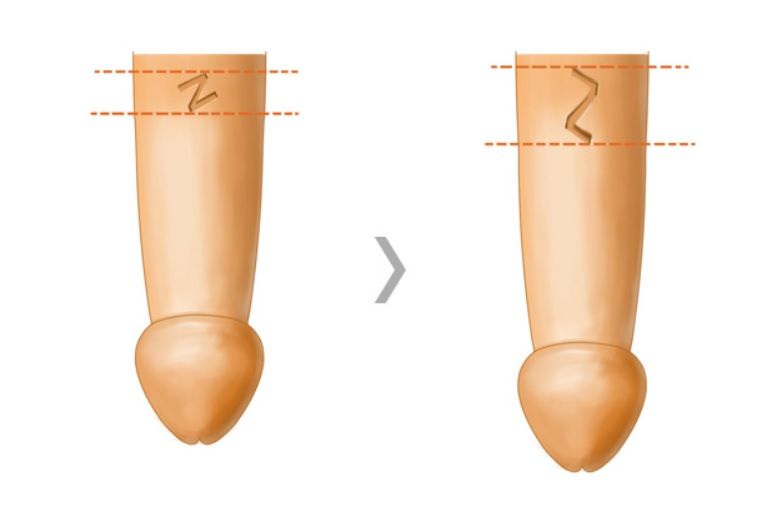
The geometry of Z-plasty at our Busan clinic.
A central scar and two angled limbs form a Z; swapping the triangular flaps converts width into length and changes scar direction.
Central incision
The scar is incised along its length to release the contracture and define the central limb of the Z, lying along the existing scar.
Angled limbs
Two limbs are cut at about 60 degrees to the centre, creating two equal triangular flaps. A 60-degree angle gives the optimal length gain.
Flap transposition
The triangles are lifted and swapped, which lengthens the central axis by roughly 75% and reorients the scar line away from the tension vector.
Serial Z-plasties
For longer scars, several small Z-plasties in series distribute the lengthening and look more natural than one large flap.
Combination
Z-plasty is often combined with V-Y advancement or local flaps for complex, multidirectional defects, chosen by scar geometry.
It releases tethering in Busan — it isn't shaft lengthening.
A single 60-degree Z-plasty lengthens the scar axis by approximately 75% of the central limb length. The functional gain depends on the scar's length and tension — it releases tethering that was limiting length, rather than adding shaft length.
It also differs from Peyronie disease, which is curvature from internal plaque in the tunica albuginea and is treated differently. Z-plasty addresses curvature or tethering caused by external skin scarring. No scar disappears entirely, but reorienting it along natural tension lines makes it much less visible.
Good candidate in Busan, or not.
Likely a good fit
- A tight, linear scar band tethers the penis
- Scar-related curvature on erection (not plaque)
- A straight web edge concealing length
- A widened or poorly-oriented scar you want improved
Worth discussing first
- Curvature from internal plaque → that's Peyronie, treated differently
- Broad scar fields or skin shortage → may need a VY flap or graft
- Main problem is a fat pad → buried-penis correction
- Immature, still-healing scar → timing matters
What your Busan quote includes.
All-inclusive, direct-pay, KRW at our Busan clinic. Because scars vary so much, pricing is individually quoted after assessment.
Z-plasty scar revision
A single short scar is the simplest case; serial Z-plasties or combination with other flaps are quoted higher by complexity. Your exact quote is confirmed at consultation.
Six points for healing well after surgery in Busan.
Z-plasty flaps done in Busan are small but their tips need protection for a clean result.
Gentle days
Limit strenuous activity for the first 3–5 days while the small flap tips establish their blood supply. Keep suture lines clean.
No smoking
Nicotine threatens the small flap tips most of all — avoid before and after surgery, and follow wound-care instructions to prevent infection.
Pause intimacy
Avoid sexual activity for about 3 weeks to keep tension off the new suture lines. Most men return to office work in 3–5 days.
Protect the scar
Once healed, protect the scar from sun and friction to optimize the final appearance. The scar matures over several months.
Find out what your scar is holding back — before you fly.
A free, discreet video consultation. Dr. Moon at our Busan clinic assesses the scar's length, orientation and tension, explains what Z-plasty can release, and gives a transparent quote. No commitment.
Discreet · replies within 24 hours · KST 9am–9pm
Your Busan visit, step by step.
From the first WhatsApp message to flying home from Busan — here's the path most international patients follow.
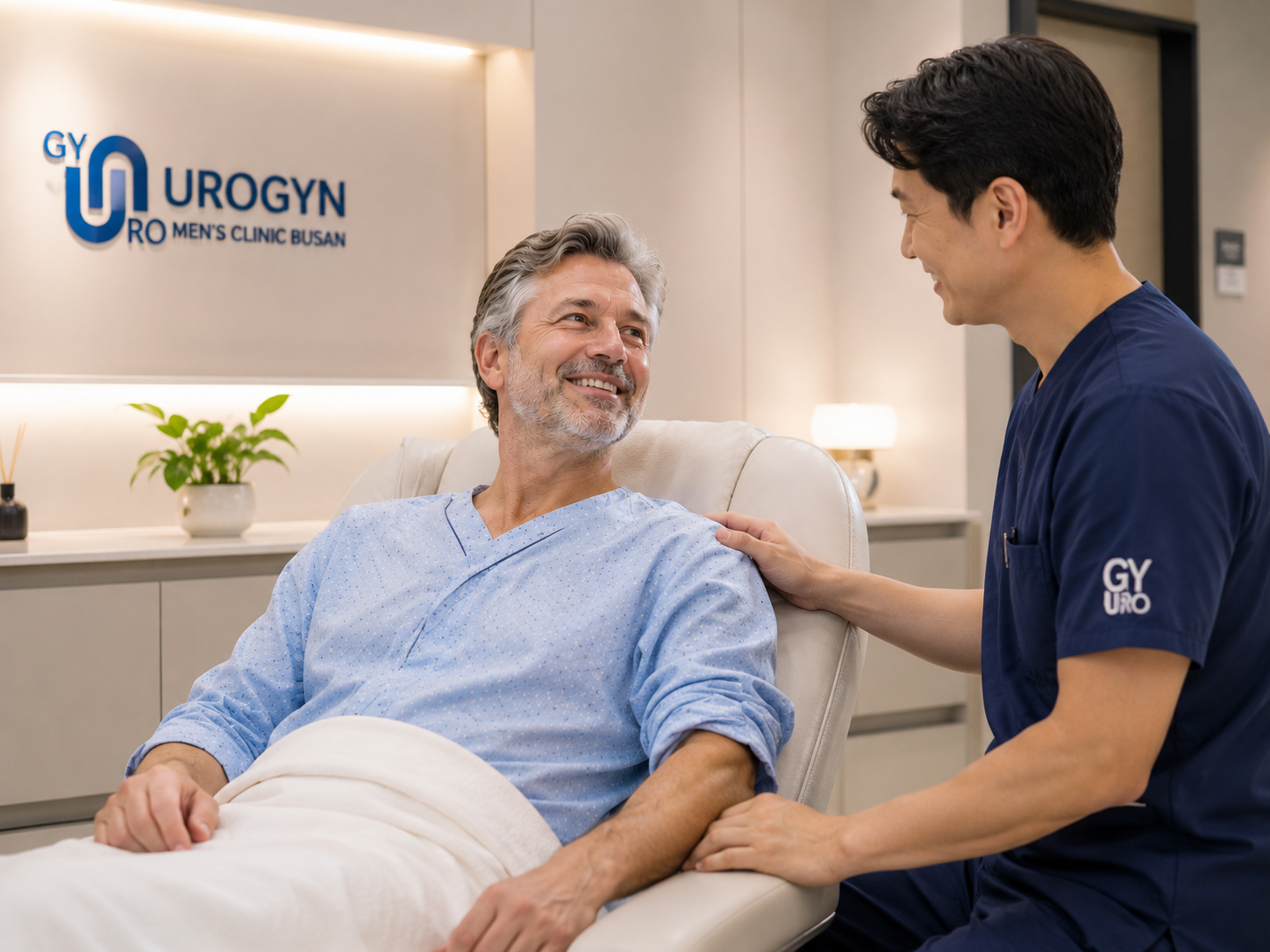
Free video consult
Send your symptoms and history over WhatsApp. The doctor reviews your case in English and explains likely options and cost.
Diagnosis & testing
On-site tests confirm your condition and rule out other causes — so the plan fits your anatomy before anything is decided.
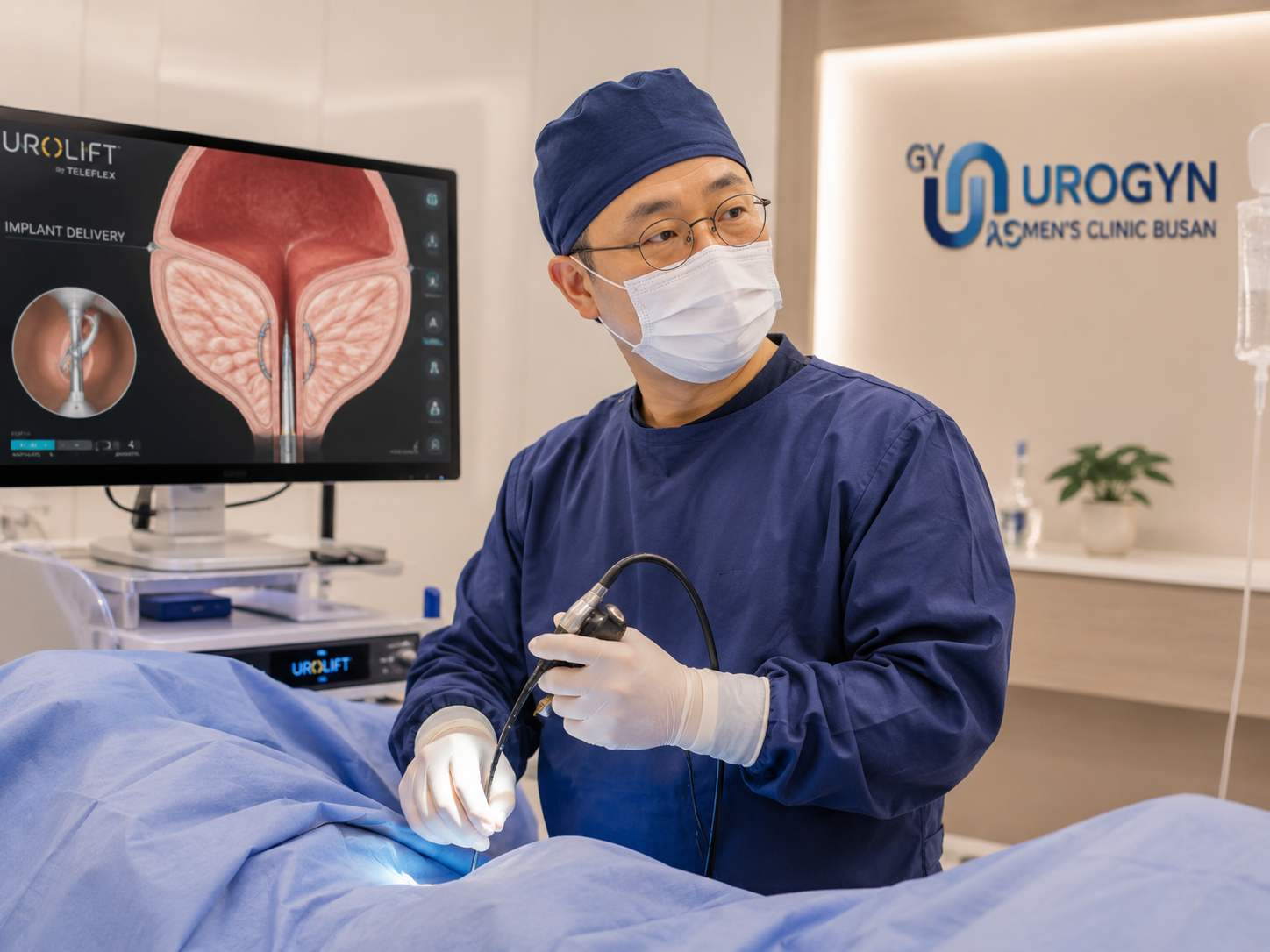
The procedure
Your procedure is performed by a board-certified urologist, with most minimally invasive treatments done the same day.

Recovery & aftercare
Fly home when cleared. Your doctor stays reachable on WhatsApp for 6 months of follow-up — photos, questions, guidance.
Your medical team in Busan Seomyeon.
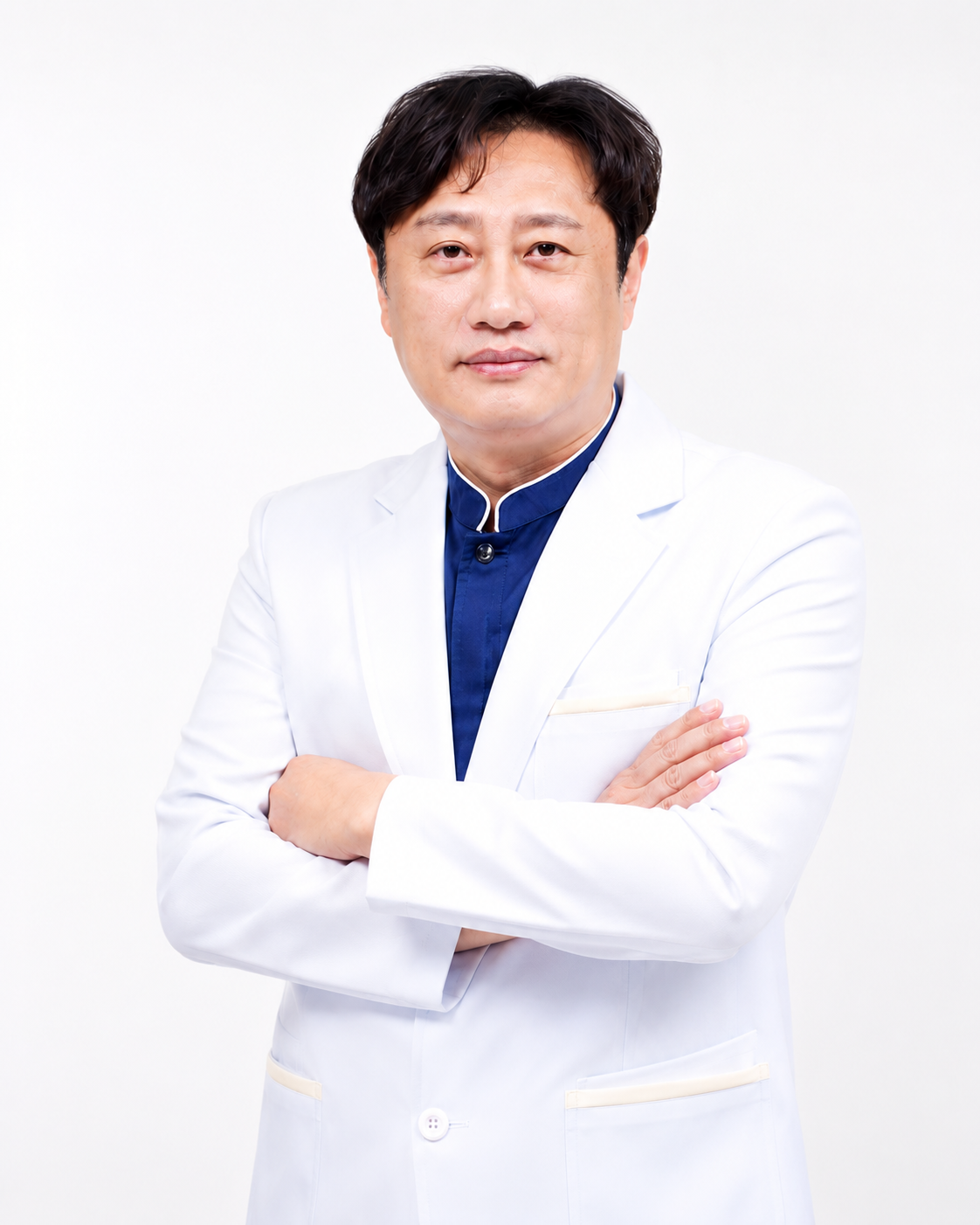
Board-certified urologists in Busan Seomyeon — the doctor who consults with you is the same one who performs your procedure and follow-up.
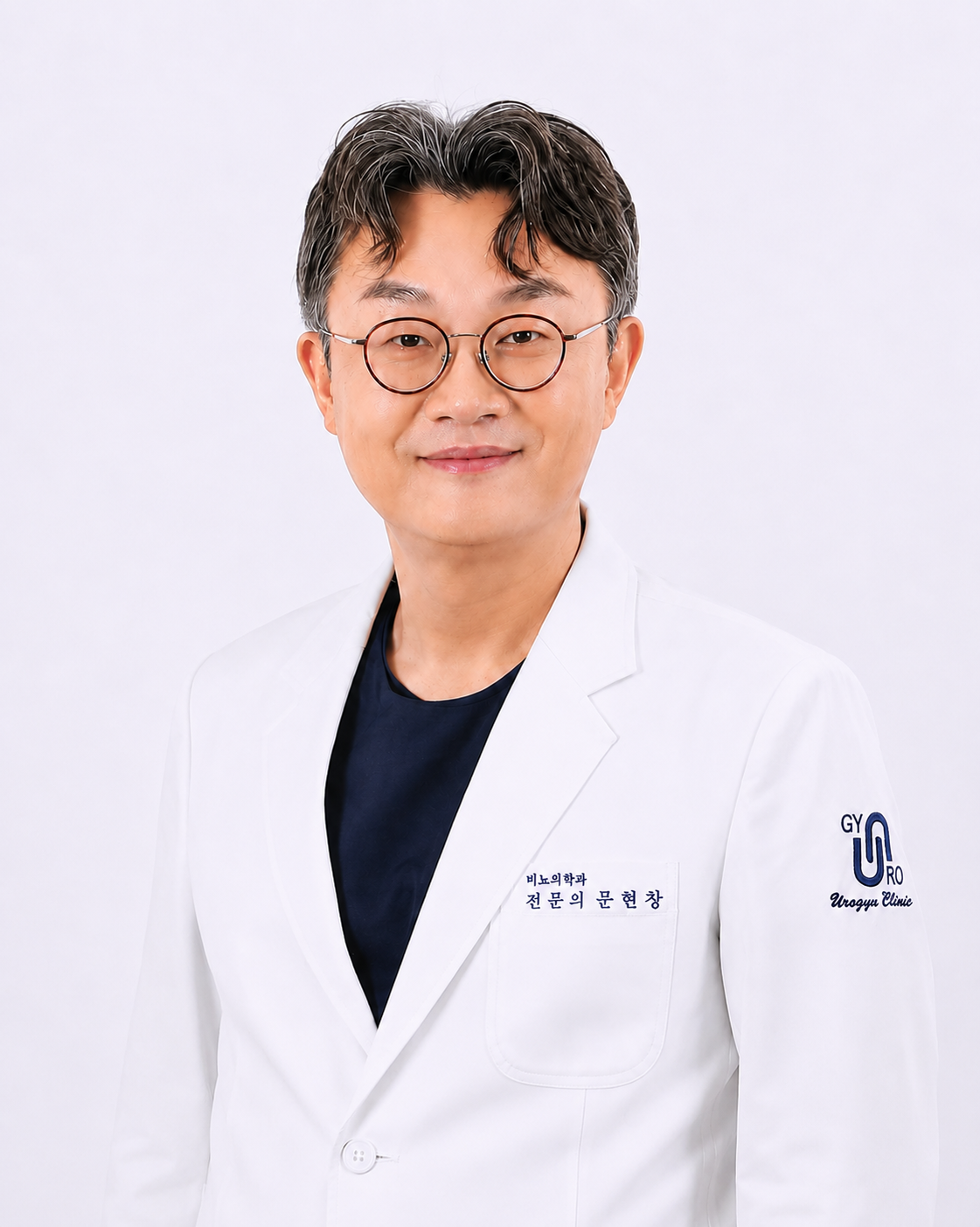
Dr. Moon Hyeon-chang
- Board-certified urologist, 15+ years
- AUA · EAU · WAS · KSSM member
- Direct English consultation
- Patients from 40+ countries
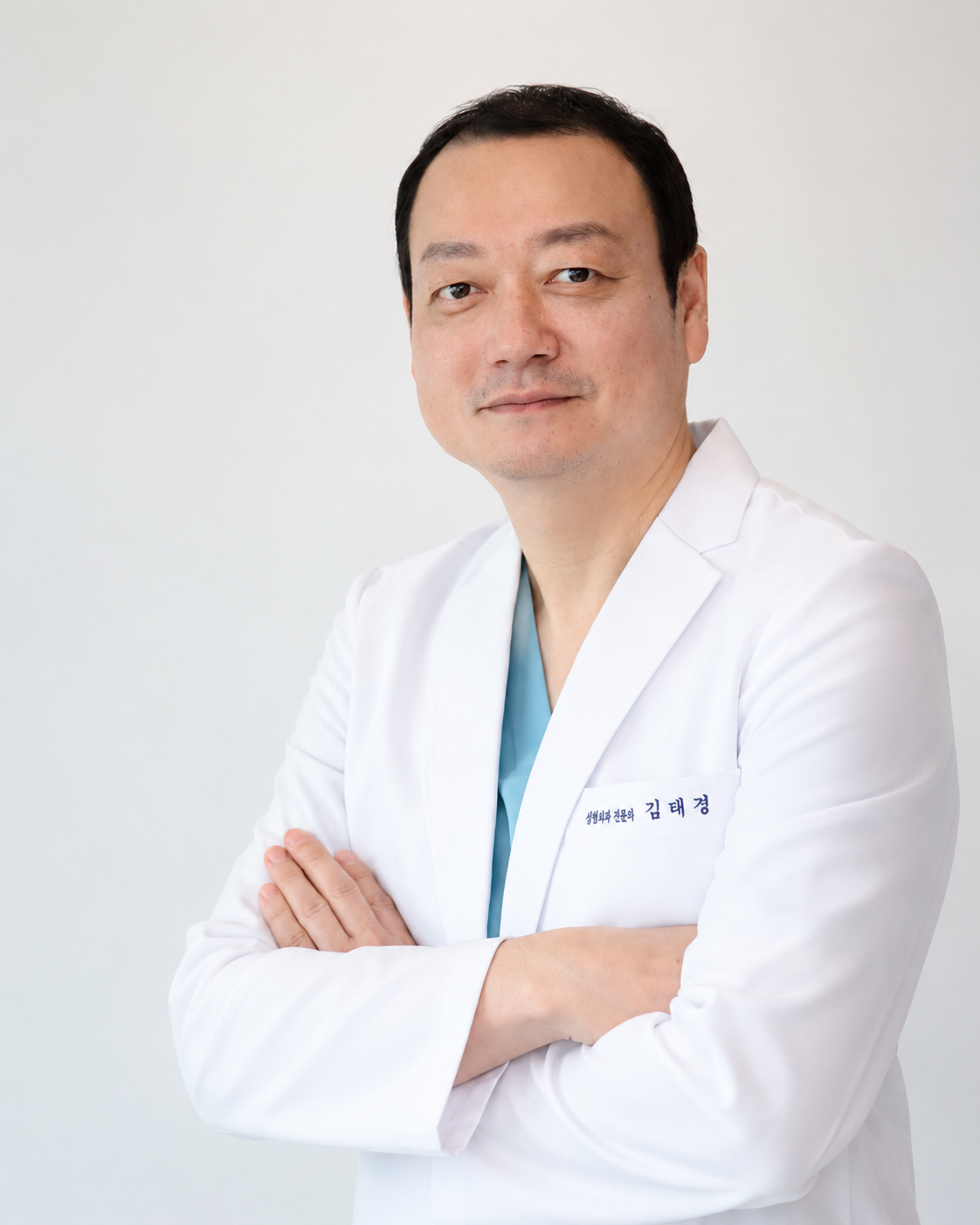
Dr. Kim Tae-kyung
- Board-certified urologist
- BPH focus — UroLift & Rezum
- MD & MS, Pusan National University
- Adjunct Prof, Ulsan Univ Hospital
Dr. Kim Jin-seong
- Board-certified, Gyeongsang Nat'l Univ
- Korean Prostate Society member
- Adjunct Clinical Prof, GNU Hospital
- Men's health & prostate surgery
What our Busan urologists are asked about scar revision.
How does turning a scar make anything longer?
A linear scar contracts along its own axis, pulling like a drawstring. Transposing the triangular flaps lengthens the line and reorients it across the direction of pull, so the tension is released. The gain is whatever the contracture was holding back — real, but bounded by the scar rather than chosen by you, which is why the measurement at consultation matters more than any figure on a website.
Is this the same as treating Peyronie disease?
No. Peyronie curvature comes from plaque inside the tunica, not from skin, and Z-plasty does nothing for it. Where an erection bends because the skin will not stretch, Z-plasty is the answer; where it bends from an internal plaque, the assessment and treatment are different. Our Busan urologists separate the two at examination rather than assuming.
Will the scar disappear?
No — it is exchanged for a longer, differently oriented line that lies better and pulls less. Scar revision improves function and appearance; it does not erase history, and any clinic saying otherwise is selling. The new line matures over months like any surgical scar.
Can it be combined with other procedures?
Frequently. Z-plasty is often part of a larger reconstruction alongside buried-penis correction or a flap, and it is sometimes the only thing needed. Your urologist says at the measurement in Busan which applies, including when a smaller operation would do.
I had a circumcision elsewhere that left this. What should I send?
Photographs at rest and, if you are comfortable, on erection, plus whatever you know about the original operation. That is enough for a provisional view in writing before you travel to Busan — the booking guide covers what else is worth including.
About Z-plasty scar revision in Busan.
Quoted individually after assessment at our Busan Seomyeon clinic, because scars vary so widely in length, tension and orientation. The figure is all-inclusive, direct-pay in Korean won, and confirmed in writing before anything proceeds — never produced on the day.
Two small triangular flaps are cut either side of the scar and transposed at our Busan clinic, which lengthens the scar line and turns its direction. That releases the contracture pulling along the old axis. It reorients tension; it does not lengthen the shaft.
Whatever the contracture was holding back — real, but set by the scar rather than chosen. Your Busan urologist measures the tethering at consultation and tells you what release would realistically change, including when the answer is very little.
No. Peyronie curvature comes from plaque inside the tunica, and Z-plasty does nothing for it. Where an erection bends because the skin will not stretch, Z-plasty is the answer. The two are separated by examination at our Seomyeon clinic rather than assumed.
No. It is exchanged for a longer, differently oriented line that lies better and pulls less — the honest position our Busan urologists take at consultation. Scar revision improves function and appearance; it does not erase history, and the new line matures over months like any surgical scar.
Men who come to our Busan clinic with a tight linear scar band tethering the penis, a scar pulling the shaft on erection, a scar-formed web, or a badly oriented line from a previous repair. Men whose scar is broad and areas of skin genuinely missing are better served by a flap reconstruction.
An outpatient recovery in Busan: dressings for the first days, swelling settling over one to two weeks, and the new line maturing over months. No sexual activity until your urologist confirms, and no stretching or pressure on the flaps in the early weeks.
Two to three nights for Z-plasty alone, longer where it is part of a larger reconstruction. Your written plan states the nights for your case before you book flights.
Usually not — Z-plasty alone is performed under local anaesthesia as an outpatient procedure in our Busan clinic's own room in Seomyeon. Where it forms part of a larger reconstruction, the anaesthesia follows that operation.
Frequently. Z-plasty is often part of a larger reconstruction alongside buried-penis correction or a VY flap, and it is sometimes the only thing needed. Your Busan urologist says at the measurement which applies, including when a smaller operation would do.
Photographs at rest and, if you are comfortable, on erection, plus whatever you know about the original operation. That is enough for a provisional view in writing before you travel to Busan.
Expected after the Busan procedure: swelling, bruising and temporary tightness as the flaps settle. Uncommon: infection, flap tip loss where tension or smoking compromises blood supply, and recurrence of contracture requiring a further revision. Increasing pain or spreading redness after day two is a same-day message to the clinic.
No. It releases length that a contracture was holding back and does not grow the shaft. Any clinic presenting scar revision as lengthening is misrepresenting it, and our Busan urologists state the distinction before payment.
Dr. Moon provides direct English consultation at our Busan Seomyeon clinic. He is internationally trained and comfortable discussing complex medical topics in English.
No. Urogyn publishes one self-pay price list in Korean won and applies it to every patient. Nationality, language and booking from abroad change no figure, and individually quoted procedures follow the same principle.
Yes. The board-certified urologist in Busan who assesses the scar performs the revision and manages your follow-up through healing. You are never passed to a junior doctor or a different surgeon.
Explore the other length options in Busan.
Tap to jump to another length-surgery page in Busan.
Scars and what they hold back — guides from our Busan urologists.
Length vs Girth: Which First?
Where a scar release sits in the length decision.
Read the guide →
Curved Penis: When to See a Urologist
Skin tethering or internal plaque — how the two are told apart.
Read the guide →
After a Circumcision
How a tight scar band forms, and when revision is the answer.
Read the guide →
Penis Enlargement Cost in Busan
Every KRW figure option by option, length and girth together.
Read the guide →
Flying After Urology Surgery
Nights to plan in Busan before a flight home.
Read the guide →
Book a Urologist in English
What to send about a scar, and the written plan that comes back.
Read the guide →