Prostatitis treatment in Busan Seomyeon — a real diagnosis, not another antibiotic.
Most men who come to our Busan Seomyeon clinic with chronic prostatitis have been handed repeat antibiotic courses that never fixed the problem — because the type was never properly identified. We start by finding out which of the four kinds of prostatitis you actually have, then build a targeted program: culture-directed antibiotics, alpha-blockers, pelvic-floor therapy or low-intensity shockwave, in English, with one urologist managing your case.
What men tell our Busan urologists on the first visit.
- I have had three or four courses of antibiotics and the pain is exactly the same.
- It hurts most when I sit, and after ejaculation — but every test I have had came back normal.
- One doctor called it prostatitis, another called it something else, and nobody explained which type I have.
- I am worried this is an STD, or that it will affect my fertility or my erections.
- Is this something that can actually be fixed, or am I managing it for the rest of my life?
All five come up most weeks at our Busan Seomyeon clinic. The sections below answer them in order — the four types and how they differ, why antibiotics keep failing, the tests that end the guessing, and what honest recovery looks like for each type.
How is prostatitis actually treated in Busan?
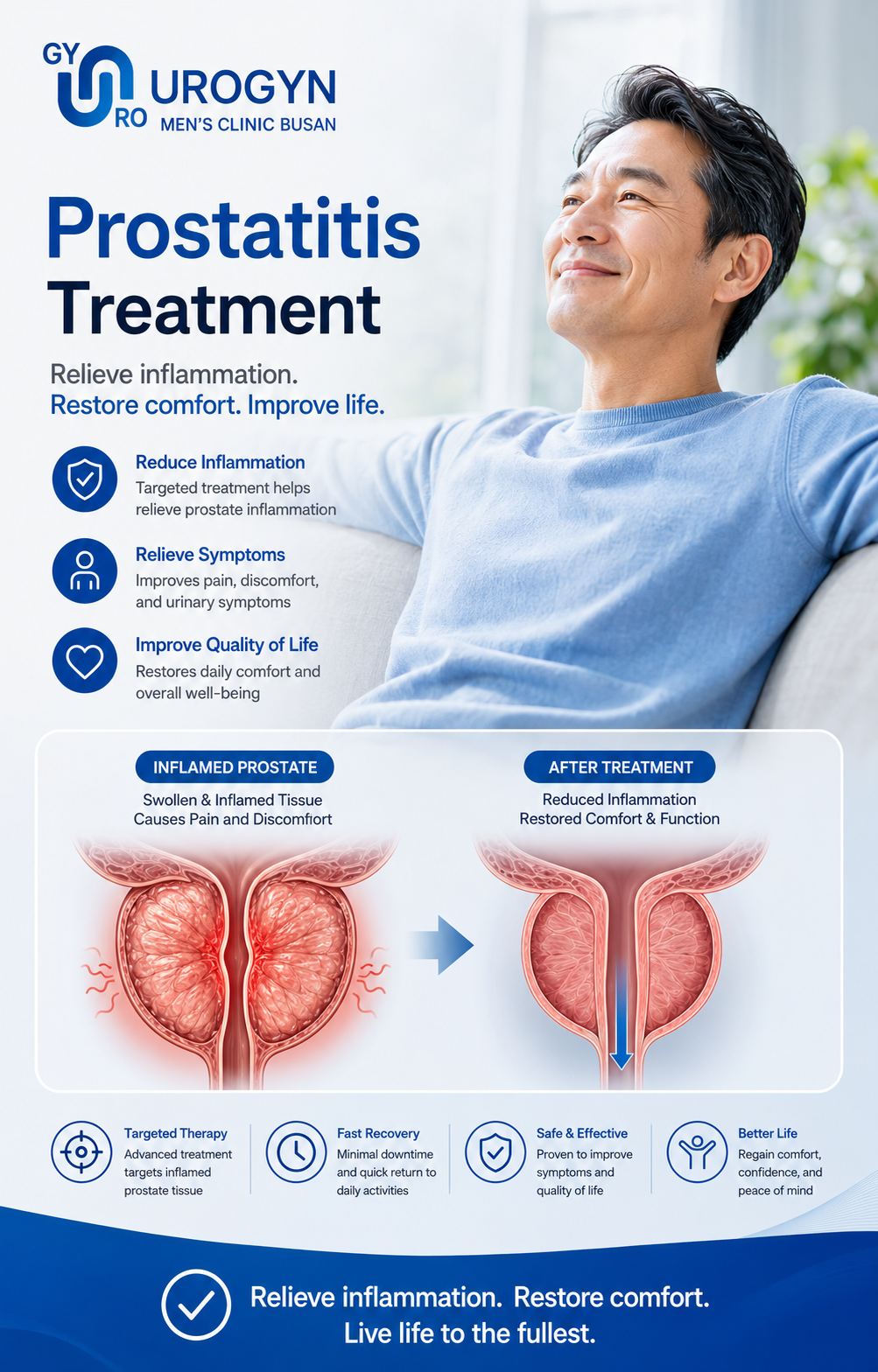
At Urogyn Men's Clinic in Busan Seomyeon, prostatitis is treated by first establishing which of the four types you have — acute bacterial, chronic bacterial, chronic prostatitis / chronic pelvic pain syndrome, or asymptomatic inflammatory — using a urine test and culture at ₩200,000, prostate massage with expressed secretion at ₩100,000, PSA at ₩150,000 and, where the pattern warrants it, ultrasound at ₩200,000 per area. Only then is treatment chosen: targeted antibiotics for the bacterial types, and a combined non-antibiotic programme for CPPS, which is the large majority.
That order is the whole point. Most men arriving here have had three or four antibiotic courses for a condition with no organism in it — each course carrying side effects and postponing the treatment that works. Our Busan urologists do not prescribe an antibiotic for chronic pelvic pain without evidence of an organism, and say so at the first visit rather than after the fourth course. The chronic pelvic pain guide explains the four types in full; if your main symptom is a weak stream rather than pain, that is BPH, not prostatitis.
“Most men sent to our Busan clinic have taken antibiotics three or four times for prostatitis that was never bacterial in the first place. The fix isn't a stronger antibiotic — it's the right diagnosis. Once we know which type you have, the treatment usually becomes straightforward.”
— Dr. Moon Hyeon-chang, Director
Prostatitis, by the numbers — what we see in Busan.
Understanding the condition is half the battle — and it's why our Busan urologists start with a diagnosis rather than a prescription.
The four types of prostatitis.
They look similar but are treated completely differently. Getting this right at the Busan work-up is the whole game — and exactly what repeat antibiotics skip.
Acute bacterial
Sudden fever, chills, painful urination and a tender prostate. A genuine infection that needs prompt, culture-directed antibiotics.
Chronic bacterial
Recurrent urinary infections with the same organism returning after antibiotics stop. Needs a longer, properly targeted antibiotic course.
CPPS (non-bacterial)
Pelvic, perineal or testicular pain for 3+ months with no bacteria found. Antibiotics won't help — this needs multimodal therapy.
Asymptomatic
Inflammation found incidentally during a fertility or PSA work-up, with no symptoms. Often needs no treatment beyond monitoring.
Symptoms men bring to our Busan clinic.
Any combination lasting more than a few weeks is worth a proper evaluation at our Seomyeon clinic — especially if antibiotics haven't helped.
Why antibiotics keep failing you.
If round after round hasn't worked, our Busan urologists look at the diagnosis underneath it rather than the drug.
It was never bacterial
Around 90% of chronic prostatitis is CPPS, with no infection to kill. Antibiotics can't fix a problem that isn't an infection — so the symptoms simply return.
No culture was taken
Even when it is bacterial, treating without a culture means guessing the organism and the course length. We localize and target it properly before prescribing.
The pelvic floor was ignored
Much chronic pelvic pain is driven by tight pelvic-floor muscles and nerve sensitization. No pill addresses that — physical therapy and shockwave do.
The Busan work-up that ends the guessing.
One focused visit in Busan to classify your prostatitis correctly — so the treatment that follows is the right one.
NIH-CPSI symptom score
A validated questionnaire that quantifies pain, urinary symptoms and quality-of-life — and lets us track your progress objectively over time.
Urinalysis & culture
Identifies infection and the exact organism, so any antibiotic is targeted rather than guessed.
Localization test (EPS / 2-glass)
Expressed prostatic secretion or pre/post-massage urine pinpoints whether bacteria are coming from the prostate itself — the step that separates Type II from CPPS.
Uroflowmetry + PSA
Flow study to rule out obstruction, plus PSA screening — important because BPH and, rarely, cancer can mimic prostatitis.
Matched to your type in Busan, not a one-size script.
Bacterial types get targeted antibiotics. CPPS gets a combined program — usually two or three of these together, adjusted as you respond.
Culture-directed antibiotics
For Type I & II only. The right drug for the cultured organism, for the right length (often 4–6 weeks in chronic bacterial cases) — not a blind repeat course.
Alpha-blockers
Relax the bladder neck and prostate to ease flow, urgency and pressure — useful in both bacterial and CPPS cases.
Anti-inflammatory & phytotherapy
Targeted anti-inflammatories and evidence-supported plant extracts to calm prostatic and pelvic inflammation in CPPS.
Pelvic-floor physical therapy
The core of modern CPPS care: releasing tight, over-active pelvic-floor muscles and retraining them — addressing the driver pills can't reach.
Low-intensity shockwave (LiESWT)
Focused acoustic-wave therapy that reduces chronic pelvic pain and improves blood flow — a growing, well-tolerated option for stubborn CPPS.
Triggers & lifestyle
Identifying and removing flare triggers — caffeine, alcohol, prolonged sitting, stress — so gains from treatment actually hold.
How fast you'll feel better — our Busan urologists say it first.
It depends entirely on type — so our Busan urologists are clear with you from day one.
Bacterial (Type I / II)
- Acute infections often improve within days of the right antibiotic
- Chronic bacterial needs a longer 4–6 week targeted course
- Cure is realistic once the organism is correctly identified
- We confirm clearance rather than just stopping the drug
CPPS (Type III)
- Managed, not "cured overnight" — think weeks, not days
- Most men see meaningful relief over 6–12 weeks of combined therapy
- Pelvic-floor therapy and shockwave build over a course of sessions
- We adjust the program by your NIH-CPSI score as you go
Worried it might be flow, not pain? Compare with our prostate care overview and BPH options like UroLift or Rezum.
When flying to Busan for prostatitis makes sense — and when it does not.
This is a condition treated over months, not in a single procedure. That changes the travel calculation, and we say so before you book.
Coming to Busan makes sense if you…
- Have had repeated antibiotic courses without a type ever being established
- Want the classifying work-up done properly in one focused visit, in English
- Have been told "it's just stress" without a urine culture or expressed secretion test
- Want a written programme you can continue with a doctor at home, with message follow-up from the urologist who diagnosed you
- Are already in Korea, Japan or nearby Asia, where the trip is short
Treat it at home if you…
- Have a clear bacterial diagnosis on culture already — the antibiotic course is the same wherever you take it
- Need weekly hands-on pelvic floor physiotherapy, which is best done near where you live
- Cannot return or continue a months-long programme remotely
- Have symptoms of days rather than weeks — many settle without any of this
Begin with a proper evaluation in Busan.
One focused visit to classify your prostatitis — then a treatment program and transparent quote built around what we find.
Prostatitis evaluation
Because prostatitis treatment varies so much by type, we price the evaluation up front and quote the program transparently once we know the cause — no open-ended bills. Itemized English receipts on request.
From your first Busan visit to steady relief.
Diagnose & start
Symptom scoring, cultures and a localization test classify your type the same day. Treatment begins immediately — antibiotics if bacterial, or the first CPPS measures.
Early response
Bacterial cases usually start easing quickly. For CPPS, alpha-blockers and anti-inflammatories take the edge off while pelvic-floor work begins.
Build the program
Chronic bacterial courses complete with confirmed clearance. CPPS therapy — pelvic-floor sessions and, if needed, shockwave — builds toward meaningful relief.
Review & adjust
We re-score your NIH-CPSI remotely, confirm what's working and fine-tune. Most CPPS patients are clearly better by this point and managing flares confidently.
Tell us what you're feeling — before you fly.
A free video consultation. Describe your symptoms and history to our Busan urologist, send any prior test results, and get an honest read on what's likely going on. No commitment.
Replies within 24 hours · KST 9am–9pm
Your Busan visit, step by step.
From the first WhatsApp message to flying home from Busan — here's the path most international patients follow.
Free video consult
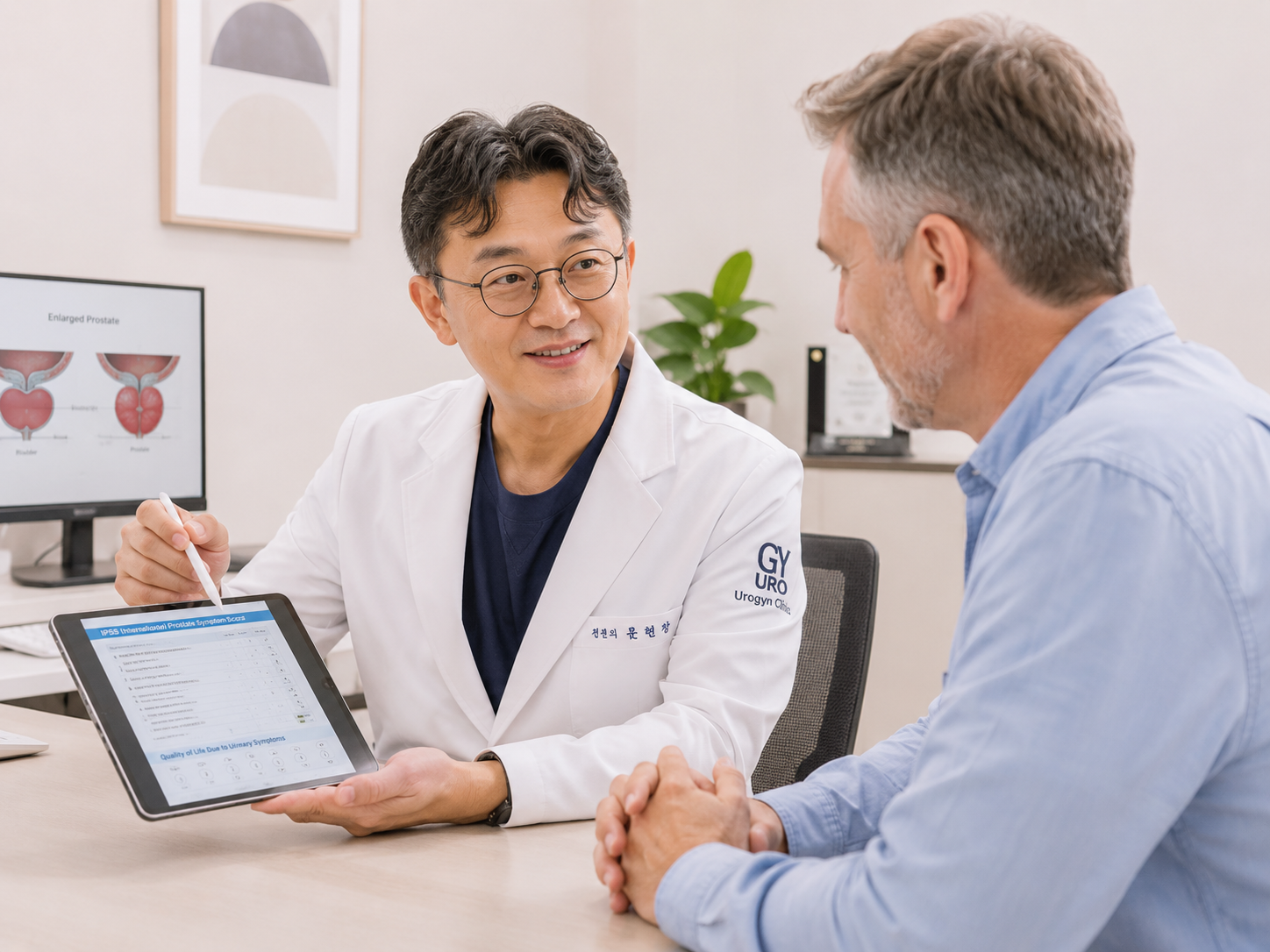
Send your symptoms and history over WhatsApp. The doctor reviews your case in English and explains likely options and cost.
Diagnosis & testing
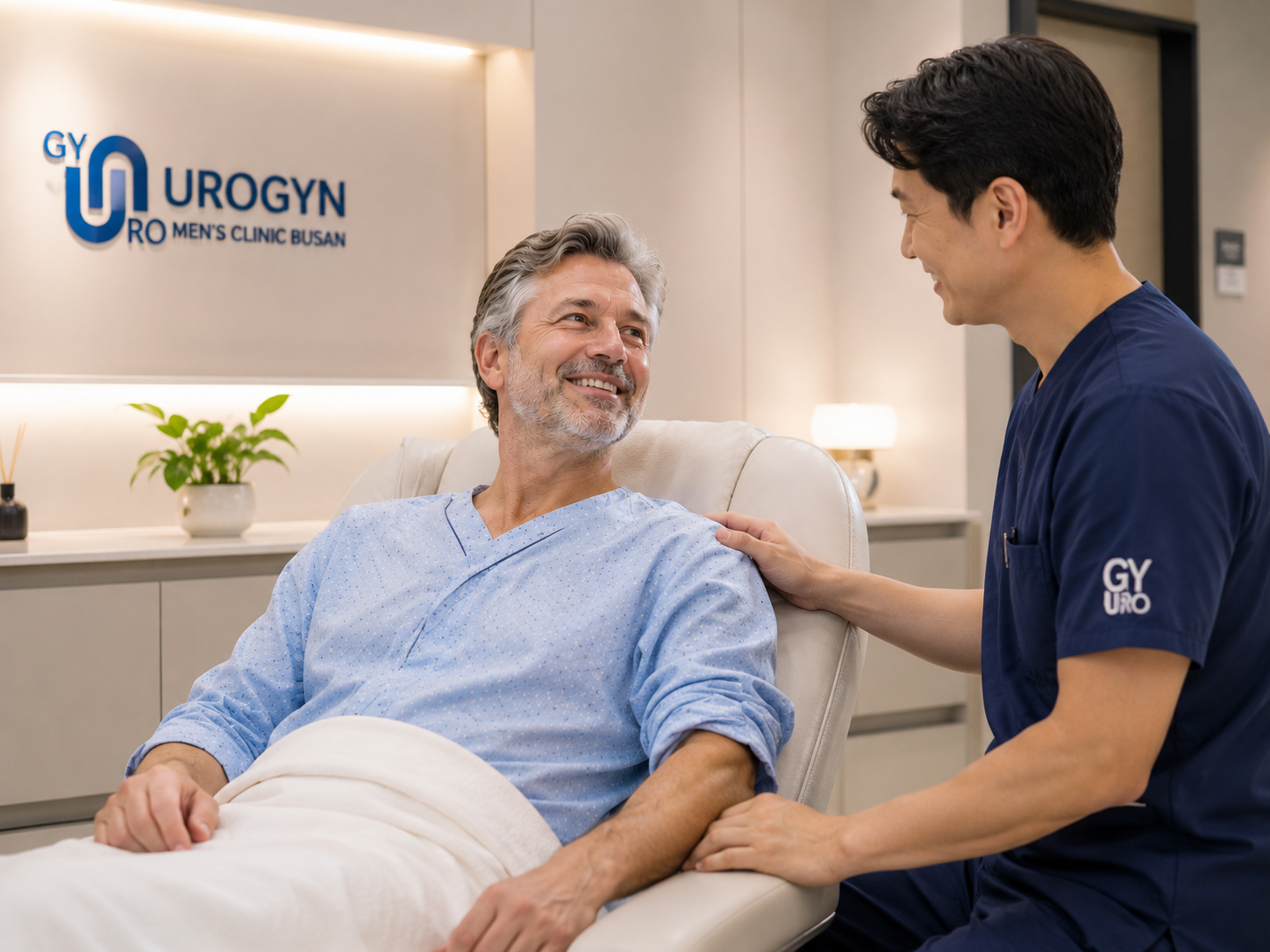
On-site tests confirm your condition and rule out other causes — so the plan fits your anatomy before anything is decided.
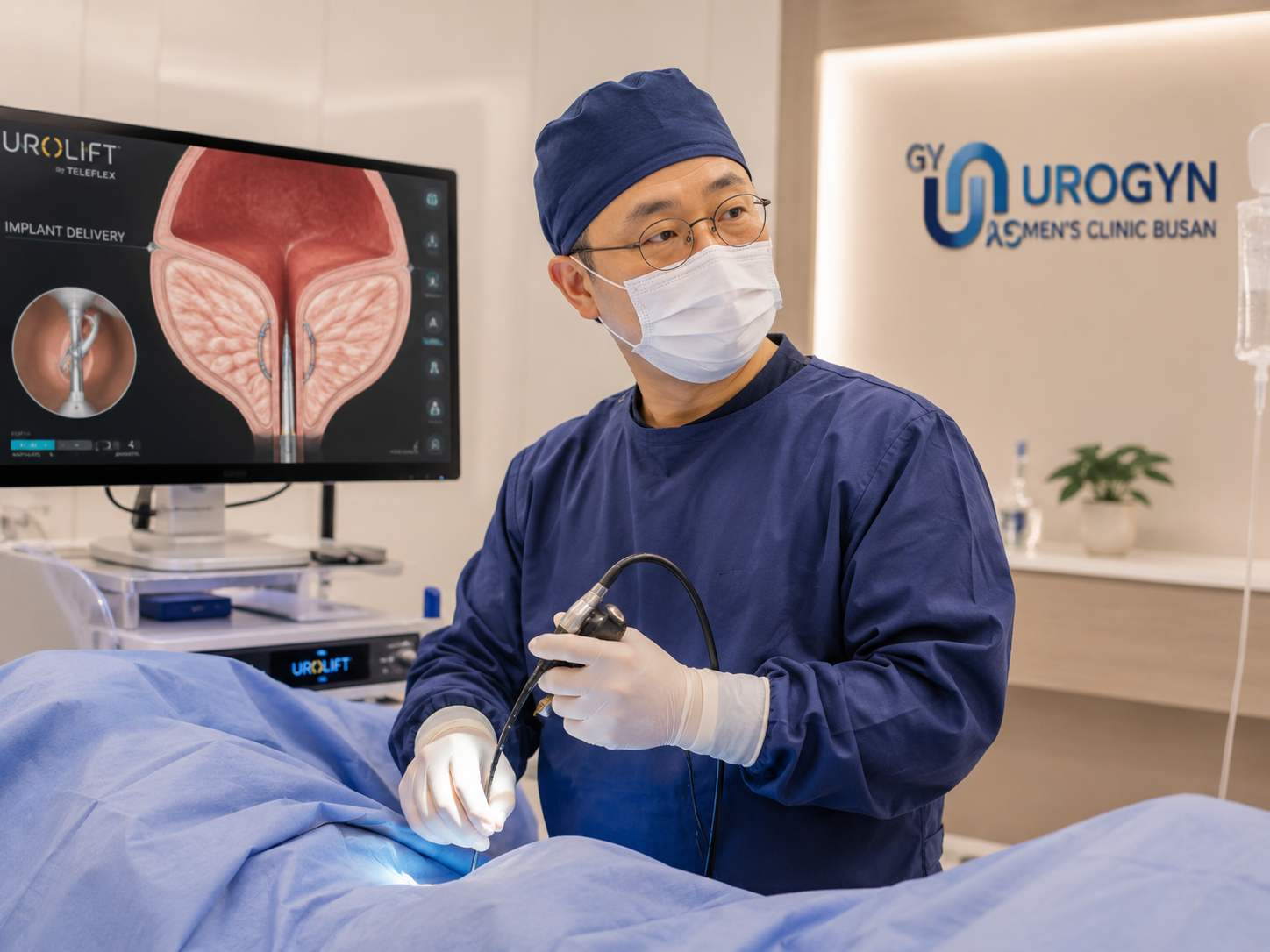
Begin treatment
Your treatment program is set by a board-certified urologist — antibiotics, alpha-blockers, pelvic-floor therapy or shockwave — started while you are here.
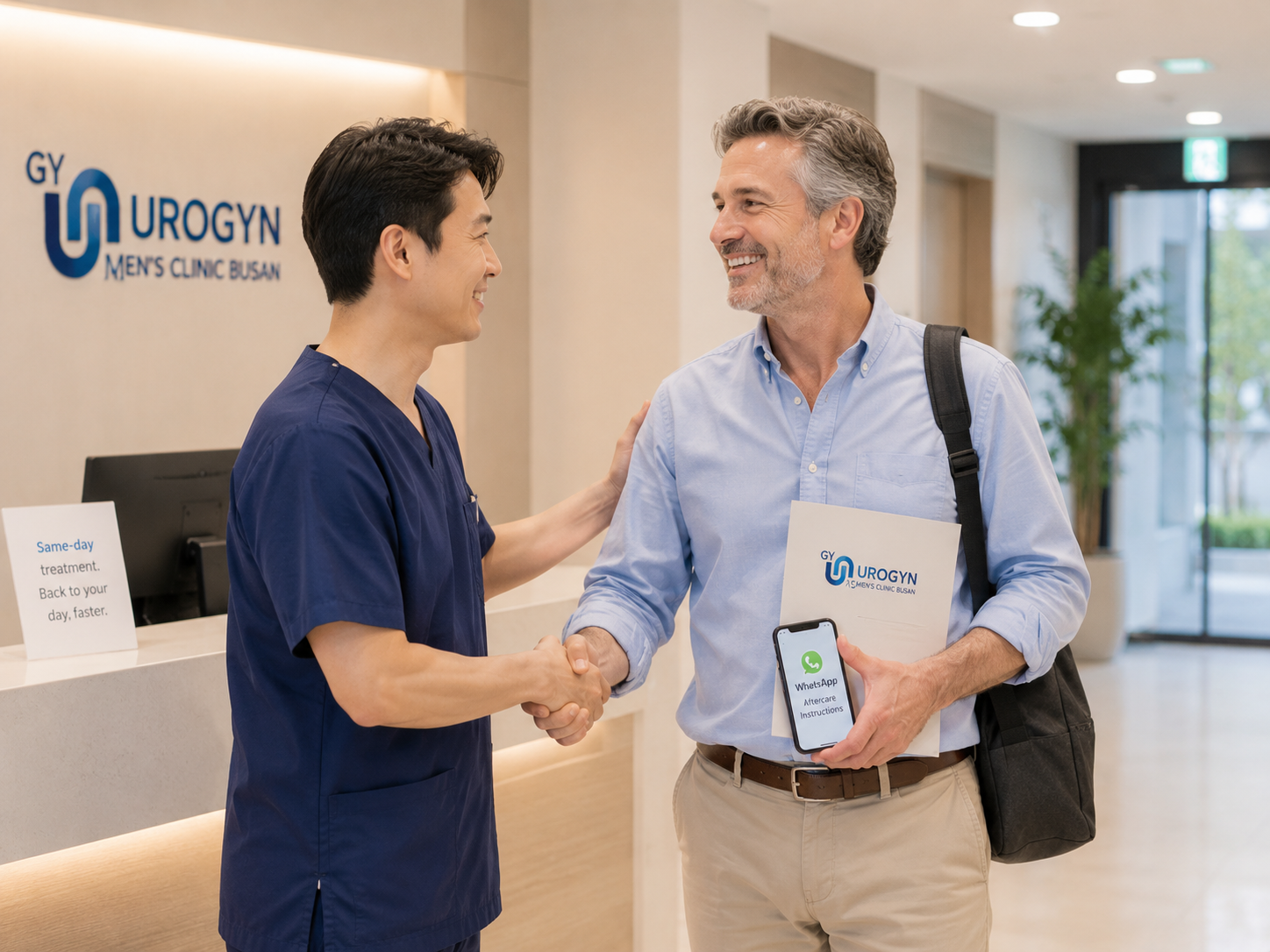
Recovery & aftercare
Fly home when cleared. Your doctor stays reachable on WhatsApp for 6 months of follow-up — photos, questions, guidance.
Your medical team in Busan Seomyeon.
Board-certified urologists in Busan Seomyeon — the doctor who consults with you is the same one who performs your procedure and follow-up.
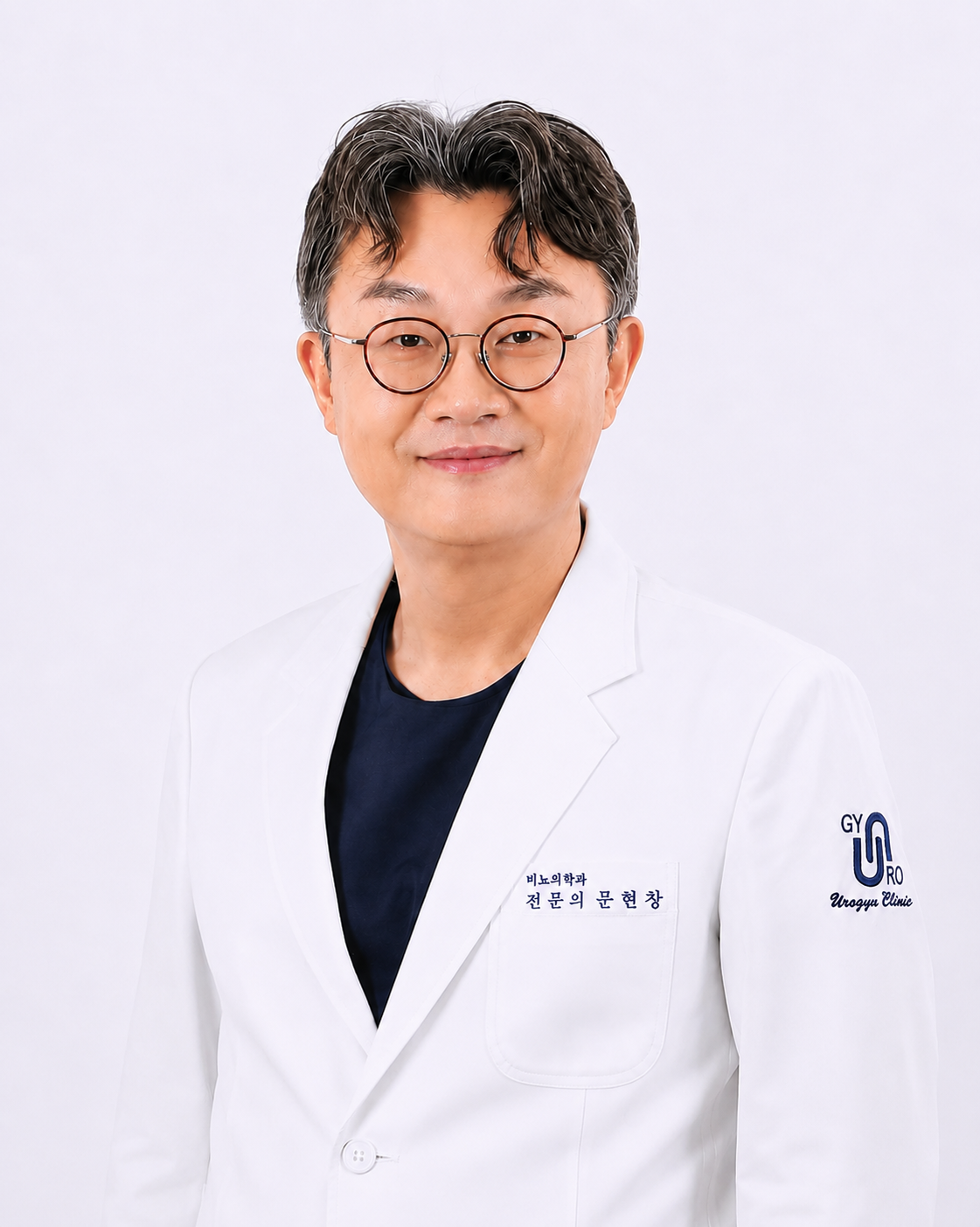
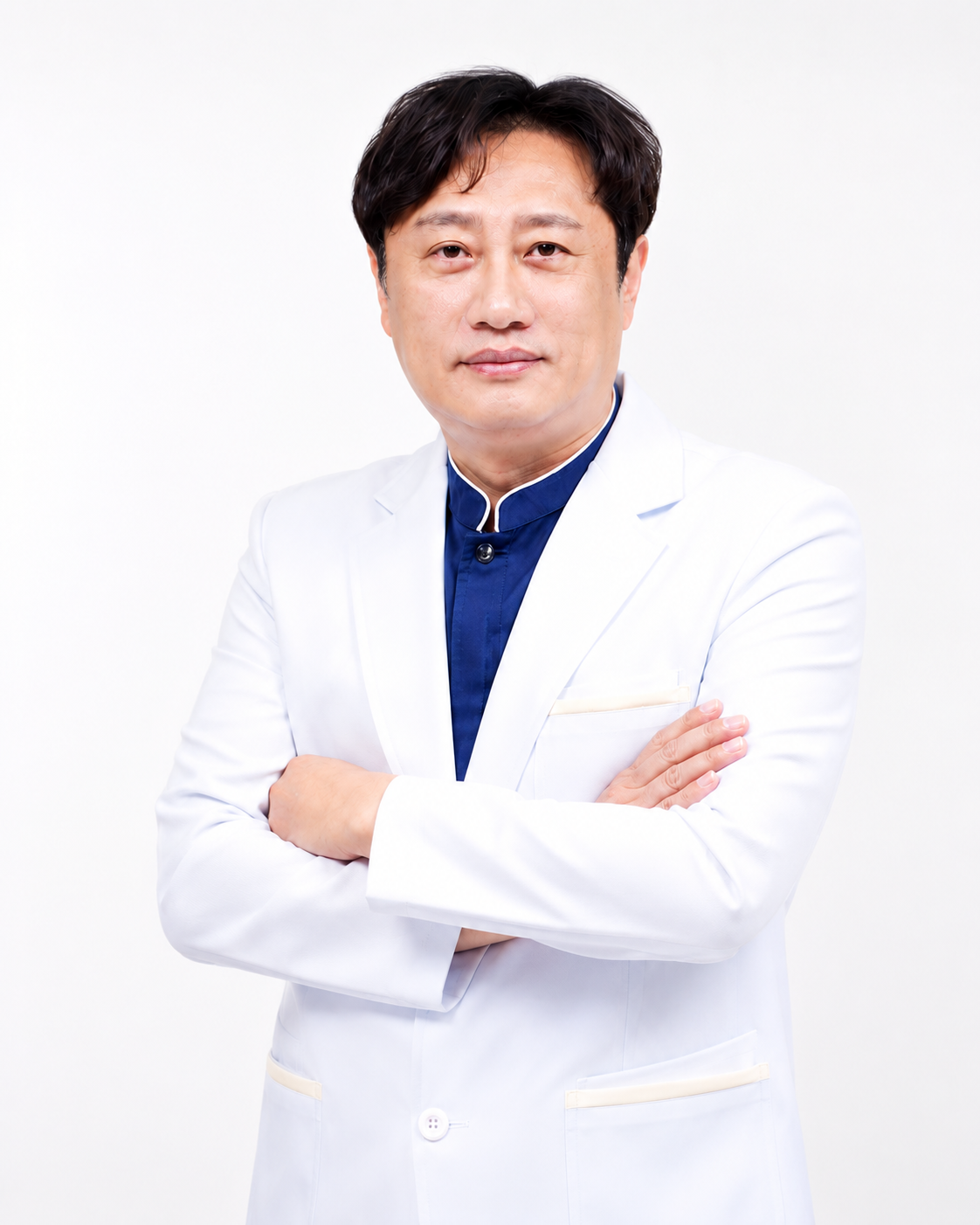
Dr. Moon Hyeon-chang
- Board-certified urologist, 15+ years
- AUA · EAU · WAS · KSSM member
- Direct English consultation
- Patients from 40+ countries
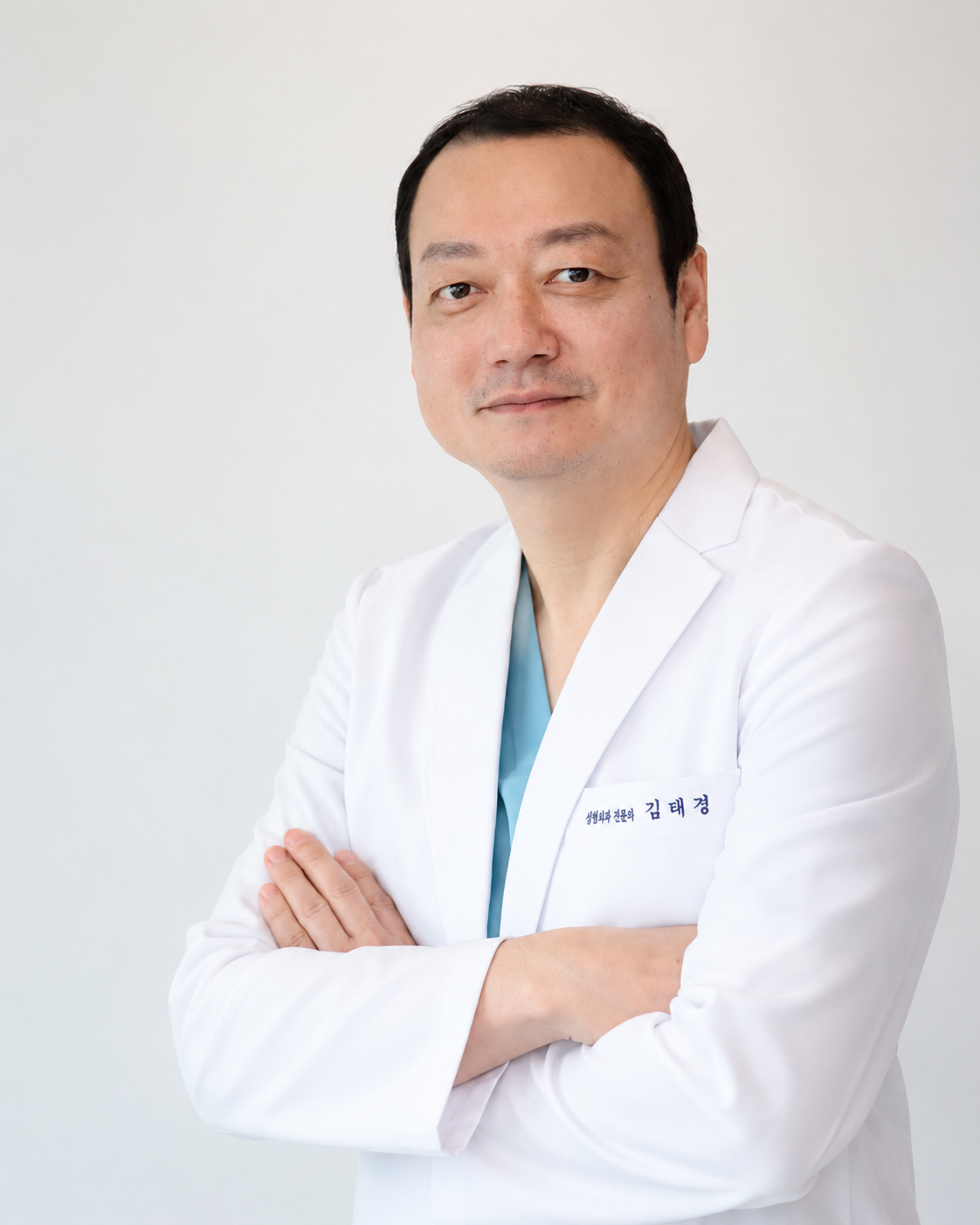
Dr. Kim Tae-kyung
- Board-certified urologist
- BPH focus — UroLift & Rezum
- MD & MS, Pusan National University
- Adjunct Prof, Ulsan Univ Hospital
Dr. Kim Jin-seong
- Board-certified, Gyeongsang Nat'l Univ
- Korean Prostate Society member
- Adjunct Clinical Prof, GNU Hospital
- Men's health & prostate surgery
What our Busan urologists are asked once the type is clear.
If it is not an infection, what is actually causing the pain?
In CPPS, three mechanisms overlap in varying proportions: pelvic floor muscle tension, sensitisation of the nerves carrying pain from the region, and in some men a genuine inflammatory component in the prostate. That is why the treatment is a combination — muscle relaxation and physiotherapy, nerve-directed medication, anti-inflammatories where the secretion shows white cells — rather than a single tablet.
Why does prostate massage matter to the diagnosis?
Because it produces expressed prostatic secretion, which is the only way to see whether white cells and organisms are actually present in the prostate rather than in the bladder. At ₩100,000 it is the test that separates inflammatory from non-inflammatory CPPS and catches the chronic bacterial cases that a plain urine test misses.
Can prostatitis be cured, or only managed?
The bacterial types are cured with the right antibiotic for long enough. CPPS is managed in the sense that a migraine is managed: most men improve substantially over weeks to months, many become symptom-free for long periods, and recurrences respond to the same measures. Our Busan urologists say this at the first visit rather than promising a cure and disappointing you at week six.
Will this affect my fertility or my erections?
Inflammation can temporarily reduce semen quality in some men and usually recovers with treatment; a semen analysis at ₩150,000 establishes where you stand. Erectile function is not damaged by prostatitis itself, though pain and anxiety can suppress it — the ED hub explains how the two are separated when both are present.
I have a new partner and I am worried this is an STD.
Prostatitis is not sexually transmitted, but an STD panel is a reasonable exclusion in a man with a new partner and urethral symptoms — ₩250,000 for the 13-panel at our Seomyeon clinic. The STD testing page covers scope and timing, and the window-period guide explains when a result can be trusted.
Before you reach out — prostatitis questions.
Most likely because there was no organism to kill. The large majority of chronic cases are CPPS — chronic prostatitis / chronic pelvic pain syndrome — in which no infection is found, and antibiotics add side effects without treating the mechanism. Our Busan urologists establish the type first, with a urine culture at ₩200,000 and expressed prostatic secretion at ₩100,000, before prescribing anything.
Type I acute bacterial — sudden fever and severe pain, a genuine emergency and the one type we treat urgently in Busan rather than investigating first. Type II chronic bacterial — recurrent infections with the same organism, uncommon. Type III CPPS — pelvic pain for three months or more with no infection, the large majority. Type IV asymptomatic inflammatory — found incidentally, usually needing no treatment.
By testing, not by symptoms, which overlap almost completely. A urine test and culture at ₩200,000 and prostate massage with expressed secretion at ₩100,000 show whether an organism and white cells are present in the prostate itself. At our Busan clinic no antibiotic is prescribed for chronic pain without that evidence.
A focused visit in Busan: consultation and history, symptom scoring, urine analysis and culture ₩200,000, prostate massage with expressed secretion ₩100,000, PSA ₩150,000, and ultrasound ₩200,000 per area where the pattern warrants it — ending in a type diagnosis and a written plan. Only tests actually performed are charged, and itemised English receipts are issued on request.
The bacterial types are cured with the right antibiotic for long enough. CPPS is managed: most men treated in Busan improve substantially over weeks to months with combined treatment, many become symptom-free for long periods, and recurrences respond to the same measures. We say this at the first visit rather than promising a cure.
A combination adjusted to you at our Busan clinic: alpha-blockers for voiding symptoms, anti-inflammatories where the secretion shows white cells, pelvic floor relaxation and physiotherapy for the muscle-tension component, nerve-directed medication where pain has become sensitised, and periodic prostate massage at ₩100,000 where the prostate is congested. Warm baths, avoiding prolonged sitting and managing stress address the mechanism rather than being folk advice.
It produces expressed prostatic secretion — the only way to see whether white cells and organisms are in the prostate rather than the bladder, and it is done at our Seomyeon clinic during the work-up. At ₩100,000 it separates inflammatory from non-inflammatory CPPS and catches chronic bacterial cases a plain urine test misses.
No. Prostatitis is not sexually transmitted. An STD panel is still a reasonable exclusion in a man with a new partner and urethral symptoms — ₩250,000 for the 13-panel at our Seomyeon clinic — but a negative panel does not rule prostatitis out.
Inflammation can temporarily reduce semen quality in some men and usually recovers with treatment; a semen analysis at ₩150,000 in Busan establishes the baseline. Erectile function is not damaged by prostatitis itself, though pain and anxiety can suppress it, and the two are assessed separately.
Sitting compresses the perineum and the pelvic floor muscles that are tense in CPPS — the pattern our Busan urologists hear most often. Prolonged sitting on hard surfaces is a common aggravator, and avoiding it is part of treatment rather than incidental advice.
The diagnosis travels; the treatment usually stays home. A visit to our Busan clinic gives you a type, the evidence behind it and a written programme, after which most men are managed where they live with the same urologist reachable by message. If you already have a clear bacterial diagnosis on culture, the antibiotic course is the same wherever you take it.
Dr. Moon provides direct English consultation at our Busan Seomyeon clinic. He is internationally trained and comfortable discussing complex medical topics in English.
It depends entirely on type, and our Busan urologists tell you which from day one. Bacterial prostatitis responds over weeks on the right antibiotic. CPPS improves over weeks to months with combined treatment, and the men who do best take the muscle and nerve components as seriously as the prostate. No single tablet does it.
No. Urogyn publishes one self-pay price list in Korean won and applies it to every patient. Nationality, language and booking from abroad change no figure, and only tests actually performed are charged.
Yes. The board-certified urologist in Busan who examines and tests you prescribes your treatment and answers your follow-up messages through the months it takes. You are never passed to a junior doctor or a different clinician.
Three things. A cure for CPPS in the sense a fracture is cured — it is managed, and most men improve substantially rather than instantly. A result in days — improvement is measured in weeks to months. And an antibiotic that will finally work — if three courses have failed, the fourth is not the answer, and our Busan urologists say so at the first visit.
Explore the other prostate options in Busan.
Tap to jump to another prostate-care page in Busan.
Prostatitis explained — guides from our Busan urologists.
Chronic Pelvic Pain in Men
The four types, the tests that separate infection from tension, and honest treatment.
Read the guide →
Weak Stream & Night Urination
If the main symptom is flow rather than pain — the BPH route in Busan.
Read the guide →
STD Testing in Busan
A reasonable exclusion in a man with a new partner — 13-panel ₩250,000.
Read the guide →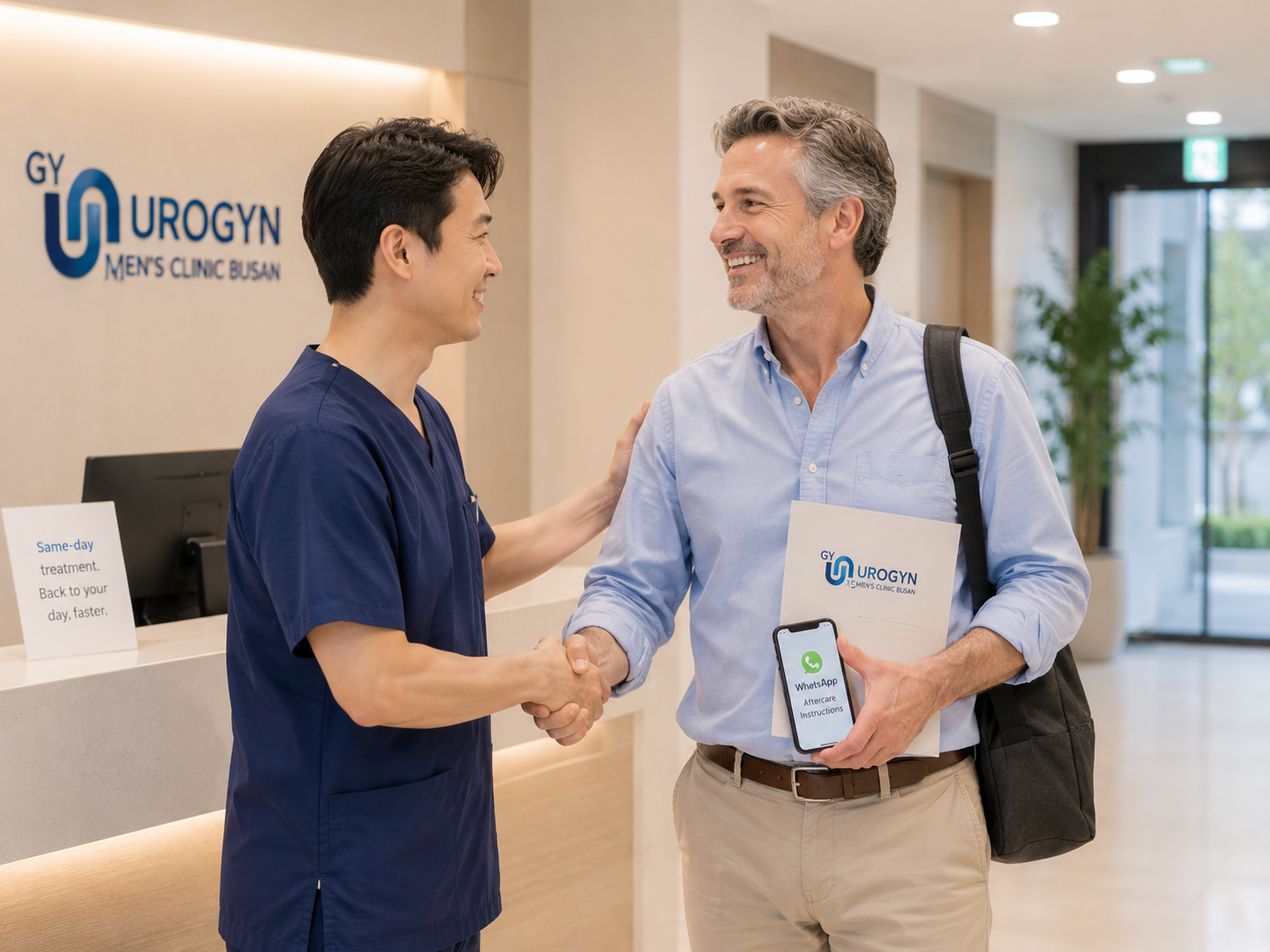
Discharge, Burning & STI Timing
Window periods that decide when a result can be trusted.
Read the guide →
ED in Your 30s
When pain and anxiety suppress erections — separating the two.
Read the guide →
Book a Urologist in English
What to send about your symptoms, and the written plan that comes back.
Read the guide →