Flying home after urology surgery: what is safe when.
The question every international patient asks before booking a return flight is the one this guide answers procedure by procedure: how many days after a vasectomy, a circumcision, girth filler, lengthening surgery, an implant or a BPH procedure a flight from Busan is sensible, what changes for long-haul, and what to do in the seat. The figures are the ones our urologists give in the written plan you leave with.
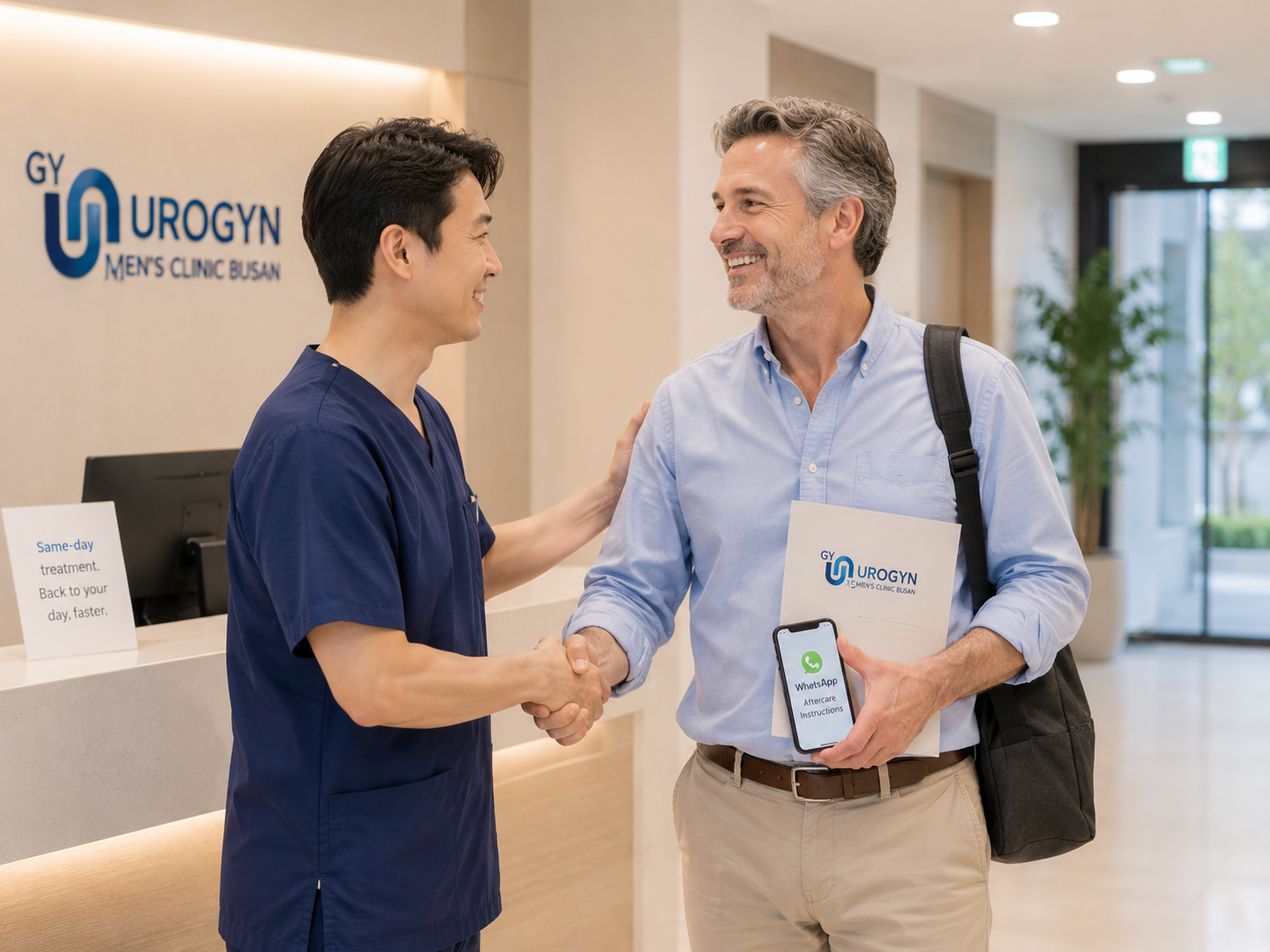
International Patients Guide
How a trip to Busan is sequenced end to end — arrival, procedure, the nights to plan, and the flight home.
Read the visit guide →- Can I fly the day after a vasectomy?
- Is a long-haul flight dangerous after surgery?
- What if my flight is already booked for the next day?
- Will a dressing or implant set off airport security?
- Who do I contact if something is wrong after I land?
Each is answered below, procedure by procedure, from the timings in our written aftercare.
Why is flying different from resting?
A flight is several hours of sitting still, limited movement, cabin pressure lower than sea level, dry air and no easy access to a bathroom or a doctor — none of which is dangerous after a well-healed procedure, and all of which matter in the first day or two after one. After same-day procedures at Urogyn Men's Clinic in Busan Seomyeon — vasectomy, filler, STD testing — a flight the next day is usually fine; after circumcision or a nerve block, two nights; after surgery — grafts, lengthening, implants, gynecomastia, BPH procedures — three to seven nights, stated for your case in the written plan.
The timings below are the ones the urologist gives in the aftercare you leave with, and the international patients guide uses them to plan the trip; this page explains the reasoning behind each, so that you can judge a flight you have already booked.
The timings from our Busan clinic, procedure by procedure
No procedure, no restriction. Results reach you by message wherever you land.
Same-day procedure; one night; mild swelling on the flight is normal. Filler page.
Next day for short-haul; two nights for long-haul. Supportive underwear on; aisle seat. Vasectomy page.
The first night is the uncomfortable one; the second the settling one. Three for extension. Circumcision page.
Same-day surgery; two nights before a flight, sexual activity after several weeks.
Swelling peaks around day two to three; a flight after it has begun to settle. Lengthening hub.
Compression vest on for the flight; drains, if used, out first. Gynecomastia page.
Surgical wound, sometimes a catheter for a day; the urologist confirms flying after the first check. Implant page.
A catheter is commonly needed for several days; the flight follows its removal. Rezum page.
These are planning figures. On the day, the urologist at our Seomyeon clinic confirms your flight timing from how the procedure went and how you are, and states it in writing.
Short-haul versus long-haul
Short-haul — Japan, Taiwan, China, within Korea — is one to three hours seated, with a bathroom nearby and a landing soon; after a same-day procedure it is usually fine the next day, and after a night's rest it is rarely the limiting factor. Long-haul — Europe, North America, Australia — is eight to fourteen hours seated, and that changes three things: swelling is more likely to increase in the seat, a dressing check is impossible for the duration, and the risk of a blood clot in the leg rises with immobility after any surgery. The urologists at our Busan clinic add a night for long-haul after most procedures for those three reasons, not for caution's sake. The hotel guide covers where to spend the extra night.
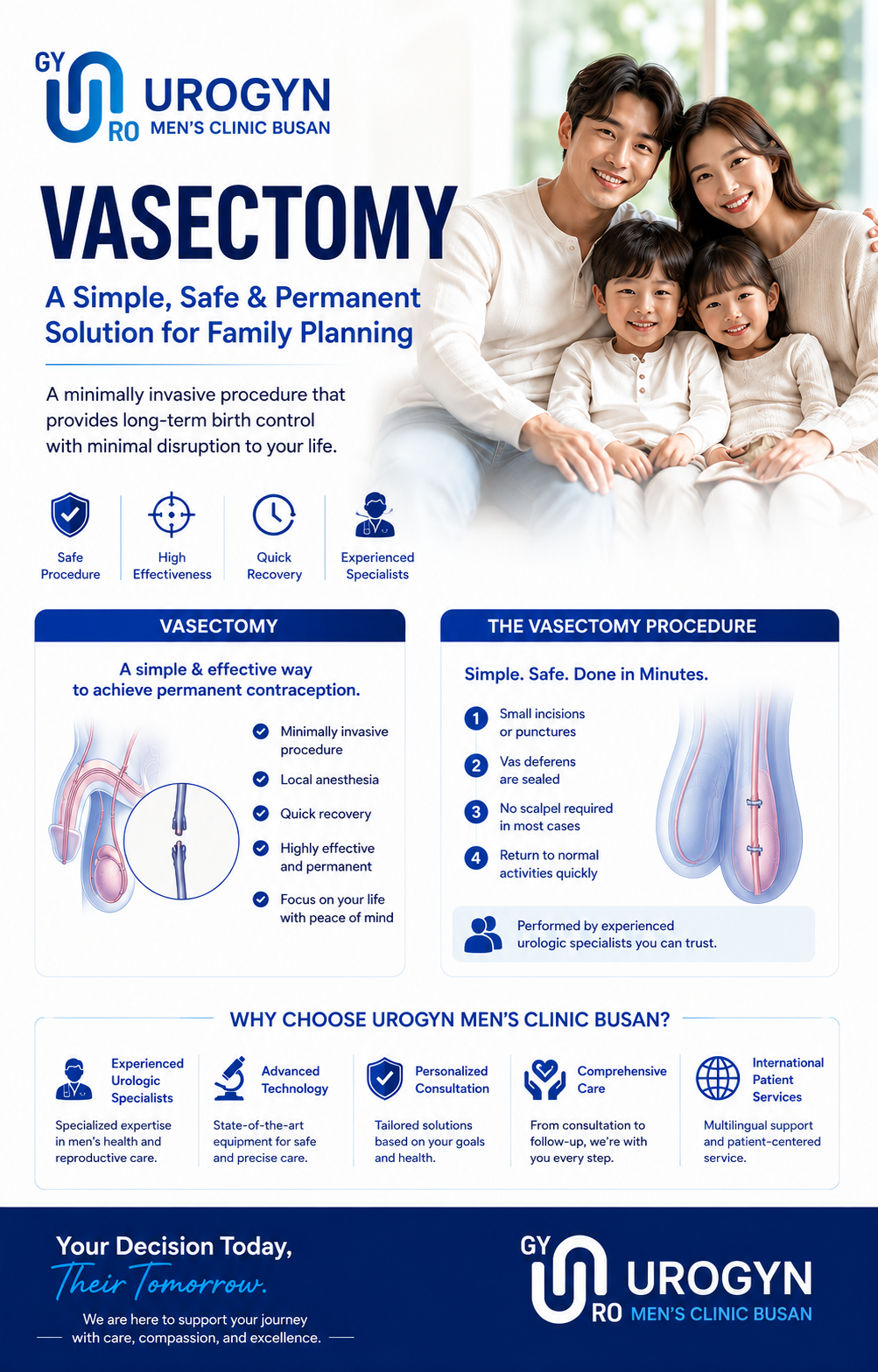
Vasectomy in Busan
Fifteen to twenty minutes, ₩800,000, and a flight the next day for short-haul or after two nights for long-haul — the procedure most often planned around a return ticket.
Read the vasectomy page →What to do in the seat
- 1 Aisle seat, and use it. Stand and walk the aisle every hour on a long flight. Movement is the single best protection against swelling and clots.
- 2 Supportive underwear after scrotal or penile procedures. Snug briefs, not boxers, keep everything still. Loose trousers over them.
- 3 Compression stockings on long-haul after any surgery. Cheap, effective against calf clots, and the urologist will say if they are advised for you.
- 4 Water, not alcohol. Cabin air is dry; dehydration thickens blood and worsens swelling. Skip alcohol until the urologist says otherwise — it also interferes with pain relief.
- 5 Pain relief before it is needed. Take the prescribed dose before boarding rather than waiting for discomfort at altitude. Keep the prescription and the written plan in hand luggage.
- 6 Cool pack if advised. A small gel pack from a pharmacy, kept cool by cabin crew, for the first hours after a same-day procedure.
Blood clots: the real long-haul risk
Deep vein thrombosis — a clot in the leg vein — is the one flight-related risk after surgery that is serious rather than uncomfortable. The risk is low after minor same-day procedures and rises with the length of surgery, the length of the flight, immobility, dehydration, obesity, smoking and any personal or family history of clots. The measures above — aisle seat, walking, stockings, water — reduce it substantially, and the urologists in Busan repeat them in every written plan; and for men with additional risk factors after larger surgery the urologist may advise a preventive injection or a longer stay. Tell the clinic in your message if you have ever had a clot, take hormonal medication, or have a clotting condition; it changes the plan. Calf pain, swelling of one leg, or breathlessness after a flight are reasons to see a doctor at once wherever you have landed.
Catheters, dressings and airport security
Dressings do not trigger security scanners and need no declaration; a small first-aid kit in hand luggage with spare dressing material, as the clinic provides or advises, is sensible. A penile implant is silicone and metal-free in its cylinders and does not set off metal detectors; the pump and reservoir are likewise non-metallic. A catheter is not something to fly with unless the urologist has specifically agreed it — for Rezum and some implant patients the flight is planned after removal. Compression vests after gynecomastia surgery are worn through security without comment. The records guide explains the written summary the clinic provides, which covers any question at a border about medication or a device.
When to change the flight
Change it if the urologist advises a night more than you planned — because of a finding, a longer procedure, or how you are on the day — and change it without guilt: an airline change fee is the cheapest complication you will ever pay for. Change it if, on the morning of departure, there is increasing pain, spreading swelling, bleeding through a dressing, fever, or you cannot pass urine; message the clinic first thing and come in rather than to the airport. Do not change it for ordinary discomfort, mild bruising or the tiredness that follows any procedure — those are expected, and the seat is as good a place to rest as a hotel room. The same-day guide explains how the clinic sequences a visit around a fixed departure.
Follow-up from Busan after landing
The urologist who performed your procedure answers your messages after you land — a photograph of the dressing, a question about swelling, a symptom you are unsure about — in the same thread you booked from, in English. Normal healing versus a warning sign is a judgement the urologist makes from the photograph and the description, and if examination is needed the clinic coordinates with a doctor at home using the written summary you carry. The semen analysis after vasectomy, at three months, can be done at any laboratory at home and sent to the clinic. The international patients guide describes the follow-up standard; the short version is that the flight does not end the care.
How it runs at our Busan Seomyeon clinic — and your next step
Message us with your arrival and departure flights, the procedure you are considering, and any history of clots or clotting medication. You will receive a reply in English stating whether the procedure fits between the flights, the nights the urologist advises for your route, and the published price. If the flights do not fit, the reply says so before you book anything else. On the day, the timing is confirmed in the written plan, and the seat advice above is in it. For the trip as a whole, the international patients guide; for where to spend the nights, the hotel guide.
- Can I fly after a vasectomy if I have a connecting flight? Yes; a connection is a chance to walk. Plan the total seated time as long-haul if it exceeds about six hours, and follow the long-haul advice — two nights, stockings, aisle seat.
- Does cabin pressure affect a penile implant or filler? No. Cabin pressure changes are small and do not affect implanted devices or hyaluronic filler. Swelling on a flight is from sitting and dry air, not pressure, and is managed by the seat measures above.
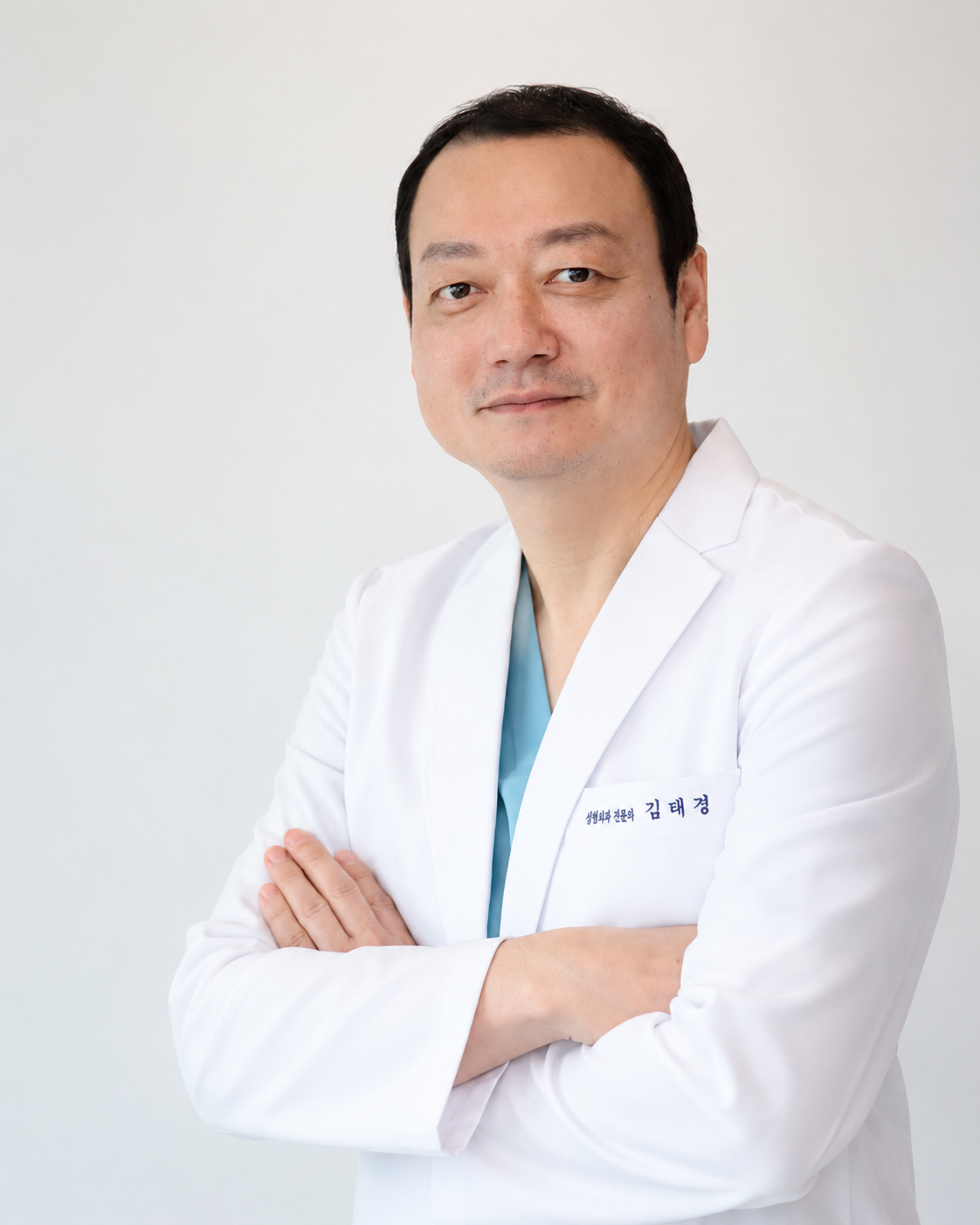
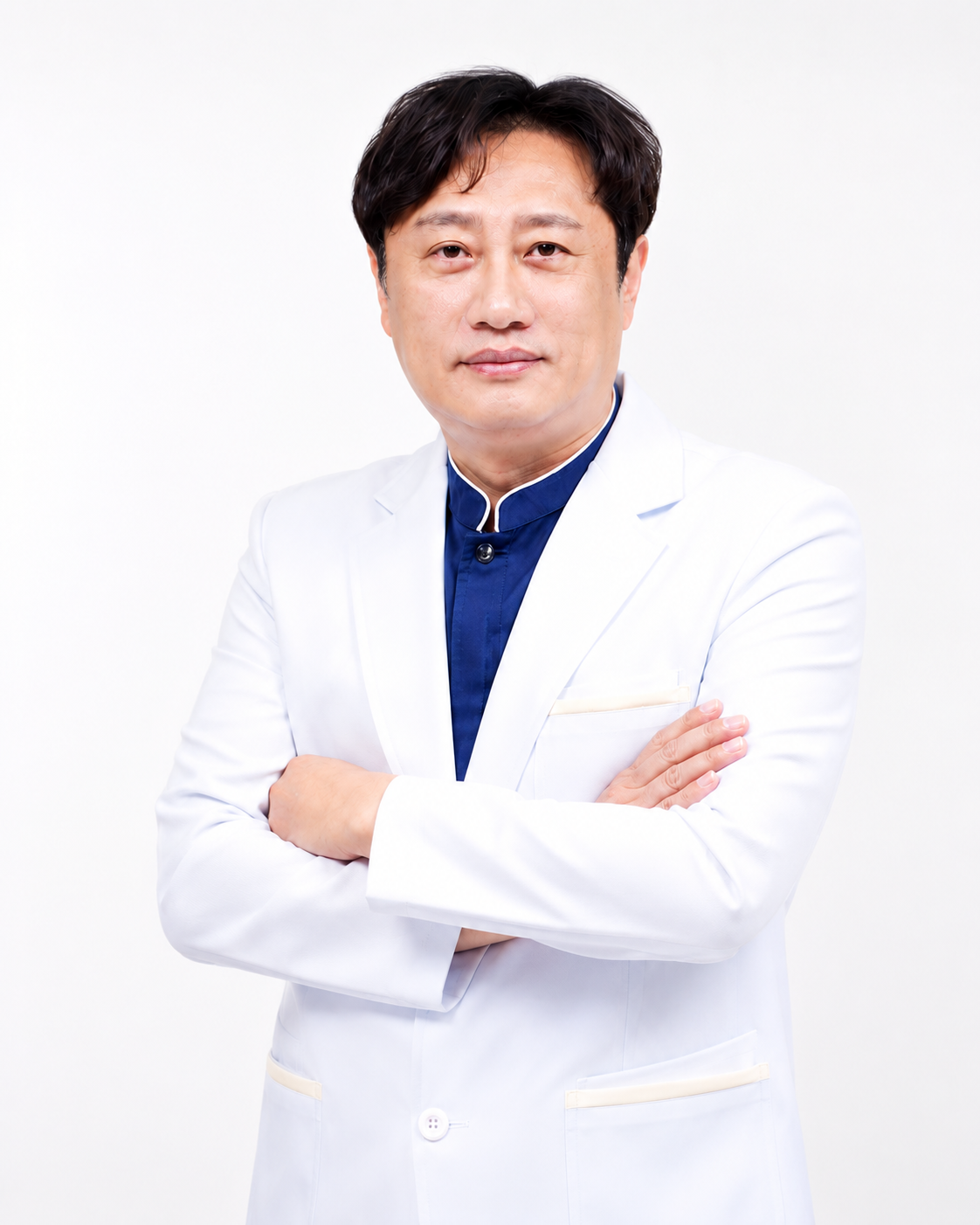
The urologists who perform your vasectomy.
Every guide on this site is written and reviewed by the three board-certified urologists below. The doctor who consults with you is the doctor who operates and answers your follow-up — never a junior doctor or a different surgeon.
Flying after urology surgery — FAQ
Related pages and next reads
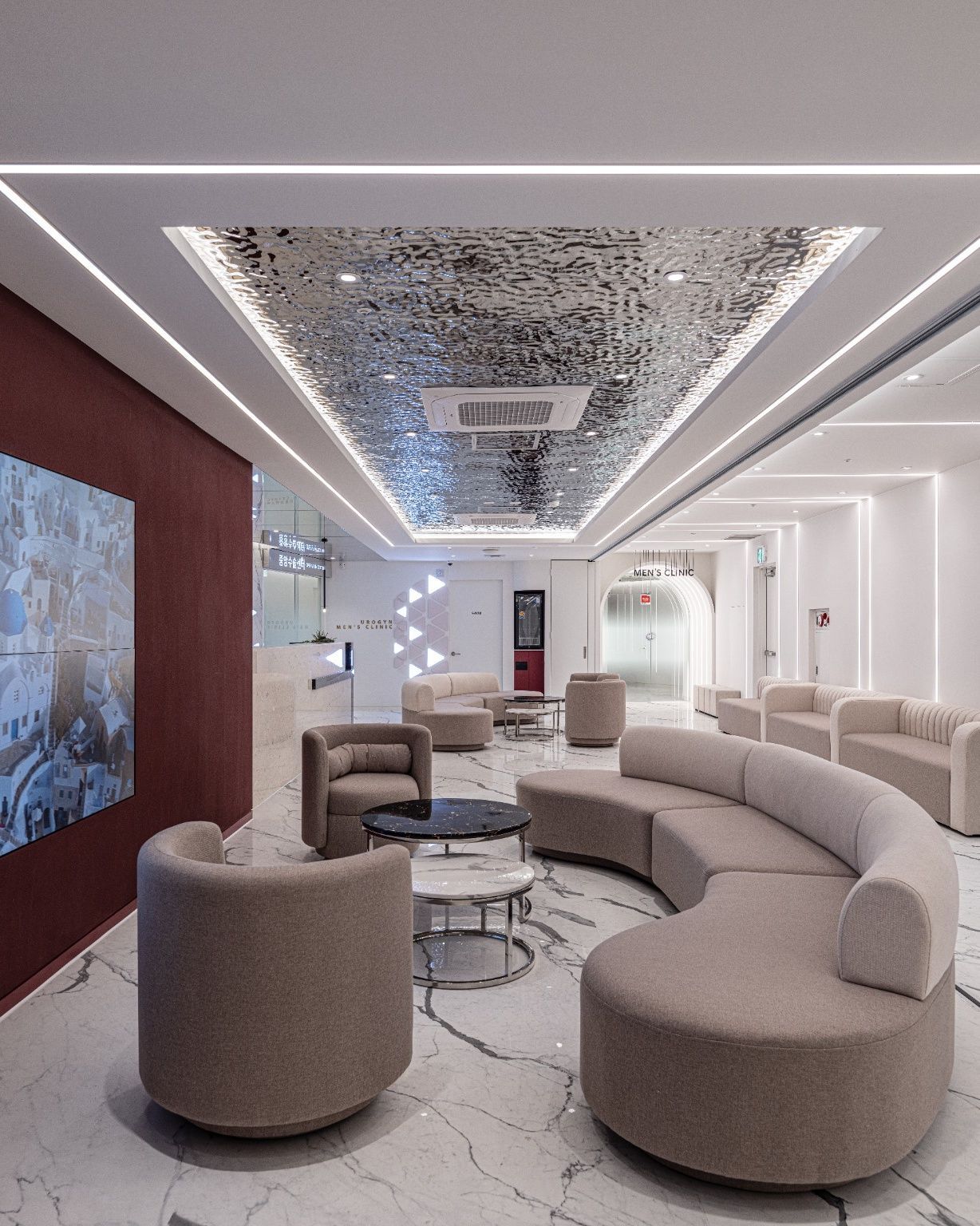
International Patients Guide
Sequencing arrival, procedure, nights and the flight home.
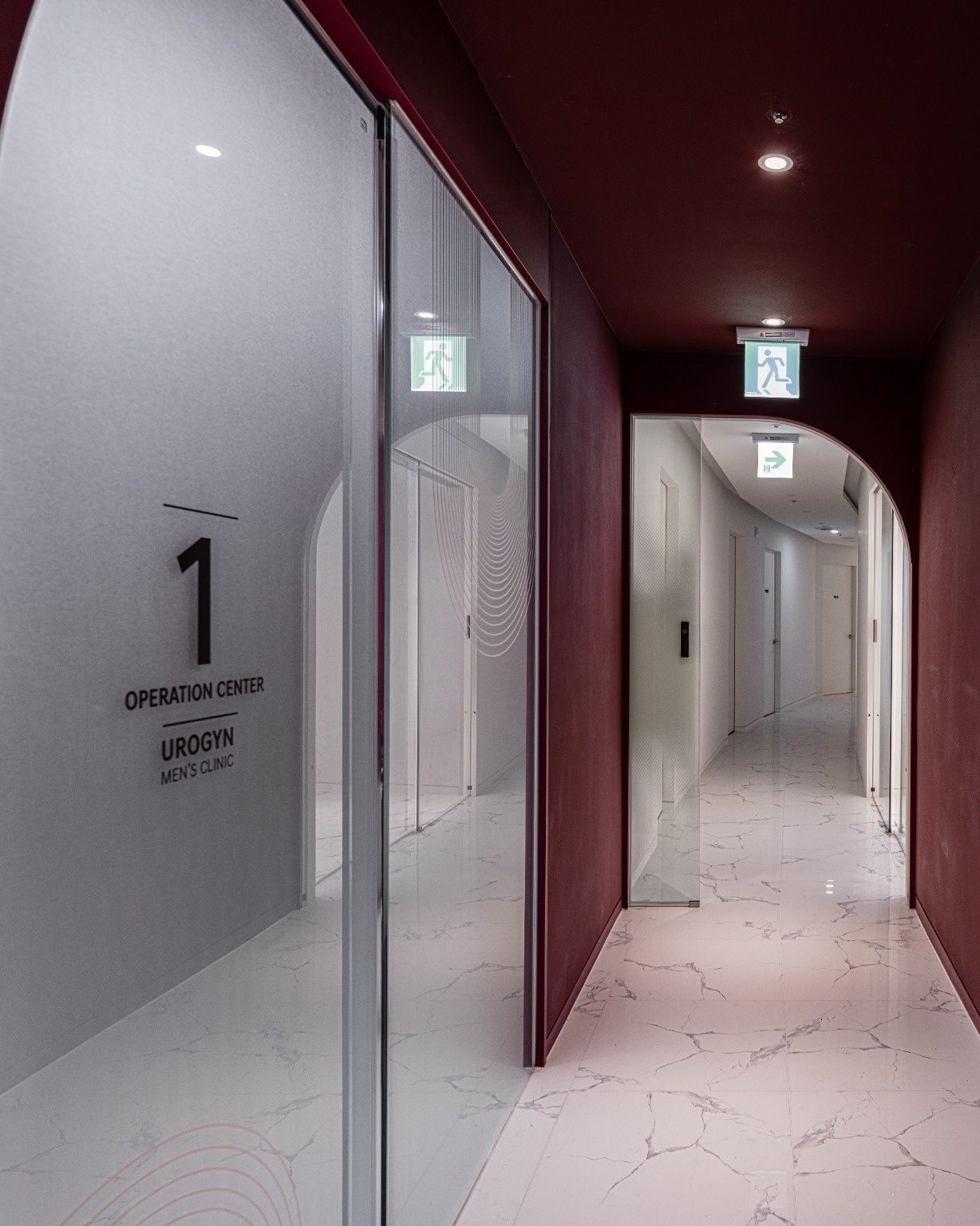
Hotels Near the Clinic
Where to spend the nights the urologist advises.
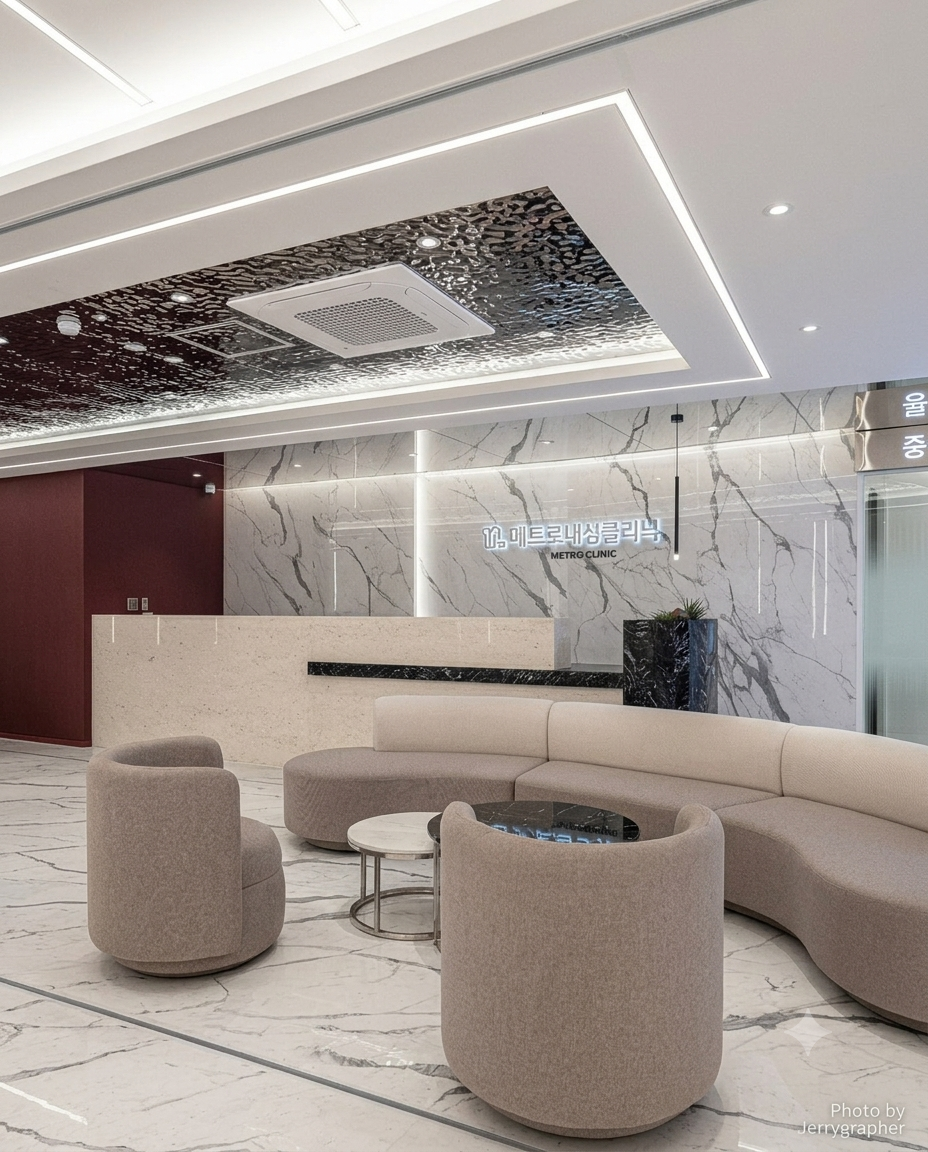
Gimhae Airport to Seomyeon
The route back to the airport after a procedure.
Vasectomy in Busan
The procedure most often planned around a return flight.
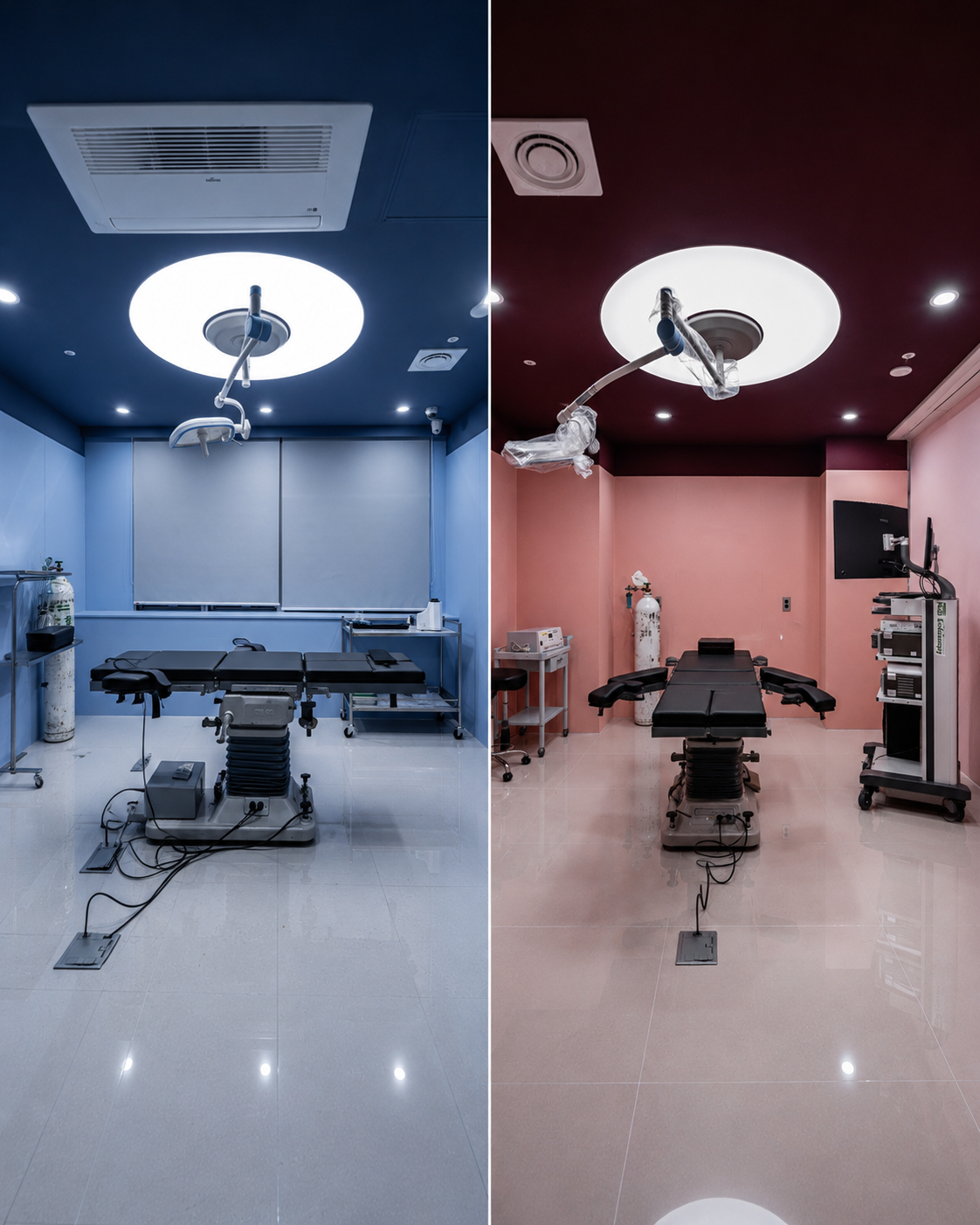
Inflatable Penile Implant
The longest stay on the list — and why.
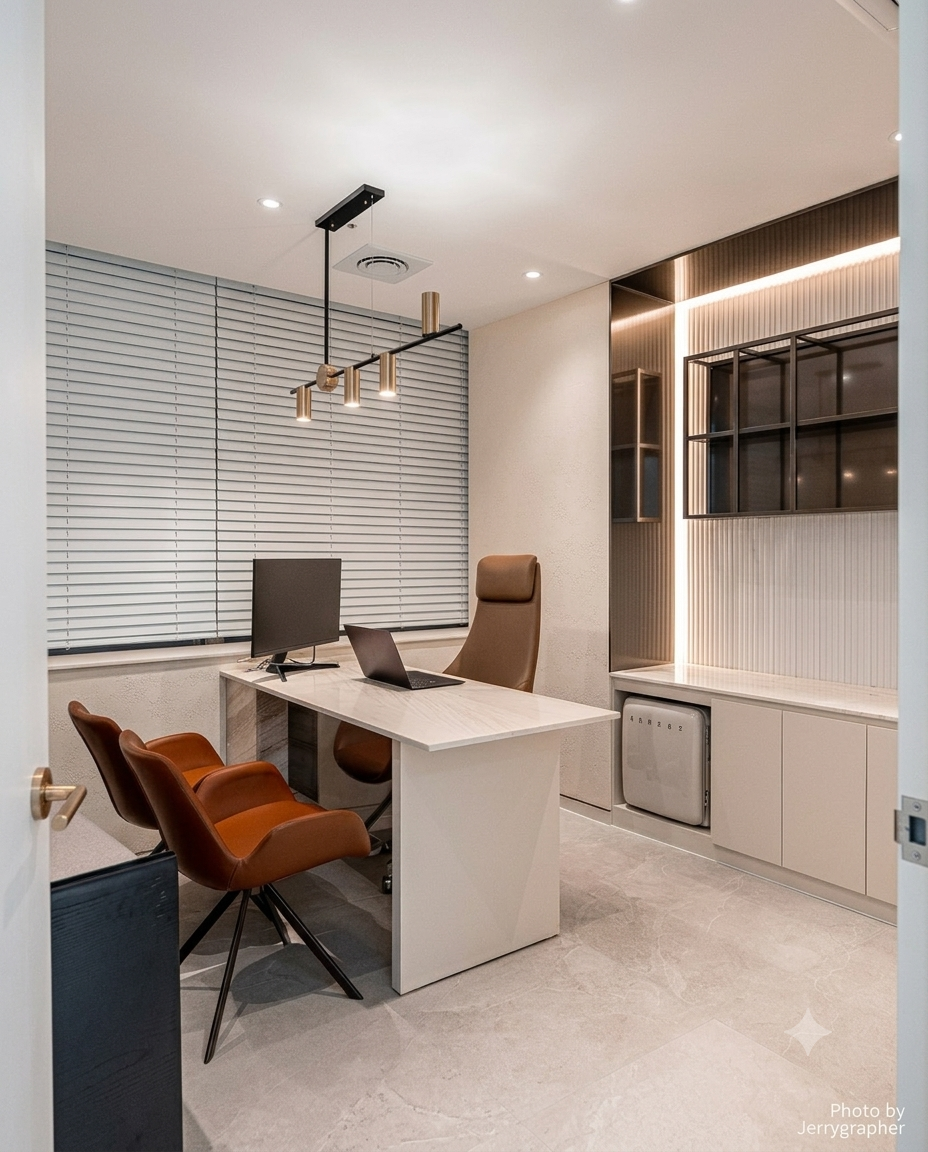
Records & Prescriptions
The written summary to carry through a border.
Urogyn Men's Clinic, Seomyeon
7F-702, Ion City Building, 74 Seomyeon-ro, Busanjin-gu, Busan 47299 — one minute on foot from Seomyeon Station Exit 7 (Lines 1 & 2).
Mon–Fri 10:00–18:00 · Sat 10:00–14:00 · Sun closed
부산광역시 부산진구 서면로 74 아이온시티빌딩 7층 702호 — show this to your taxi driver.
Send both flights. Get the nights in writing before you book anything else.
Your arrival and departure flights, the procedure and any clot history are enough for a written answer — does it fit, how many nights, and the published price — in English, from the urologist who would treat you at our Busan Seomyeon clinic.