
Aftercare that continues after you fly home.
The question behind most international patients' hesitation is not the procedure but the ninth day: who answers when something looks uncertain and the clinic is a flight away. At our Busan Seomyeon clinic the answer is the urologist who operated, in the same message thread, with a photograph — and, where examination is needed, a local doctor briefed with a written summary. This guide explains exactly how that works, what is normal at each stage, and what is not.
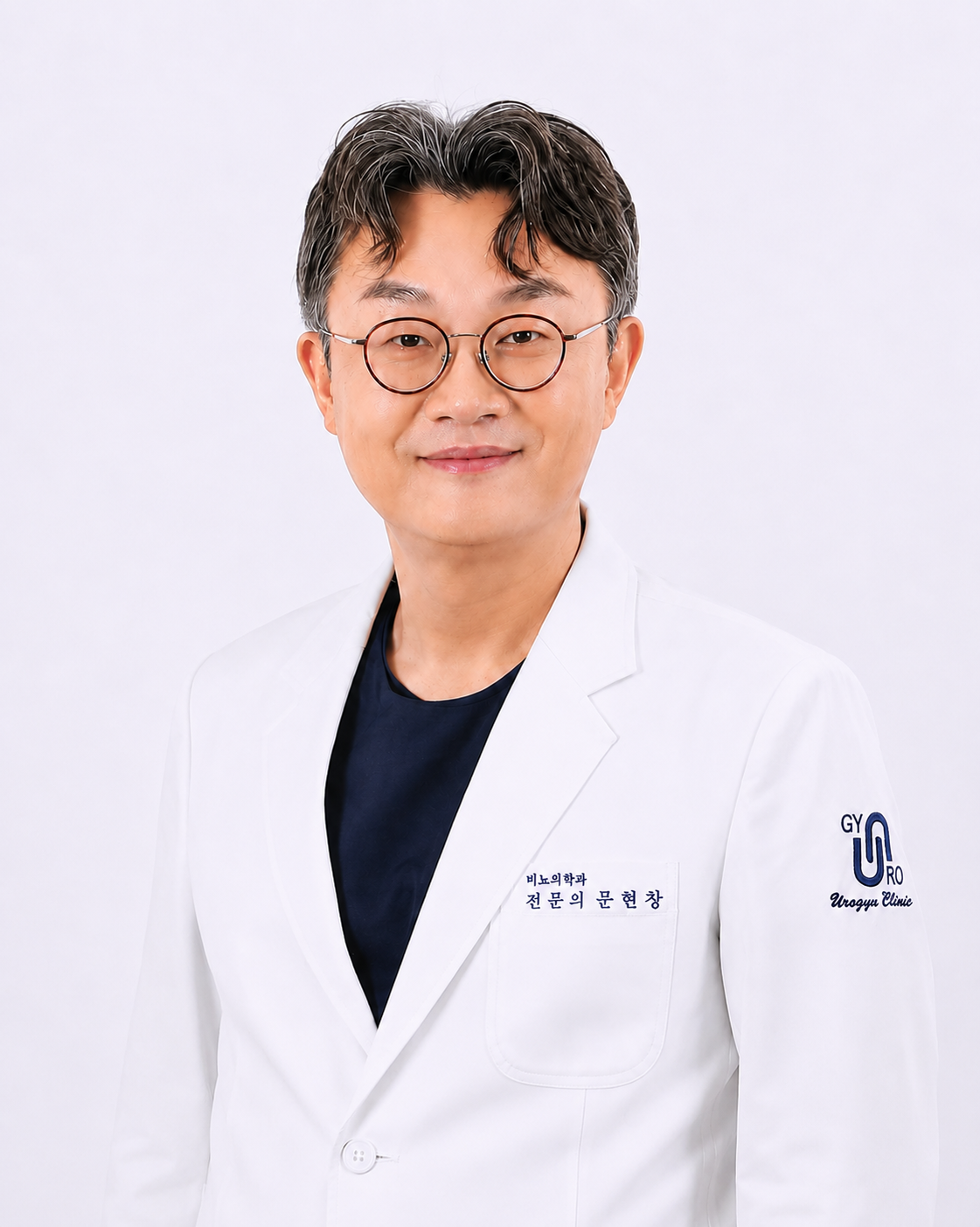
One urologist, start to finish
The doctor who consulted and operated is the one who answers on day nine — the standard behind every page on this site.
Read why choose us →- How follow-up works, mechanically
- The photograph: what to send and how it is read
- What is normal at each stage
- What is not — and what happens then
- When a local doctor is needed
- Tests done at home: semen, blood, PSA
- Prescriptions and refills from abroad
- How long follow-up lasts
- How it runs here — and your next step
- Who actually replies — the doctor or a receptionist?
- How fast is a reply, and what about time zones?
- What if I need to be examined?
- Can my home doctor talk to the clinic?
- Is there a cut-off after which follow-up ends?
Each is answered below, from how follow-up actually runs for patients who have flown.
How does follow-up from Busan work once you have flown?
Follow-up after a procedure at Urogyn Men's Clinic in Busan Seomyeon is by direct message — WhatsApp, LINE or KakaoTalk, in the thread you booked from — to the urologist who performed it. You send a description and, where useful, a photograph; the urologist reads it, replies in English, and says whether what you describe is normal healing, something to watch, or something to have examined. If examination is needed, the clinic briefs a doctor near you with a written summary. There is no coordinator relaying messages and no rotating team; the doctor who consulted and operated is the one who answers.
That standard is set out on the why choose us page and the international patients guide; this page is the practical detail of it, from the first message after landing to the last.
Dr. Moon Hyeon-chang, Dr. Kim Tae-kyung or Dr. Kim Jin-seong — whoever treated you. Not a receptionist, not a coordinator.
WhatsApp, LINE or KakaoTalk. Text and photographs. In English.
Mon–Fri 10:00–18:00, Sat 10:00–14:00. A message sent overnight from Europe or the Americas is usually answered by the time you wake.
Message follow-up carries no separate fee. A return visit or a home doctor's examination is separate, as below.
The photograph: what to send and how it is read
- 1 Good light, no flash, same angle each time. Daylight from a window, phone at the same distance and angle as the last photograph, so the urologist compares like with like.
- 2 The whole area, then close. One image showing the site in context — swelling, colour, symmetry — and one closer image of the wound, suture line or dressing.
- 3 A sentence of context. Day since the procedure, what changed, pain going up or down, temperature if you have one, any discharge. The photograph shows; the sentence tells.
- 4 What the urologist does with it. Compares it with the operative record and your previous images, judges normal-versus-not, and replies with a decision: continue as planned, adjust the aftercare, or have it examined.
Photographs are viewed by the urologist only and kept within your clinical record — the privacy guide explains — and men who prefer not to send images describe instead; a good description is usually enough for the common questions.
What is normal at each stage — by procedure
Each procedure has its own timeline, given in writing on the day, and the recovery guides on this site set them out: vasectomy — bruising and a firm nodule; circumcision — night erections, a ridge below the line, sutures falling away; enlargement — early unevenness in filler, reabsorption in fat, firmness in a dermal graft; implants — dramatic scrotal swelling, a device that can be felt; gynecomastia — lumpiness, numb nipples, the vest. The common thread is that the first week looks worse than it is and week two is when it starts to look like the result. The message thread exists for exactly the moments when you cannot tell which you are looking at.
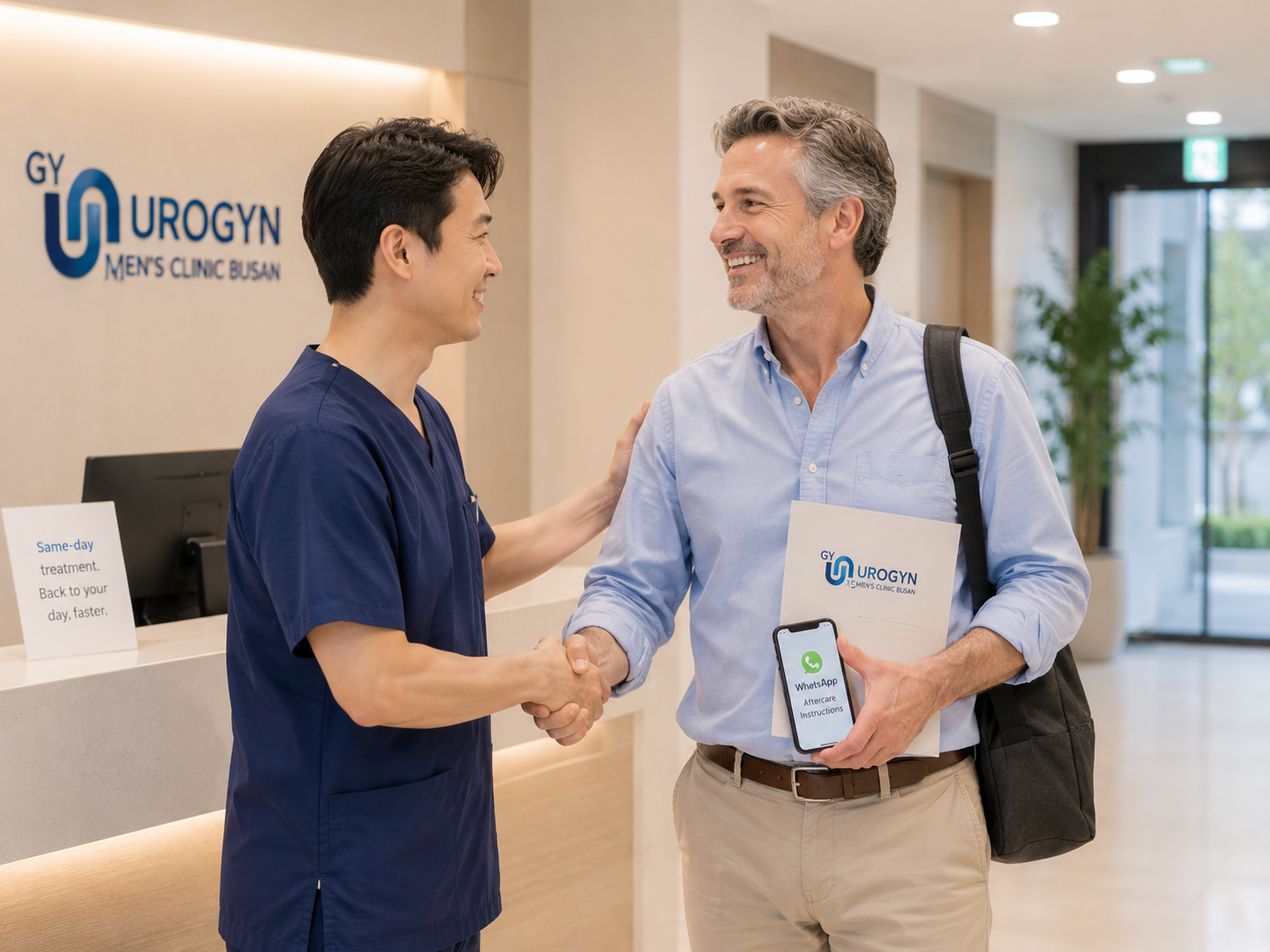
Flying After Urology Surgery
The nights to plan by procedure, what to do in the seat, and the clot risk — the page that comes before this one in every international patient's trip.
Read the flying guide →What is not normal — and what happens then
Across every procedure at our Busan clinic the same five signs mean “message now, not tomorrow”: pain that is increasing after day three rather than decreasing; fever; redness spreading from a wound, with warmth or pus; bleeding that does not stop with ten minutes of firm pressure; and swelling that is growing rather than settling. Add, for implants, a device that becomes fixed and tender to the skin, and for filler, skin over the injected area that turns pale, dusky or mottled. What happens then is a judgement from the urologist within clinic hours: adjust the aftercare and re-photograph in a set number of hours; start or change a medication the summary allows a local pharmacy to dispense; or be examined — at Urogyn if you are still in Korea, or by a local doctor briefed as below. Outside clinic hours with a sign that cannot wait — heavy bleeding, high fever, a leg that is swollen and painful after a long flight — an emergency department is the right place, and the clinic coordinates the next morning.
When a local doctor is needed — and how Busan briefs them
A minority of follow-up questions from patients who have left Busan need hands on the patient — a wound to be opened, a haematoma drained, a catheter dealt with, an inflatable implant activated. When that happens the clinic does three things: sends you a written summary in English of the procedure, the device or materials used, the findings and the specific concern, signed by the urologist; tells you what the local doctor should look for and what should not be done; and, where the local doctor wants to speak directly, makes the urologist available by message or call. You choose the local doctor — a GP, a urologist, a base or company provider — and you carry the summary; the clinic does not contact anyone without your instruction. The records guide covers what the summary contains and who can see it.
Procedure, device, materials, findings, the specific concern, what to check, what not to do.
A clear question and the clinical context. They do not have to guess what was done in Korea.
By message or call, doctor to doctor, at your request.
Your care, your instruction, your choice of doctor.
Tests done at home: semen, blood, PSA
Some follow-up from Busan is a laboratory test rather than an examination, and every one of them can be done where you live. The post-vasectomy semen analysis at about three months — any laboratory; send the report and the urologist confirms in writing. A testosterone level a few months into replacement therapy, and the blood count and PSA that monitor it — any laboratory; the written plan names the tests and the intervals. A PSA repeated after treatment for prostatitis. A test-of-cure after an STD treatment where advised. Send the report in the thread; the urologist reads the values against the reference range on the report and replies with what they mean and what, if anything, changes. If you are back in Korea when a test is due, the price list covers it — semen analysis ₩150,000, PSA ₩150,000, hormone test ₩150,000.
Prescriptions and refills from abroad
A Korean prescription is not generally accepted abroad, so the clinic gives you, before you fly, what a home prescriber needs to continue any ongoing medication: the written plan naming the drug, dose and duration, and a summary a doctor can act on. For men returning to Korea, a re-prescription follow-up is listed from ₩50,000. For injectable testosterone, the interval decides the practicality — the Nebido vs Jenasteron guide explains why the long-acting injection suits men abroad — and the summary names the dose and target levels so a home doctor can continue seamlessly. Ask in the thread how refills would work for your medication and your country; the answer is given before you travel rather than after.
How long does follow-up last?
As long as the procedure does — whether you are in Busan or ten thousand kilometres away. For a vasectomy, through the semen test. For circumcision or enlargement, through the weeks until the result is settled and beyond, for any late question. For an implant, for as long as you have it — a fever with a tender device years later is still a message to the urologist who placed it. For testosterone therapy, through every monitoring interval. There is no cut-off after which a message goes unanswered, and no fee for asking. What ends is the intensity: daily photographs in the first week, a check at each milestone, and then silence until you have a reason to write — which the clinic never breaks with marketing or reminders you did not ask for.
How it runs at our Busan Seomyeon clinic — and your next step
Before you book, ask in your first message how follow-up would work for the procedure you are considering and the country you will return to; the reply describes it for your case, including whether any visit — an implant activation, a catheter removal — must happen before you fly or be arranged at home. After the procedure, the thread stays open, the urologist who operated reads it, and the written summary you carry briefs any doctor you choose. For the procedures themselves, the recovery guides linked above; for the standard behind all of it, the why choose us page; for every figure, the full price list.
- Can my partner send the photograph or message on my behalf? Yes, from your thread or their own, if you have told the clinic to expect it. The urologist replies to whoever wrote, about you, with your consent on record.
- I am in a different time zone and something looks wrong at 3am my time — what do I do? Send the message and photograph anyway; it is read when the clinic opens, and for most concerns that is soon enough. If it is one of the five signs that cannot wait — heavy bleeding, high fever, breathlessness or a swollen painful leg — go to an emergency department first and message after.
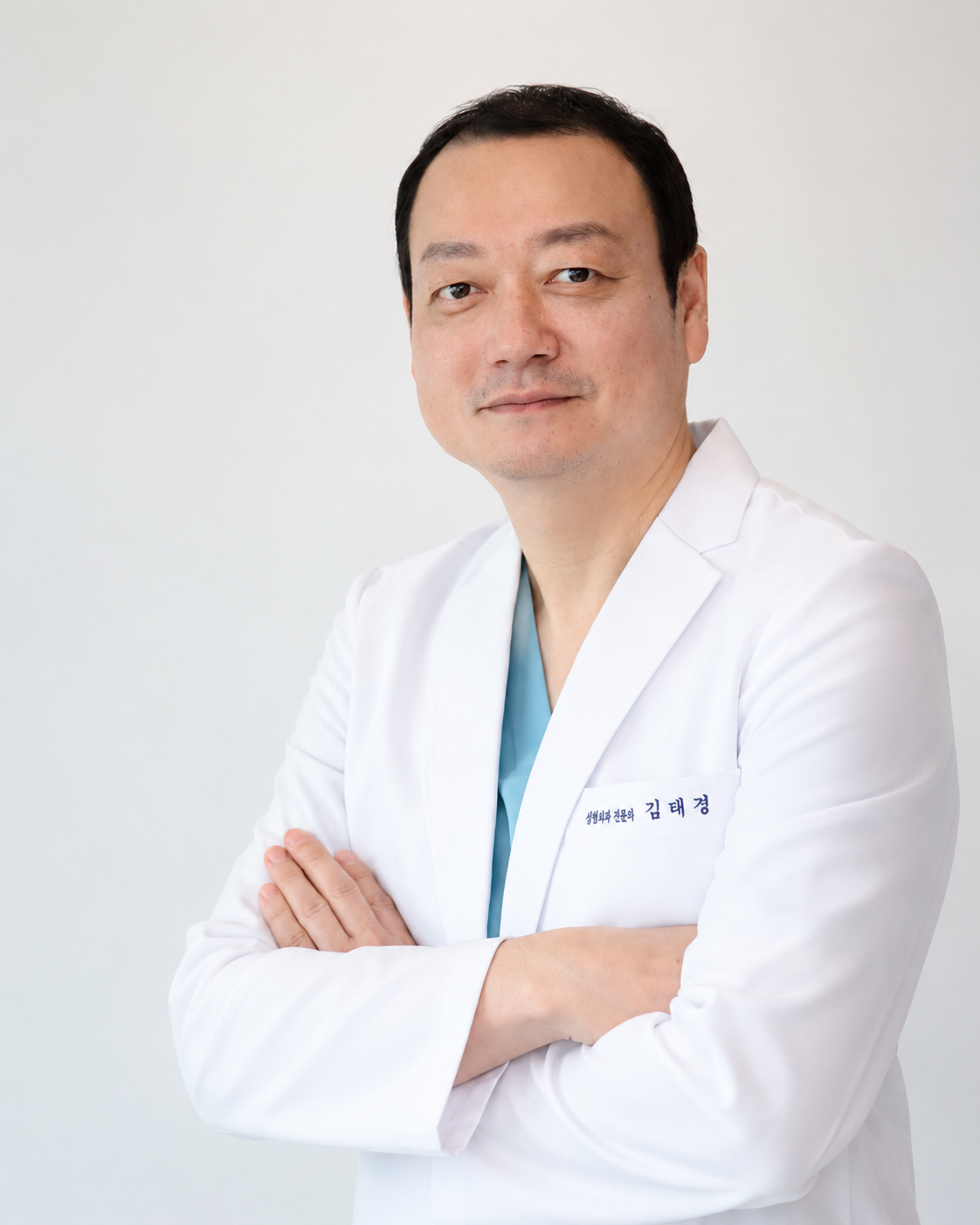
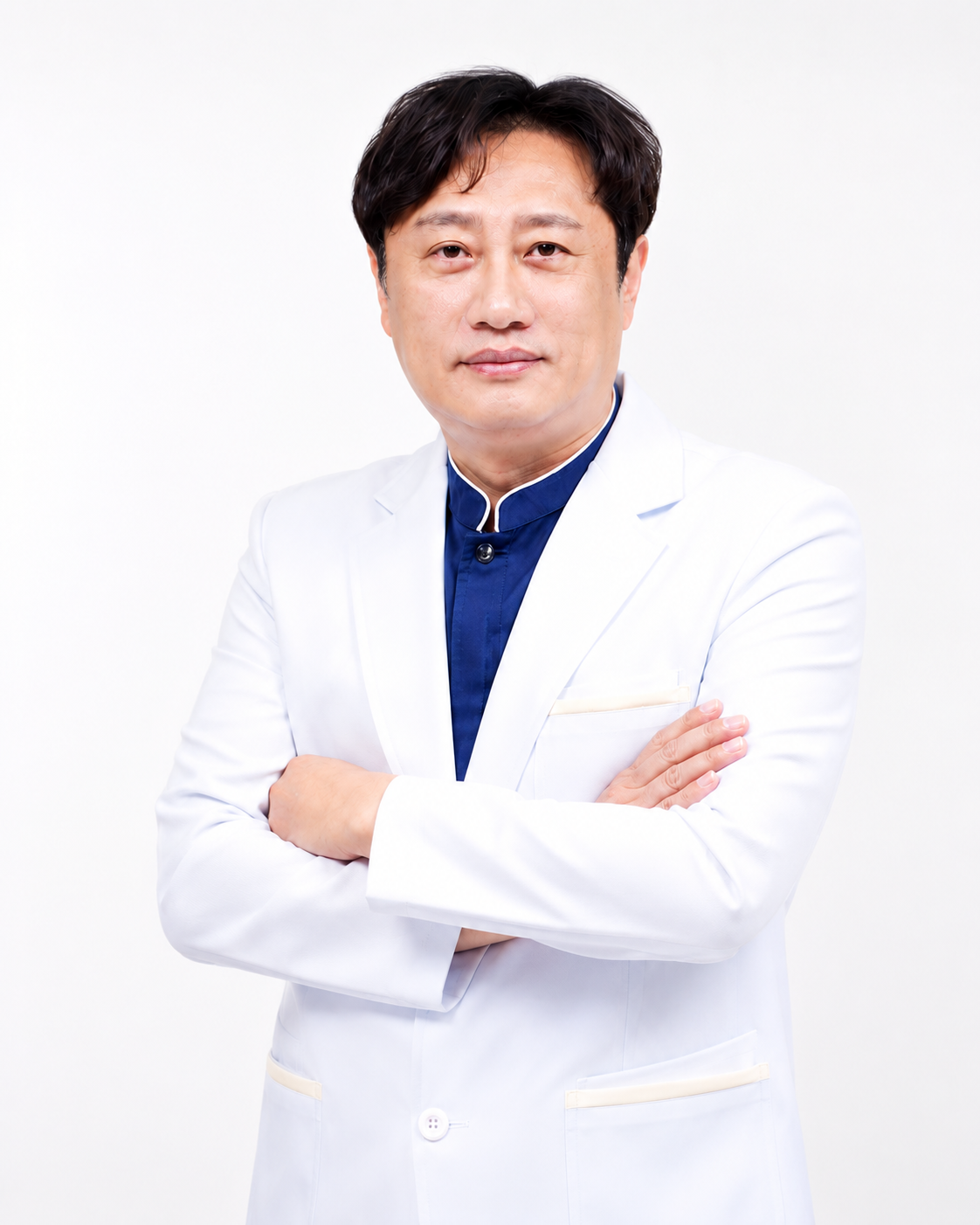
The urologists who perform your vasectomy.
Every guide on this site is written and reviewed by the three board-certified urologists below. The doctor who consults with you is the doctor who operates and answers your follow-up — never a junior doctor or a different surgeon.
Follow-up after flying home — FAQ
Related pages and next reads
Why Choose Urogyn
One urologist from consultation to follow-up — the standard.
Flying After Urology Surgery
The page before this one — nights by procedure and the seat measures.
Records & Prescriptions
The written summary you carry to a local doctor.
Vasectomy Recovery Day by Day
What is normal, what is not, and the semen test done at home.
Penile Implant Recovery
The follow-up that includes an activation visit — planned before you fly.
Privacy at the Clinic
Who sees the photographs you send after landing.
Urogyn Men's Clinic, Seomyeon
7F-702, Ion City Building, 74 Seomyeon-ro, Busanjin-gu, Busan 47299 — one minute on foot from Seomyeon Station Exit 7 (Lines 1 & 2).
Mon–Fri 10:00–18:00 · Sat 10:00–14:00 · Sun closed
부산광역시 부산진구 서면로 74 아이온시티빌딩 7층 702호 — show this to your taxi driver.
Ask about day nine before you book day one.
Your dates, the procedure and the country you will return to are enough for a written description of how follow-up would run for your case — who answers, what must happen before you fly, and how a local doctor is briefed — in English, from the urologist who would treat you at our Busan Seomyeon clinic.