No-scalpel vs conventional vasectomy: what changes for you.
Both end in the same place — two sealed vas deferens and permanent contraception — but they get there differently, and the differences are the ones patients feel: how the skin is opened, how much it bleeds, how it heals, and how the vas is sealed. Our Busan Seomyeon clinic performs the no-scalpel technique with a five-layer seal at ₩800,000; this guide explains what each of those words means against the conventional operation.
Vasectomy in Busan
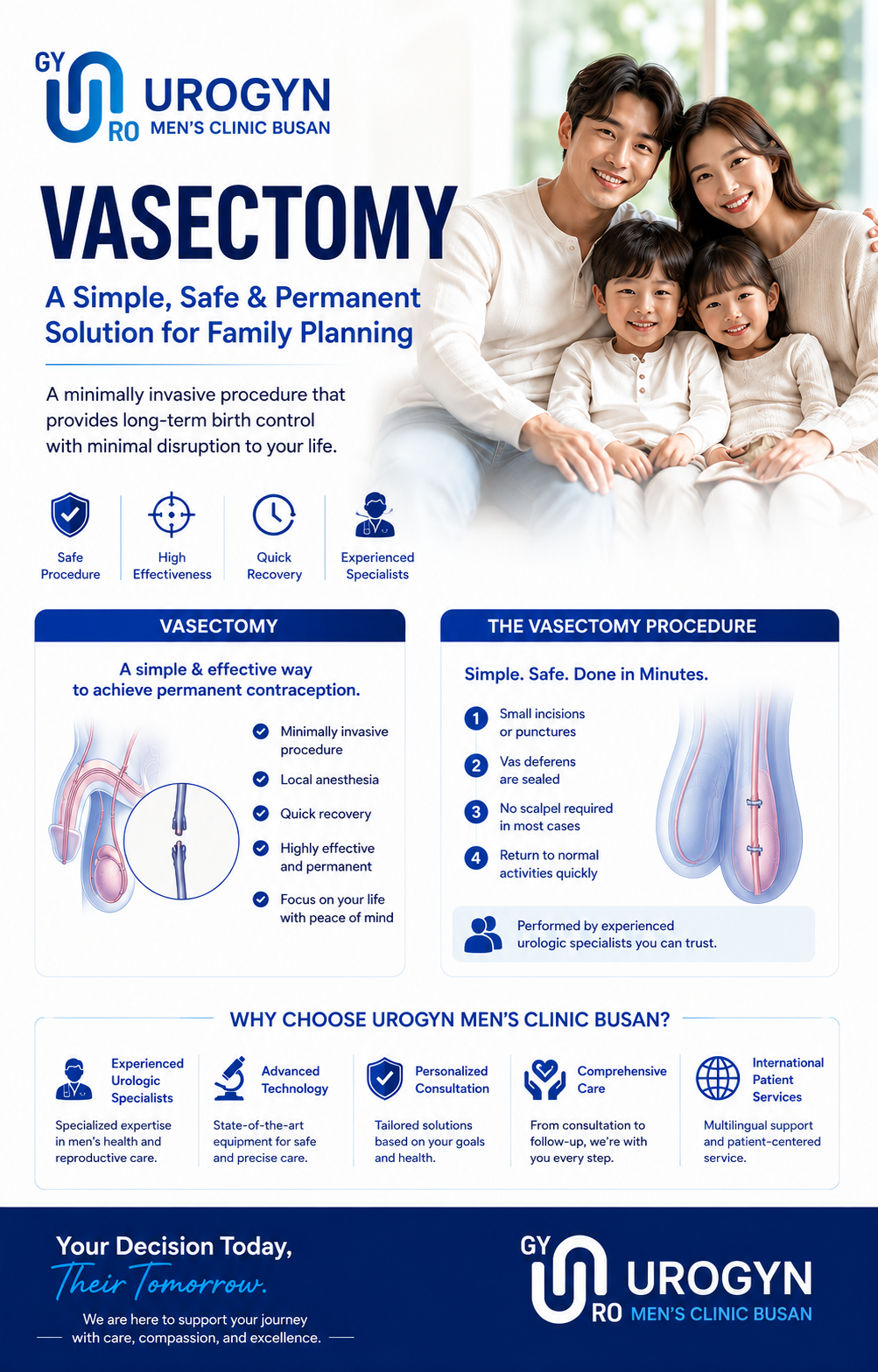
The clinical page behind this comparison — the no-scalpel approach, the four pain-minimising techniques, the five-layer seal and the recovery, at ₩800,000.
Read the vasectomy page →- Is “no-scalpel” a marketing term, or a different operation?
- Does no-scalpel mean no pain?
- Which technique has the lower failure rate?
- What is the five-layer technique, and is it standard?
- Can I fly home the next day?
Each is answered below, the way our urologists answer it in the consultation room.
What separates a no-scalpel from a conventional vasectomy?
A conventional vasectomy reaches each vas deferens through one or two scalpel incisions in the scrotal skin, closed afterwards with stitches. A no-scalpel vasectomy reaches both through a single tiny puncture made with a pointed instrument, spread open rather than cut, and left to close without stitches. What happens to the vas once it is reached — cut, tied, sealed — can be identical in either technique or can differ, which is why the sealing method deserves its own section. At Urogyn Men's Clinic in Busan Seomyeon the no-scalpel approach is combined with a five-layer seal, at ₩800,000.
“No-scalpel” is not marketing; it is a specific technique developed in China in the 1970s and now the recommended approach in most urological guidelines because of what it does to bleeding and healing — and the technique every Urogyn urologist uses. The vasectomy page covers the procedure in full; this page is the comparison.
One or two cuts in the scrotal skin; vas isolated through each; skin closed with stitches.
Skin punctured and spread with a sharp haemostat; both vas reached through the same opening; no stitches needed.
How is the skin opened, and why does it matter?
The scrotal skin is thin, mobile and richly supplied with small blood vessels. A scalpel cuts across those vessels; a pointed instrument spread between them pushes them aside instead. That single difference is the source of most of what follows: less bleeding, less bruising, a smaller wound, and no stitches. The opening in a no-scalpel vasectomy is typically a few millimetres and closes on its own within a day or two; a conventional incision is longer and needs sutures that either dissolve or are removed. For an international patient, “no stitches to remove” is a practical advantage on its own.
Anaesthesia: what do you feel with each?
Both are performed under local anaesthesia, and neither is painful in the sense that surgery under general anaesthesia is painful afterwards. The differences are in the delivery and the pressure. A conventional technique usually infiltrates the anaesthetic with a standard needle and works through a larger field. The no-scalpel technique at our Busan clinic uses four deliberate steps — an ultra-fine needle, a three-stage block from skin to deeper tissue to the vas itself, single-puncture entry, and tissue-sparing handling — so that what most men report is a brief sting from the first injection and then pressure rather than pain. Some clinics use a needle-free jet injector for the anaesthetic; the principle is the same. Our English-speaking urologist explains each step as it happens.
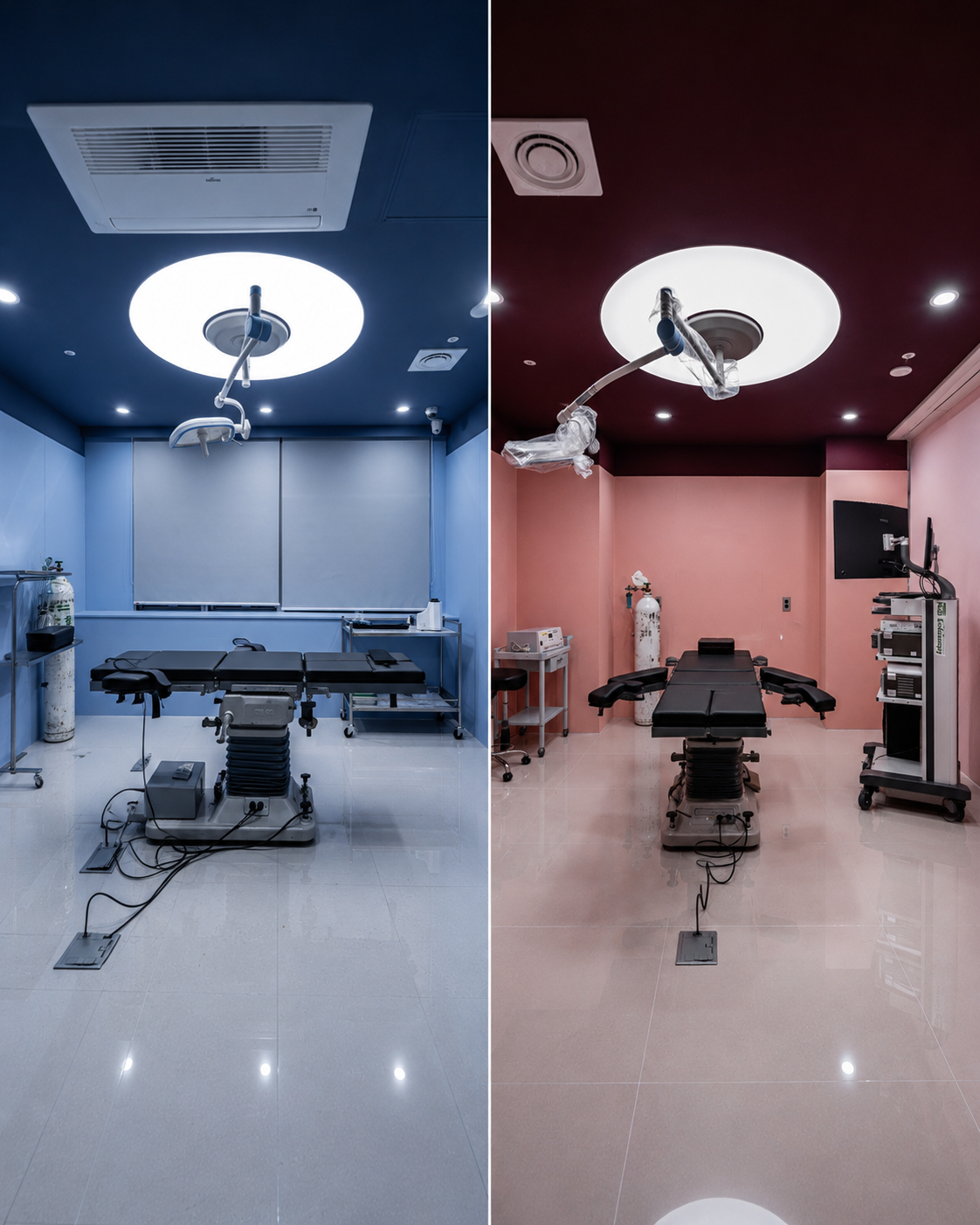
No-scalpel vasectomy at Urogyn, Seomyeon
Performed here under local anaesthesia with the four pain-minimising steps and the five-layer seal — 15 to 20 minutes, same-day discharge.
How the procedure works →Bleeding, bruising and haematoma — why no-scalpel is the Busan standard
This is where the evidence is clearest. Because the no-scalpel puncture spreads tissue rather than cutting it, the rate of bleeding during the procedure and of haematoma — a collection of blood in the scrotum afterwards — is substantially lower than with conventional incision in comparative studies. Haematoma is the complication that turns an easy recovery into a difficult fortnight, so reducing it is the single strongest argument for the no-scalpel approach. Infection rates are also lower, because the wound is smaller and closes faster — see the clinic standard on sterile single-use materials. None of this means a conventional vasectomy is unsafe — it is a well-established operation — but for a man choosing between the two on the same table, the bleeding data decide it.
How is the vas sealed? The part that matters most
The skin technique gets the attention, but the sealing technique is what determines whether the vasectomy works. Either approach can end with the vas simply cut and tied with a single ligature — the historical method, and the one with the highest rate of recanalization, in which the two ends find each other and fertility returns. Modern practice adds barriers, and so does ours. At Urogyn the no-scalpel approach is paired with a five-layer occlusion: each vas is isolated and ligated in two to three layers (barriers one to three), the cut ends are thermally sealed (barrier four), and the fascial sheath is closed between the ends so they heal in separate compartments (barrier five). The vasectomy page illustrates each layer.
- 1 Isolation and multiple ligation. Each vas exposed through the single puncture and tied in two to three layers. Barriers one to three.
- 2 Thermal sealing. The lumen of each cut end is sealed with cautery so no channel remains. Barrier four.
- 3 Fascial interposition. The sheath around the vas is closed between the two ends so they cannot meet during healing. Barrier five — the step most strongly associated with reduced recanalization in the literature.
Healing and recovery compared
Recovery after a no-scalpel vasectomy is shorter and simpler: no stitches, a puncture that closes in a day or two, less swelling, and a return to desk work within a day or two and to heavier activity within about a week. Conventional recovery adds stitch care, a longer wound, and typically a few more days before the scrotum feels normal. Both require the same aftercare: supportive underwear, no heavy lifting or cycling for about a week, and no sexual activity until tenderness has settled. The vasectomy recovery guide sets out the days in detail, and the cost guide covers how many nights to plan.
Failure and recanalization: what our Busan urologists check
Vasectomy of any technique fails in a small proportion of men, almost always because the vas recanalizes — the cut ends reconnect through scar tissue in the weeks after surgery. The skin approach does not change this; the sealing method does. Single-ligature vasectomies have the highest rates; adding cautery and fascial interposition, as the five-layer technique does, brings early failure down to a fraction of a percent in published series. This is why the seal, not the scalpel, is the question to ask any clinic. And it is why the semen analysis at about three months — ₩150,000 at our Busan clinic, or any lab at home — is not optional with either technique: a vasectomy is complete when the sample confirms it, not when the procedure ends.
The trip to Busan: what changes with no-scalpel?
No-scalpel, five-layer, 15–20 minutes under local anaesthesia. Same for every patient.
No stitches, small puncture. One night after the procedure; two for long-haul. See the visit guide.
Semen analysis at about three months — at Urogyn or any lab at home; send us the report.
The urologist who operated answers your questions. Nothing to remove, no return visit for routine healing.
The practical gain of no-scalpel for a man flying in is the absence of stitches and the lower haematoma risk: there is no suture-removal visit to plan around and a lower chance of the complication most likely to delay a flight. The vasectomy cost guide covers the budget in full.
How it runs at our Busan Seomyeon clinic — and your next step
Message us with your travel dates, your age, and whether you take blood thinners or have had scrotal surgery before. You will receive a reply in English confirming the no-scalpel procedure, the ₩800,000 published fee, a proposed day and a short pre-visit note. On the day, the same urologist consults with you, performs the procedure with the five-layer seal, and answers your follow-up messages afterwards. For the clinical detail, start with the vasectomy page; for every figure, the full price list.
- Does no-scalpel mean the vas is not cut? No — the vas is still divided and sealed; “no-scalpel” describes how the skin is opened, not what is done to the vas. A vasectomy that leaves the vas intact would not be a vasectomy.
- Is the five-layer technique standard everywhere? Cautery and fascial interposition are recommended in most guidelines; multiple ligation layers on top of them are Urogyn's addition. Ask any clinic which barriers its technique uses — the answer tells you more about failure risk than the skin approach does.
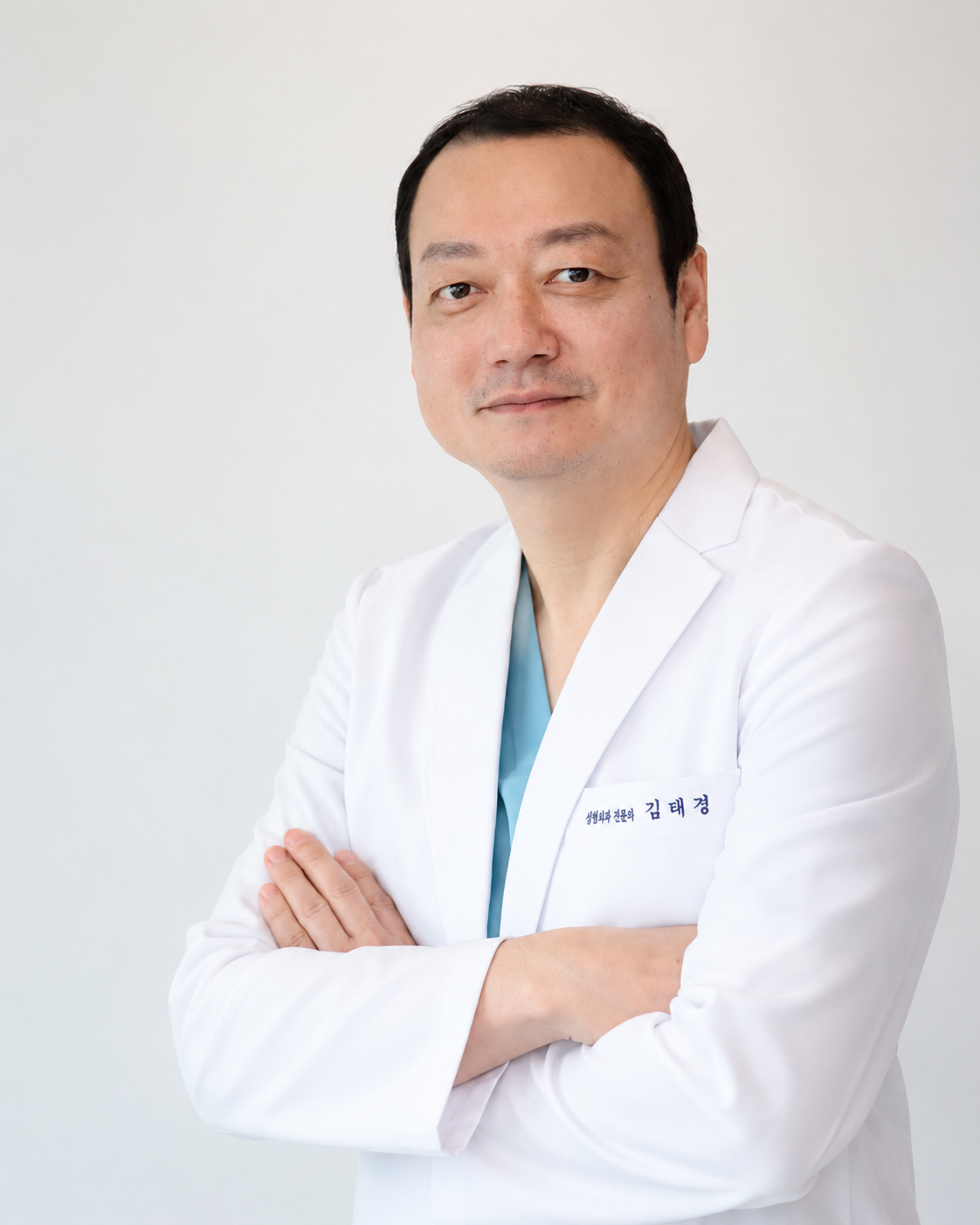
The urologists who perform your vasectomy.
Every guide on this site is written and reviewed by the three board-certified urologists below. The doctor who consults with you is the doctor who operates and answers your follow-up — never a junior doctor or a different surgeon.


No-scalpel vs conventional vasectomy — FAQ
Related pages and next reads
Vasectomy in Busan
The five-layer technique, pain-minimising steps and recovery in full.
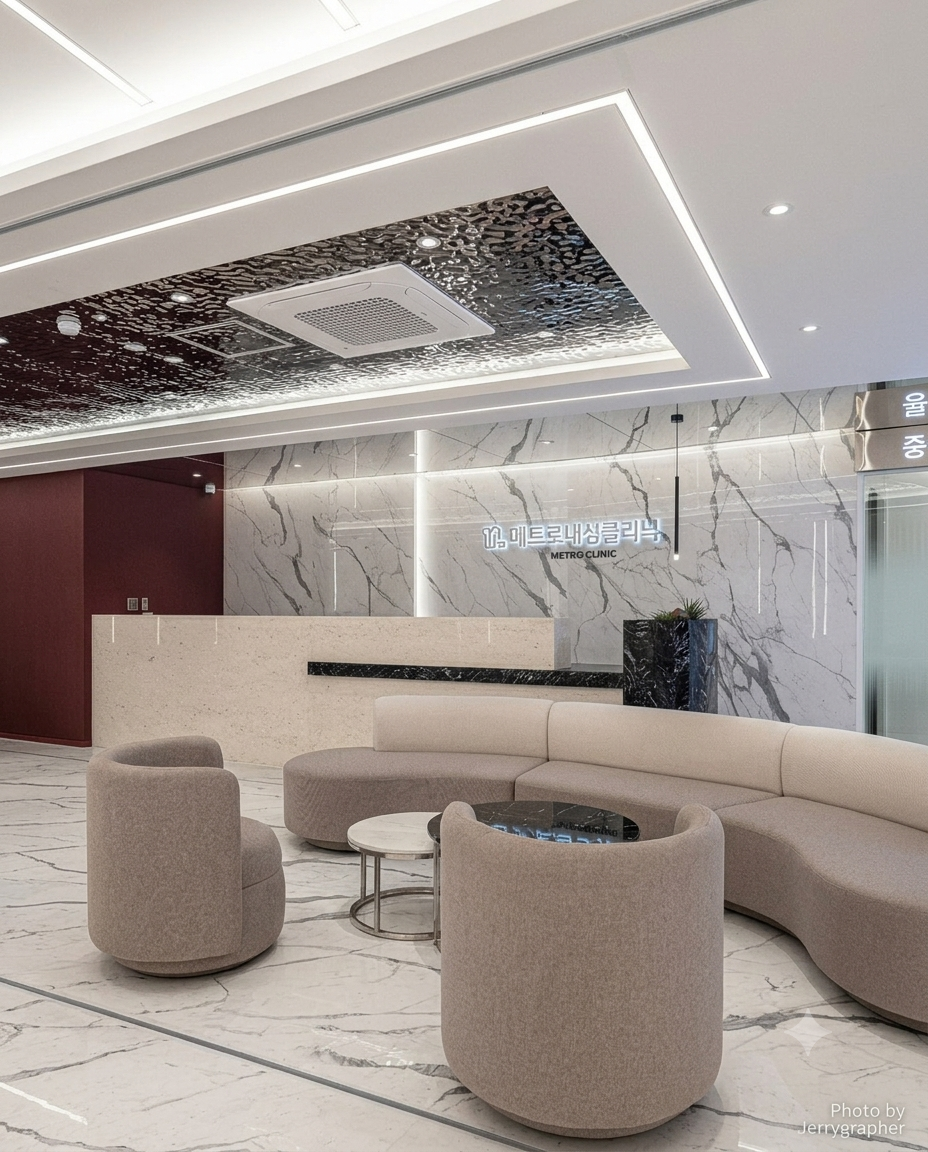
Vasectomy Cost Guide
The ₩800,000 published fee, the semen test and the trip budget.

Men's Health Clinic in Busan
STD panels and other tests often added to the same visit.

Male Fertility Screening
Semen analysis — where the confirmation test lives.
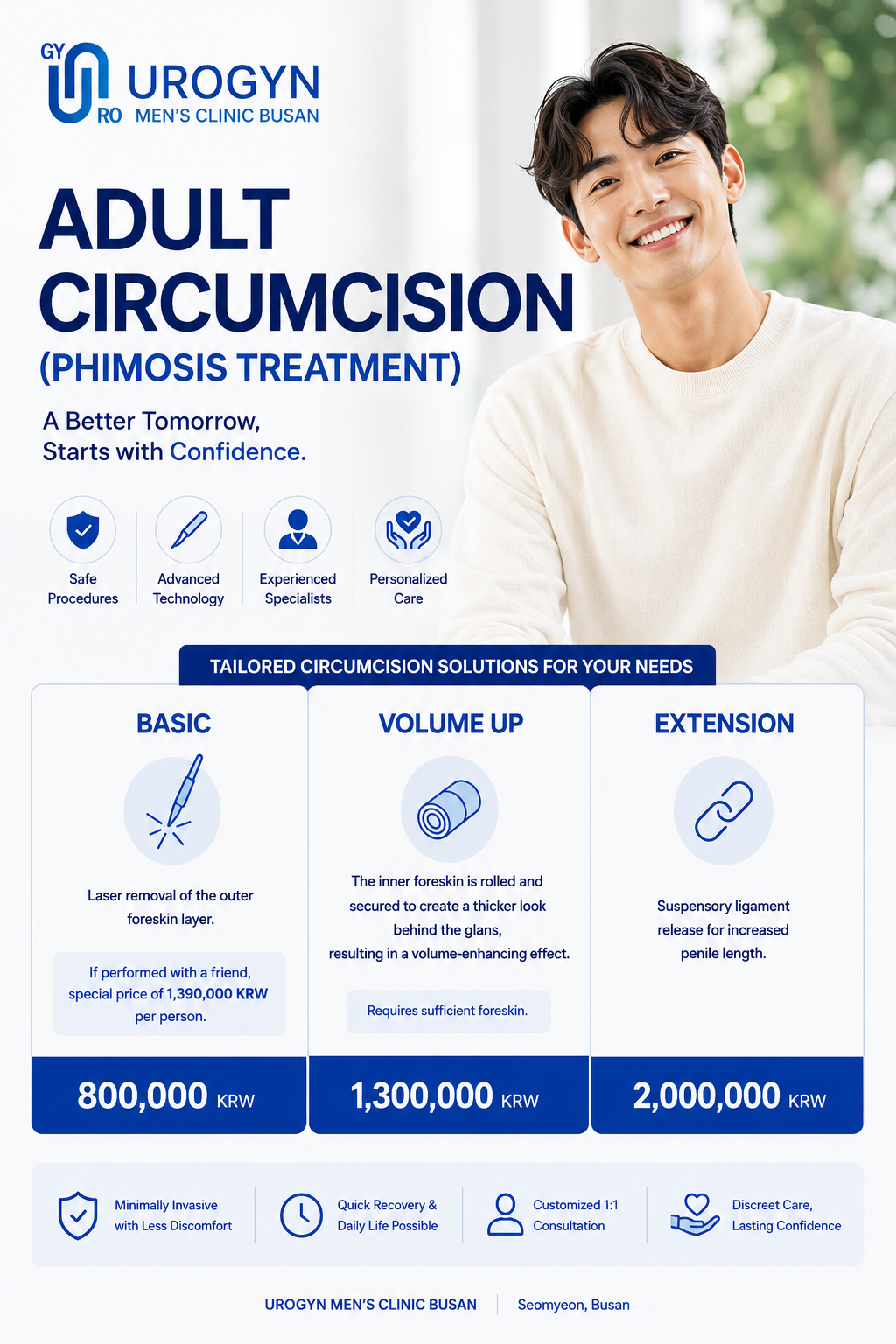
Adult Circumcision in Busan
Sometimes planned on the same trip.
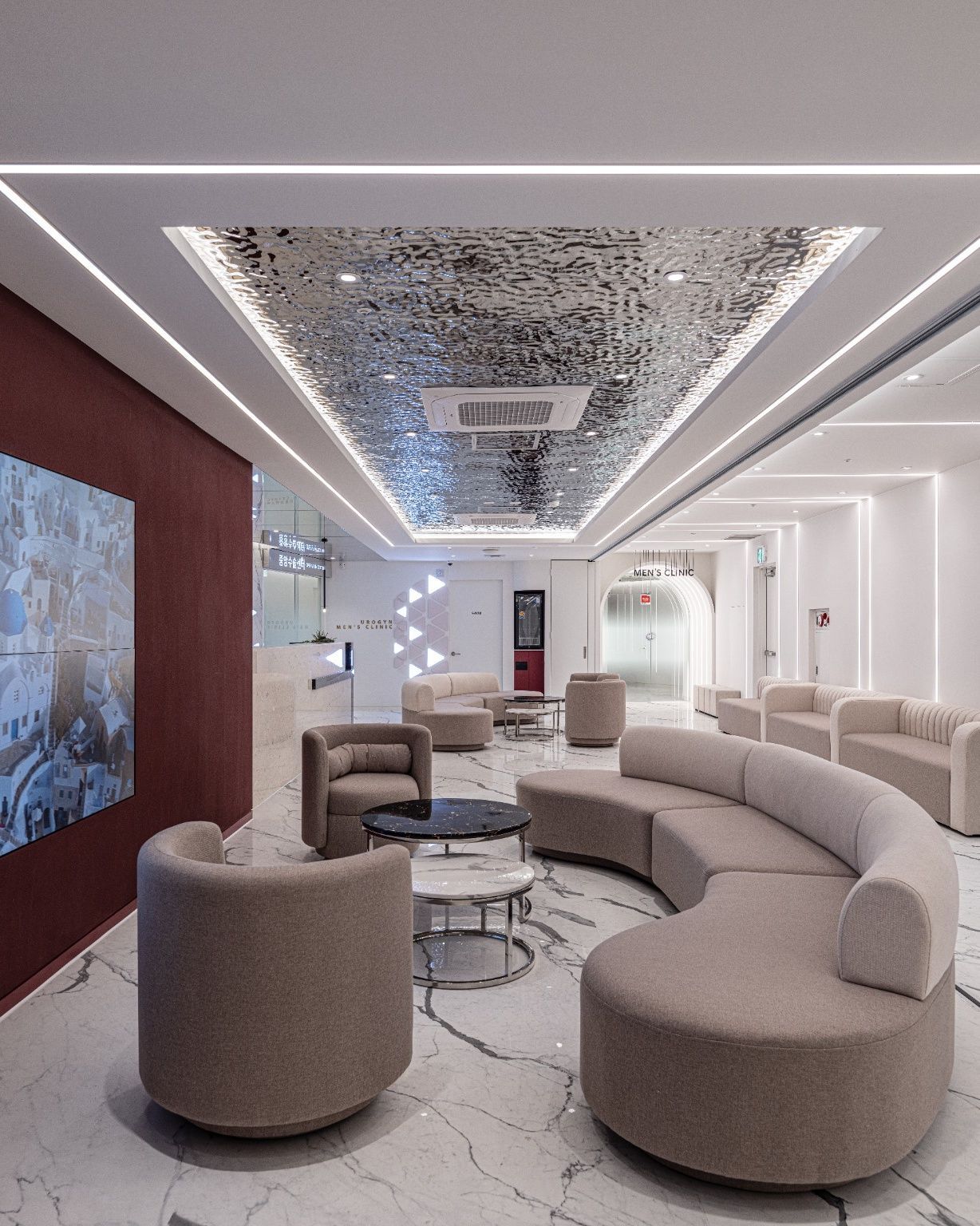
International Patients Guide
Routes, hotels near Seomyeon and how a one-visit trip is planned.
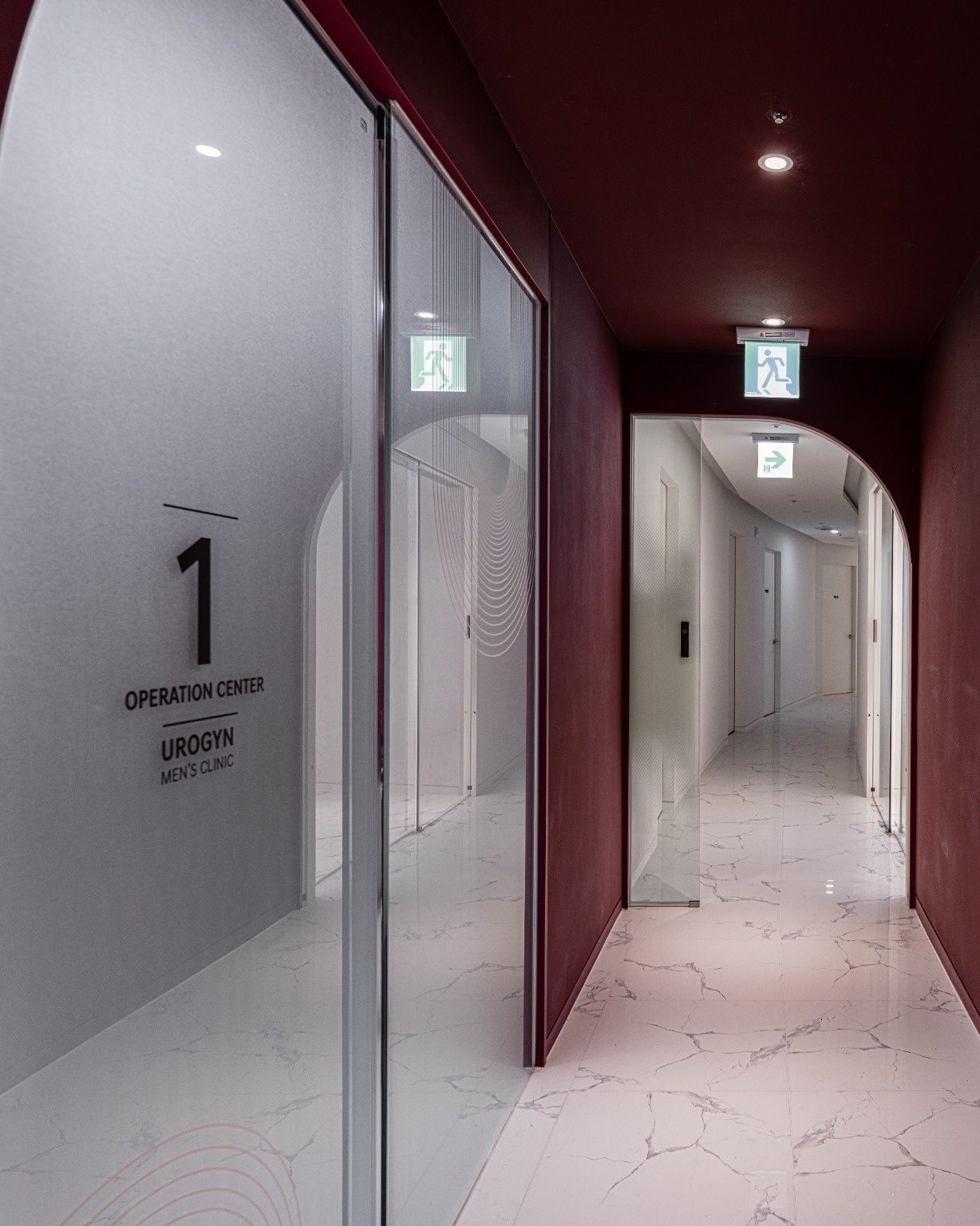
Urogyn Men's Clinic, Seomyeon
7F-702, Ion City Building, 74 Seomyeon-ro, Busanjin-gu, Busan 47299 — one minute on foot from Seomyeon Station Exit 7 (Lines 1 & 2).
Mon–Fri 10:00–18:00 · Sat 10:00–14:00 · Sun closed
부산광역시 부산진구 서면로 74 아이온시티빌딩 7층 702호 — show this to your taxi driver.
Ask about the seal, not the scalpel. Then send your dates.
One message with your travel dates and a few screening answers is enough for a same-visit no-scalpel vasectomy plan at our Busan Seomyeon clinic — in English, from the urologist who will operate and follow up.