
Discharge, burning or a sore: STI symptoms and when to test.
Some infections announce themselves within days; most of the serious ones say nothing for weeks or ever. This guide decodes the symptoms men actually notice, names the infections that produce none, and — the part that matters most — sets out the window periods that decide when a 13-panel test at our Busan Seomyeon clinic gives an answer you can rely on, and when it is simply too early.

STD Testing in Busan
The clinical page behind this guide — the 13-panel, single tests, window periods and how results reach you, with published prices.
Read the STD testing page →- I have discharge and burning — what is it likely to be?
- I have no symptoms — do I still need to test?
- How soon after exposure can I test and trust the result?
- Which panel do I need?
- Will the result be shared with anyone?
Each is answered below, the way our urologists answer it in the consultation room.
What do STD symptoms in men mean?
Discharge from the urethra with burning on urination, appearing within days of exposure, points to gonorrhoea or chlamydia. A sore without pain that heals on its own points to syphilis; a cluster of painful blisters points to herpes; soft flesh-coloured bumps point to genital warts. Testicular pain, a rash on the palms or a flu-like illness weeks after exposure are the later signs of infections that were silent at first. At Urogyn Men's Clinic in Busan Seomyeon each is assessed on the day, and the STD 13-panel at ₩250,000 tests for all of them at once.
Gonorrhoea, chlamydia, or non-gonococcal urethritis from mycoplasma or ureaplasma. Urine or swab confirms; treated with a prescription the same day.
Primary syphilis — a firm ulcer that heals in weeks without treatment, which is exactly the problem. Blood test confirms; treated with antibiotics.
Herpes — recurring clusters, often with tingling first. Swab confirms during an outbreak; blood test between them. Managed, not cured.
HPV — soft, flesh-coloured, sometimes clustered. Visible diagnosis; treated from ₩300,000; HPV subtyping ₩250,000 if the type matters.
The STD testing page covers the tests and the cost guide the prices; this page decodes what you are looking at, and when looking is too early.
The infections that say nothing — the reason our Busan panel exists
Most chlamydia in men produces no symptoms. HIV produces at most a brief flu-like illness a few weeks in, easily missed. Hepatitis B and C are silent for years. Syphilis's first sore causes no pain and disappears, and its second stage — a rash, often on the palms and soles — is easy to mistake for something else. Mycoplasma and ureaplasma cause mild or no urethral symptoms. Trichomonas is usually silent in men. The consequence is simple and uncomfortable: absence of symptoms after an exposure means almost nothing, and the men who test only when something hurts are the men who miss the infections that matter most. The 13-panel exists for exactly this group — men with an exposure and nothing to show for it.
Window periods: when can a result be trusted?
- 1 Days to two weeks. Gonorrhoea and chlamydia become detectable on urine or swab within days of exposure — usually by one to two weeks. If you have discharge or burning, test now; the result is meaningful.
- 2 Two to four weeks. Early syphilis blood tests begin to turn positive, though not reliably until several weeks. Mycoplasma, ureaplasma and trichomonas are detectable.
- 3 Four to six weeks. Modern HIV antigen-antibody tests are reliable for most infections. Herpes antibody tests begin to be informative. This is the usual single-visit timing for a man testing after a specific exposure with no symptoms.
- 4 Three months. Confirmatory HIV and syphilis testing — the ₩150,000 single tests — closes every window. Can be done at any laboratory at home; send the report and the urologist reads it.
- 5 Hepatitis B and C. Detectable from about four to eight weeks; a repeat at three to six months confirms in a high-risk exposure.
A negative result inside a window period is not a clean result; it is a result taken too early. The urologist at our Busan clinic tells you, for your exposure date, whether to test now, test now and repeat, or wait — and does not charge for a test he would not trust.
STD Test Cost in Busan
13-panel ₩250,000, HIV and syphilis ₩150,000 each, HPV subtype ₩250,000 — which panel fits which exposure, and what each covers.
Read the cost guide →What to do in the first days after an exposure
- Do not take leftover antibiotics. They may partially treat an infection, mask it on testing, and leave a resistant one behind. If you have already taken some, tell the urologist — it changes the timing advice.
- If you have discharge or burning, come now. Bacterial urethritis is detectable and treatable within days, and treating it early prevents complications and transmission.
- If you have no symptoms, message with the exposure date. The reply states when to test for each infection and whether a first test now is worthwhile alongside a later confirmatory one.
- Think about HIV prevention. Post-exposure prophylaxis, where indicated, must be started within 72 hours of a high-risk exposure; this is a hospital or specialist-service matter, and the urologist will say immediately if your exposure warrants it.
- Avoid sex until tested , or use condoms, so that nothing is passed on while the question is open.
Which test, for which exposure, at our Busan clinic?
For an unprotected exposure with a new or casual partner, the 13-panel at ₩250,000 is the default — it covers the bacterial urethritis organisms, HIV, syphilis, herpes, hepatitis and the silent infections in one set of samples. For a known single exposure — a partner diagnosed with one named infection — the urologist may advise the single test first and the panel only if symptoms appear. For confirmation after a window period has passed, the single HIV or syphilis test at ₩150,000. For visible warts or a partner with an abnormal smear, add HPV subtyping at ₩250,000. For urinary symptoms that point to the bladder rather than the urethra, the urine test at ₩200,000 first. The cost guide sets these side by side; the urologist confirms the right one for your exposure in the reply to your message.
If something is found
Gonorrhoea, chlamydia, mycoplasma, ureaplasma and trichomonas are treated with a prescription on the day, filled at a pharmacy near Seomyeon Station, with a test-of-cure where the urologist advises it. Syphilis is treated with antibiotics according to stage. Herpes is managed with antiviral medication for outbreaks or suppression. Genital warts are treated in clinic from ₩300,000 — see the circumcision page for foreskin-related assessment — and Gardasil 9 vaccination at ₩300,000 per dose is offered to men who want protection against further HPV types. HIV and hepatitis are referred with a written summary in English to the appropriate specialist service, at home or in Korea, and the urologist stays in the loop by message. The records guide explains how prescriptions and summaries work.
Partners and re-testing
A positive result means a partner needs testing and, for bacterial infections, treating — otherwise re-infection follows. Urogyn is a men's clinic; for a female partner the clinic provides a written summary of your result in English so she can be tested with matched scope at a clinic of her choice, and for a male partner, a visit here. Re-testing is advised after treatment for some infections, at three months for HIV and syphilis after an exposure, and routinely — annually or with each new partner — for men who are sexually active with more than one partner. None of this is moralising; it is the mechanism by which infections stop circulating.
What a negative result means — and does not
A negative 13-panel taken after the window periods have passed means you did not acquire any of those thirteen infections from that exposure. It does not cover HPV types without visible warts, it does not cover exposures after the test, and it does not cover an infection tested inside its window. A negative result taken too early is a reason to repeat, not a reason to relax. The urologist at our Busan clinic says which of these applies to your result in the message that delivers it, so that “negative” means what you think it means. The privacy guide covers how that message reaches you and no one else.
How it runs at our Busan Seomyeon clinic — and your next step
Message us with your travel dates, the approximate date and nature of the exposure, any symptoms and when they started, and any antibiotics taken since. You will receive a reply in English with the test the urologist recommends for that timing, its published price, and — if the window period has not yet passed — an honest note saying so and when to test instead. On the day, one urologist sees you, takes the samples and treats what is visible; the same urologist reads the results and messages them to you directly. For the test detail, start with the STD testing page; for every figure, the full price list.
- I had a negative test last year and a new partner since. Do I need to test again? Yes, if the new exposure was unprotected — a previous negative covers only exposures before it. The panel is the same ₩250,000, and the window periods count from the new exposure.
- Is an STD test reported to immigration or my employer? No. Results are given to you. Korean public-health reporting applies to a small number of notifiable infections and is anonymised; it does not involve employers, insurers or immigration. The privacy guide explains.
The urologists who perform your vasectomy.
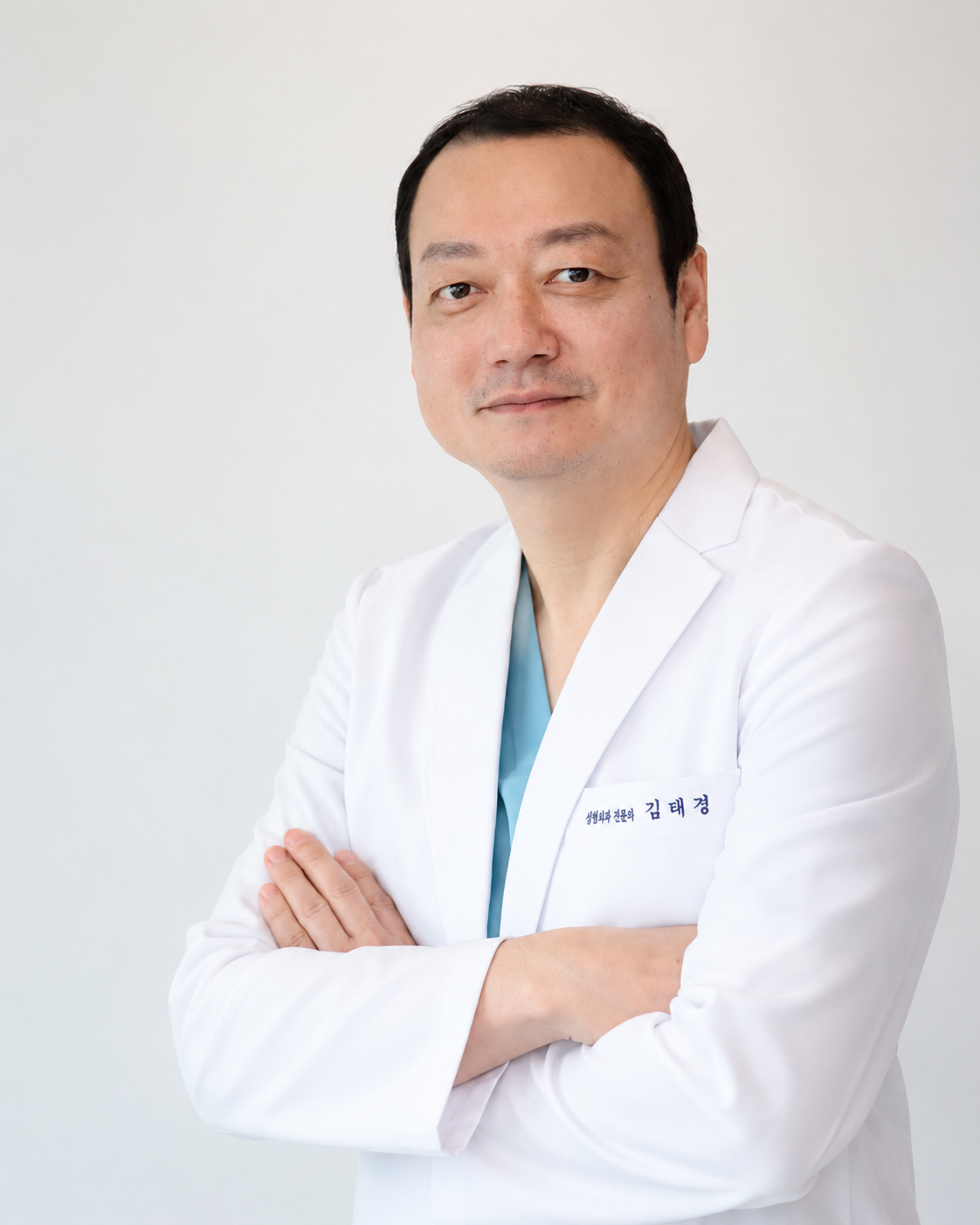
Every guide on this site is written and reviewed by the three board-certified urologists below. The doctor who consults with you is the doctor who operates and answers your follow-up — never a junior doctor or a different surgeon.


STD symptoms & when to test — FAQ
Related pages and next reads
STD Testing in Busan
The clinical page — panel scope, window periods and results delivery.
STD Test Cost Guide
Every panel and single test priced, and what each covers.
Privacy at the Clinic
How a result reaches you and no one else.
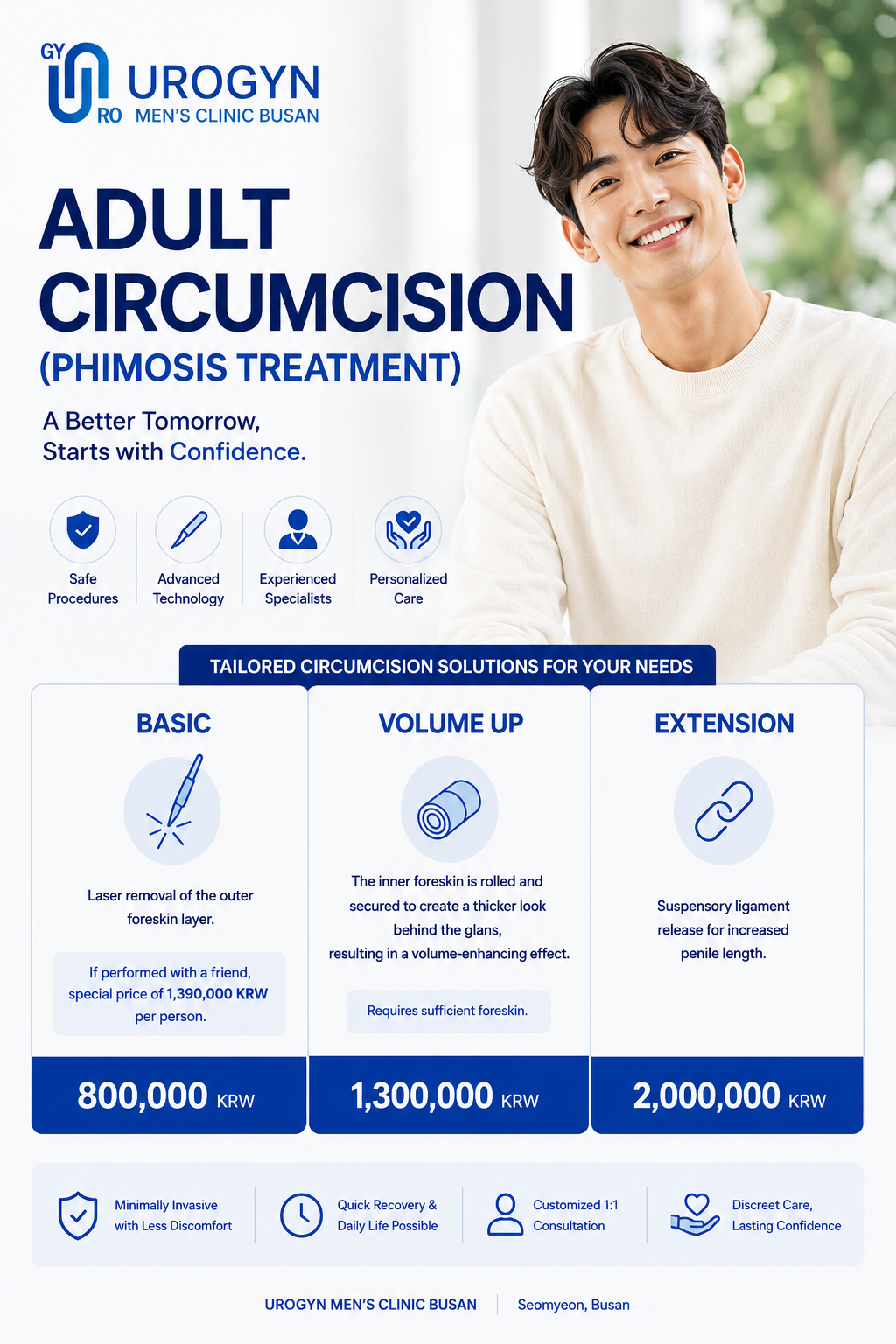
Adult Circumcision in Busan
Genital warts and foreskin infections are assessed on the same visit.

Chronic Pelvic Pain in Men
When burning and urgency persist after a negative panel.
Men's Health Clinic in Busan
STD testing sits within the wider men's health page.
Urogyn Men's Clinic, Seomyeon
7F-702, Ion City Building, 74 Seomyeon-ro, Busanjin-gu, Busan 47299 — one minute on foot from Seomyeon Station Exit 7 (Lines 1 & 2).
Mon–Fri 10:00–18:00 · Sat 10:00–14:00 · Sun closed
부산광역시 부산진구 서면로 74 아이온시티빌딩 7층 702호 — show this to your taxi driver.
Send the exposure date. Get the timing, not just the test.
Your dates, the approximate exposure date, any symptoms and any antibiotics taken are enough for a written recommendation — which test, when it can be trusted, and its published price — in English, from the urologist who would see you at our Busan Seomyeon clinic.