
Who actually performs your procedure, and why it matters.
In many clinics the doctor who consults, the doctor who operates and the person who answers afterwards are three different people — and the patient discovers this on the table. This guide explains the roles that exist in Korean and international men's clinics, the questions that reveal who will hold the instruments, and why our Busan Seomyeon clinic is built so that the answer is one board-certified urologist from the first message to the last.
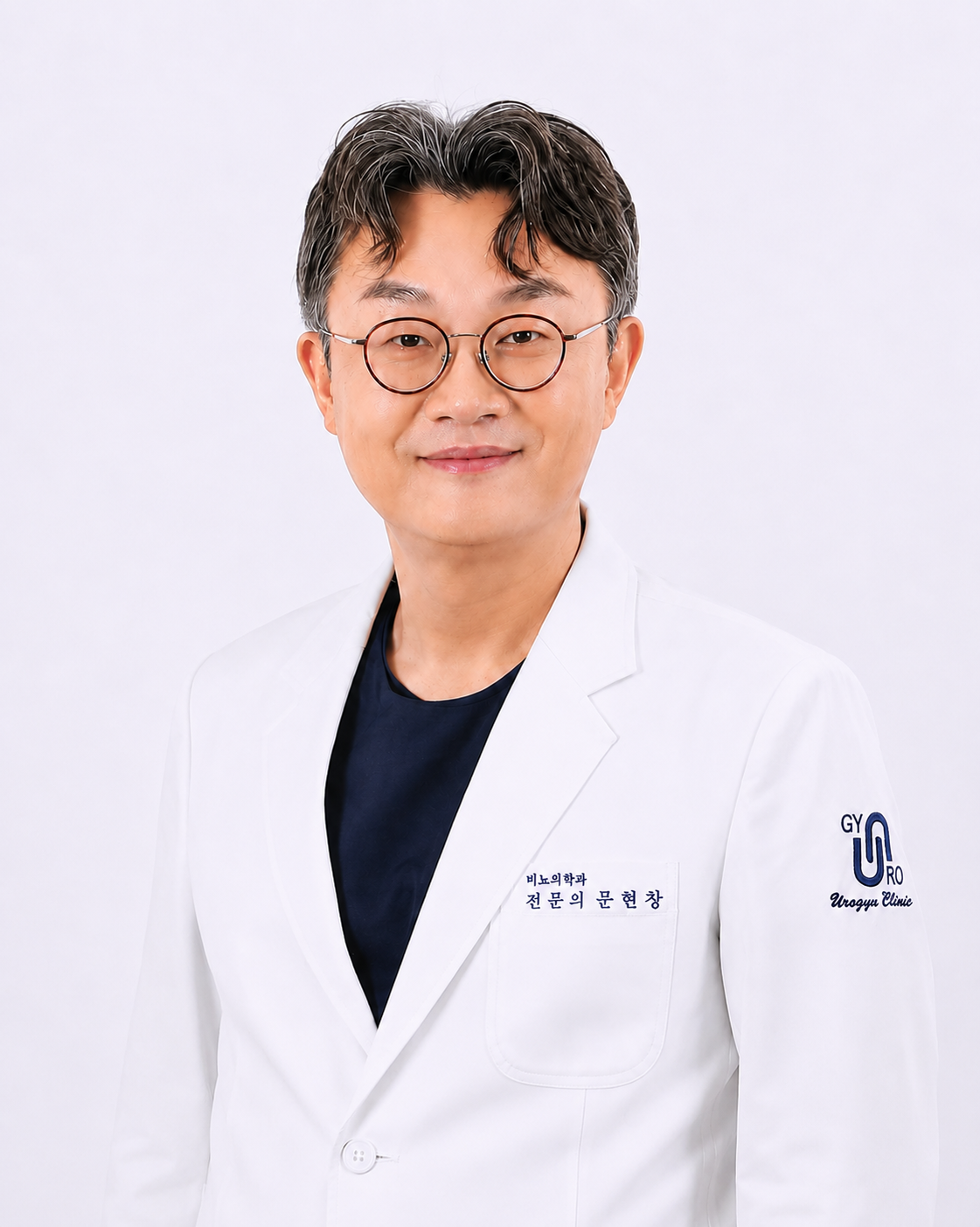
About Urogyn and the urologists
Dr. Moon Hyeon-chang, Dr. Kim Tae-kyung and Dr. Kim Jin-seong — the three board-certified urologists, their training and their focus, on one page.
Meet the team →- The roles that exist — and who holds the instruments
- Specialty: what board-certified urologist means
- The three-doctor problem
- How Urogyn is built
- The three urologists
- Five questions that reveal the answer at any clinic
- Why it matters to the result
- What one-doctor care does not mean
- How it runs here — and your next step
- Is the doctor I speak to at consultation the one who operates?
- What is the difference between a urologist and a doctor who does men's procedures?
- Who assists, and what do they do?
- How do I check a Korean doctor's credentials?
- Does it really change the outcome?
Each is answered below, the way our urologists answer it when a patient asks in the consultation room.
Who performs a men's urology procedure — the roles that exist
In a men's clinic, the person who performs your procedure may be a board-certified urologist, a doctor of another specialty, a general practitioner who has taken a course, or — for injections in some jurisdictions — a non-physician. The person who consulted with you may be any of those, or a coordinator, or a salesperson. At Urogyn Men's Clinic in Busan Seomyeon the answer to every part of that question is the same: a board-certified urologist consults with you, performs the procedure, and answers your follow-up — and it is the same urologist throughout.
That is stated in the last question of every FAQ on this site because it is the question patients most often forget to ask. The why choose us page sets out the standard; this page explains the alternatives it was built against and how to tell them apart anywhere.
Trained in urology after medical school, examined and certified by the national board. Performs and manages the full range of men's urological surgery.
Legitimate surgeons, sometimes excellent, whose training is in other anatomy. Common in enlargement and cosmetic men's clinics.
A GP who has taken a short course in a procedure. Common for filler injections and some minor procedures.
Nurses or aesthetic injectors performing filler in some countries. Assist in surgery everywhere; perform it in some places.
Specialty: what “board-certified urologist” means
A urologist is a doctor who, after medical school, completed a multi-year residency in urology — the surgical specialty of the male and female urinary tract and the male reproductive organs — and passed the national board examination in it. In Korea that is a formal specialist qualification, recorded and verifiable. It means the doctor's daily work is the penis, the testes, the prostate and the urethra: their anatomy, their blood and nerve supply, their diseases and their complications. Enlargement, implants, Peyronie's correction, vasectomy, circumcision and BPH procedures are urological operations on urological anatomy; a urologist performing them is operating in the field he trained in. The team page lists the qualifications of the three urologists at our Busan clinic; the country comparison guide explains why the question of specialty matters more than the question of country.
The three-doctor problem
The commonest structure in commercial men's clinics — in Korea and abroad — separates the patient's journey into three hands. A consultant or coordinator, sometimes a doctor and sometimes not, meets you, explains options and quotes a price; their job is the conversation and the sale. A surgeon, whom you may meet for the first time on the day, performs the procedure; their job is the operation. A nurse, coordinator or call centre handles follow-up; their job is triage. Each may be competent, and the structure is efficient for the clinic. What it costs the patient is continuity: the person who understood what you wanted is not the person holding the instruments, and the person holding the instruments is not the one who sees the photograph on day nine.
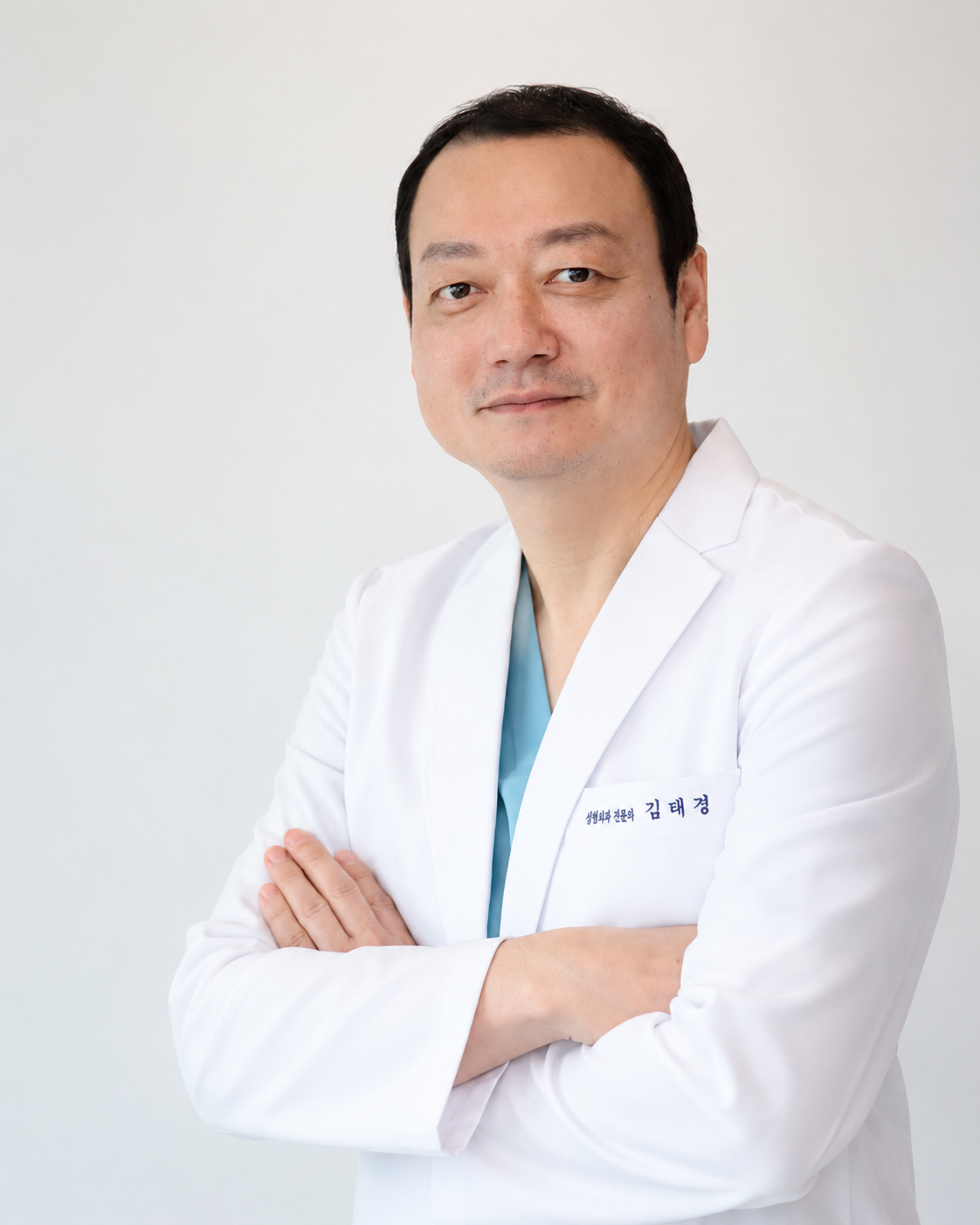
Dr. Kim Tae-kyung — BPH focus
Director of the Busan branch, MD and MS from Pusan National University, adjunct professor at Ulsan University Hospital. Consults, operates and follows up on his own patients.
Read about English care here →How Urogyn in Busan is built
- 1 The message. Read at the clinic desk and passed to the urologist, who decides the plan. The reply carries his view, not a coordinator's.
- 2 The consultation. With the urologist who replied — Dr. Moon Hyeon-chang, Dr. Kim Tae-kyung or Dr. Kim Jin-seong — in a closed room, in English. No triage step, no junior doctor first.
- 3 The procedure. Performed by the same urologist, in the clinic's own procedure room. Nursing staff assist; they do not operate.
- 4 The follow-up. Answered by the same urologist, in the same message thread, for as long as the procedure needs — the follow-up guide explains.
Which of the three urologists you see depends on the concern and the day — BPH with Dr. Kim Tae-kyung, for instance — and is the same one throughout. The clinic has no coordinators, no international desk, and no surgeon you meet for the first time on the table.
The three urologists at our Busan Seomyeon clinic
Dr. Moon Hyeon-chang, director: board-certified urologist with more than fifteen years in practice, member of the American Urological Association, the European Association of Urology, the World Association for Sexual Health and the Korean Society for Sexual Medicine and Andrology, and the urologist who has treated patients from more than forty countries in English. Dr. Kim Tae-kyung, director of the Busan branch: board-certified urologist, MD and MS from Pusan National University, adjunct professor at Ulsan University Hospital, with a clinical focus on BPH and the UroLift and Rezum procedures. Dr. Kim Jin-seong, director of the Busan branch: board-certified urologist trained at Gyeongsang National University, member of the Korean Prostate Society, adjunct clinical professor at Gyeongsang National University Hospital. The team page carries their profiles; no other clinician performs procedures at Urogyn.
Five questions that reveal the answer at any clinic
- “What is the name and specialty of the doctor who will perform my procedure?” A confident clinic answers immediately, in writing. Hesitation, or a name that differs from the person you consulted, is information.
- “Will I meet that doctor before the day of the procedure?” If the answer is no, the consultation you had was a sale, not an assessment.
- “How many of exactly this procedure does that doctor perform?” Volume matters more than reputation. A urologist who does implants weekly is a different proposition from one who does them yearly.
- “Who answers my message on day nine, and are they a doctor?” The question that separates continuity from triage.
- “Is the doctor's specialist qualification verifiable?” In Korea, specialist status is a formal record. Ask; the team page states ours.
Ask all five of Urogyn as readily as of anyone else. The booking guide explains what a first message looks like, and these five questions belong in it.
Why it matters to the result
Three ways. First, judgement on the table: a surgeon who assessed you knows what you wanted and why, and adjusts to what he finds; a surgeon meeting you for the first time executes a plan someone else wrote. Second, complications: the doctor who did the operation is the one who can read a day-nine photograph against what he saw inside, and the one who knows which local doctor to brief and about what — the follow-up guide explains why that matters when you have flown. Third, honesty: a urologist who will personally operate and personally follow up has every reason to tell you at consultation what the procedure cannot do, because he will be the one answering when you find out. The privacy guide adds a fourth: the number of people who know why you came is one.
What one-doctor care does not mean
It does not mean the urologist works alone: nursing staff assist in the procedure room, prepare instruments and support recovery, as in any surgery. It does not mean every urologist does every procedure equally often: Dr. Kim Tae-kyung's focus is BPH, and a man with BPH is scheduled with him for that reason. It does not mean a second opinion is unwelcome: the three urologists consult each other on complex cases, and a patient who wants a second view within the clinic can have it. And it does not mean the urologist is available at every hour: messages are read within clinic hours, and an emergency outside them is an emergency department first. What it means is simpler — the doctor who says yes to your procedure is the doctor who performs it and the doctor who answers for it.
How it runs at our Busan Seomyeon clinic — and your next step
Put the five questions in your first message if you like; the reply will name the urologist who would treat you, his specialty and focus, and confirm that he consults, operates and follows up personally. On the day, that is who you meet, in a closed room, in English. For the urologists' profiles, the team page; for the standard behind the structure, the why choose us page; for every figure, the full price list.
- Can I choose which of the three urologists I see? You can ask, and the clinic accommodates where the concern and the day allow. The urologist assigned is chosen for the concern — BPH to Dr. Kim Tae-kyung, for instance — and is the same one throughout your care.
- What if my urologist is unavailable when I have a follow-up question? Another of the three reads the thread and the record and replies, and your urologist picks it up when available. All three are board-certified urologists; the record is shared within the clinic and nowhere else.
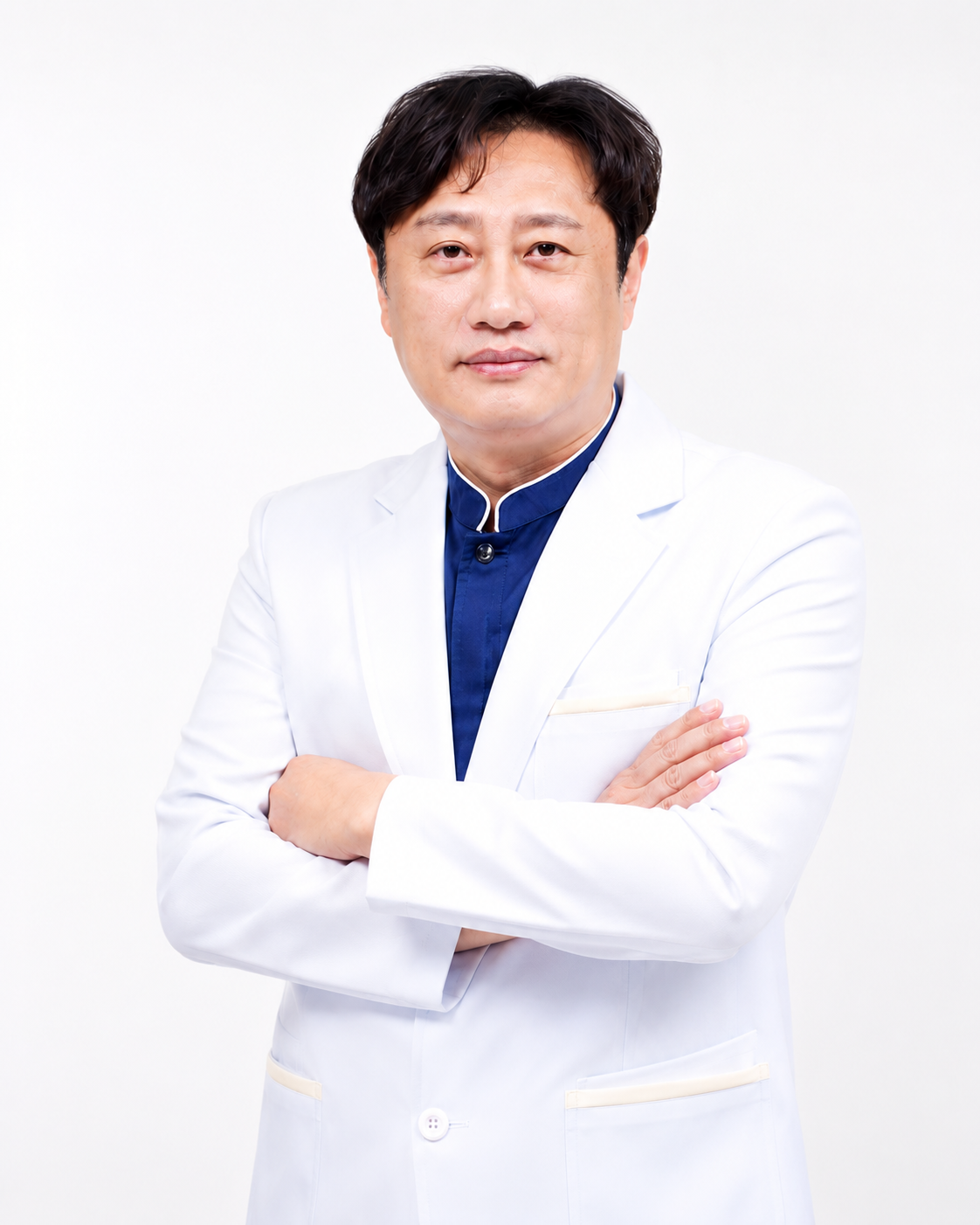
The urologists who perform your vasectomy.
Every guide on this site is written and reviewed by the three board-certified urologists below. The doctor who consults with you is the doctor who operates and answers your follow-up — never a junior doctor or a different surgeon.
Who performs your procedure — FAQ
Related pages and next reads
About Urogyn & the Team
The three urologists — training, focus and memberships.

Why Choose Urogyn
One urologist, published prices, same-day treatment and privacy.
English-Speaking Urologist
The doctor speaks to you directly — no interpreter, no coordinator.

Follow-Up After Flying Home
Why the doctor who operated is the one who should read day nine.
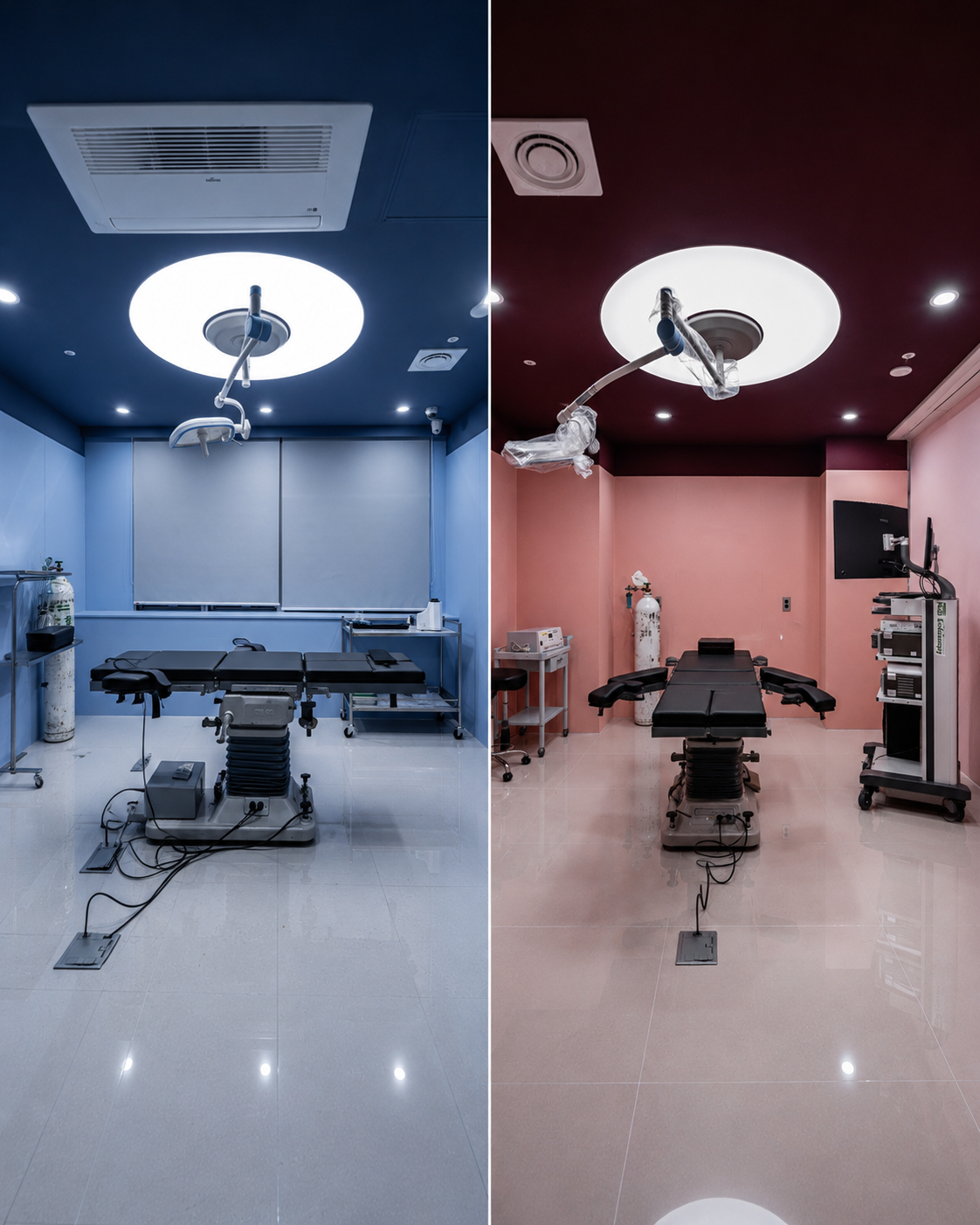
Korea vs Thailand vs Turkey
Why the surgeon's specialty matters more than the country.
Privacy at the Clinic
One doctor means one person who knows why you came.
Urogyn Men's Clinic, Seomyeon
7F-702, Ion City Building, 74 Seomyeon-ro, Busanjin-gu, Busan 47299 — one minute on foot from Seomyeon Station Exit 7 (Lines 1 & 2).
Mon–Fri 10:00–18:00 · Sat 10:00–14:00 · Sun closed
부산광역시 부산진구 서면로 74 아이온시티빌딩 7층 702호 — show this to your taxi driver.
Ask who holds the instruments. Get a name, a specialty and a yes.
Put the five questions in your first message and the reply names the board-certified urologist who would treat you at our Busan Seomyeon clinic, his focus, and confirms in writing that he consults, operates and follows up personally.