
How sterilization and safety actually work at a Korean men's clinic.
Infection is the complication that turns a minor procedure into a serious one, and it is prevented by things a patient rarely sees: how instruments are sterilised, what is single-use, how a procedure room is run, and how the surgeon prepares the skin. This guide explains the standards a men's clinic should meet, what you are entitled to ask to see, and what our Busan Seomyeon clinic shows any patient who asks before a procedure.
Why patients choose Urogyn
One urologist, published prices, same-day treatment and strict privacy — and beneath all four, a procedure room run to the standards this page describes.
Read why choose us →- Why this is the question that matters
- The five layers of infection control
- Sterilisation: what an autoclave does
- Single-use: what should never be reused
- The procedure room and the surgeon
- Your part: what you can do
- What you are entitled to ask to see
- What Urogyn shows you
- What no standard eliminates
- How it runs here — and your next step
- Is a clinic as safe as a hospital for these procedures?
- What is single-use and what is sterilised?
- Can I ask to see the sterilisation equipment?
- How does Korea regulate clinic infection control?
- What can I do myself to reduce infection risk?
Each is answered below, the way our urologists answer it before a procedure.
Why is infection control the question that matters at a men's clinic in Busan?
Every procedure at Urogyn Men's Clinic in Busan Seomyeon — from a filler injection to a penile implant — carries one complication that outweighs the rest: infection. It is rare, it is preventable, and its prevention depends on standards a patient cannot see from the waiting room: sterilised instruments, single-use materials where reuse would carry risk, a procedure room run as one, skin preparation and antibiotic cover where indicated, and a surgeon who follows the protocol every time rather than most times. This page explains each, and what you may ask to see.
The why choose us page lists four reasons patients choose the clinic; infection control is not on the list because it is not a differentiator — it is the floor beneath everything on it. The who performs guide covers the surgeon; this page covers the room.
The five layers of infection control
- 1 Sterilisation of reusable instruments. Steam sterilisation in an autoclave, with indicator strips and logged cycles, for anything that touches tissue and is used again.
- 2 Single-use for everything that should be. Needles, syringes, blades, sutures, gloves, drapes, dressings, cannulas — opened from sealed packaging in front of you and discarded after.
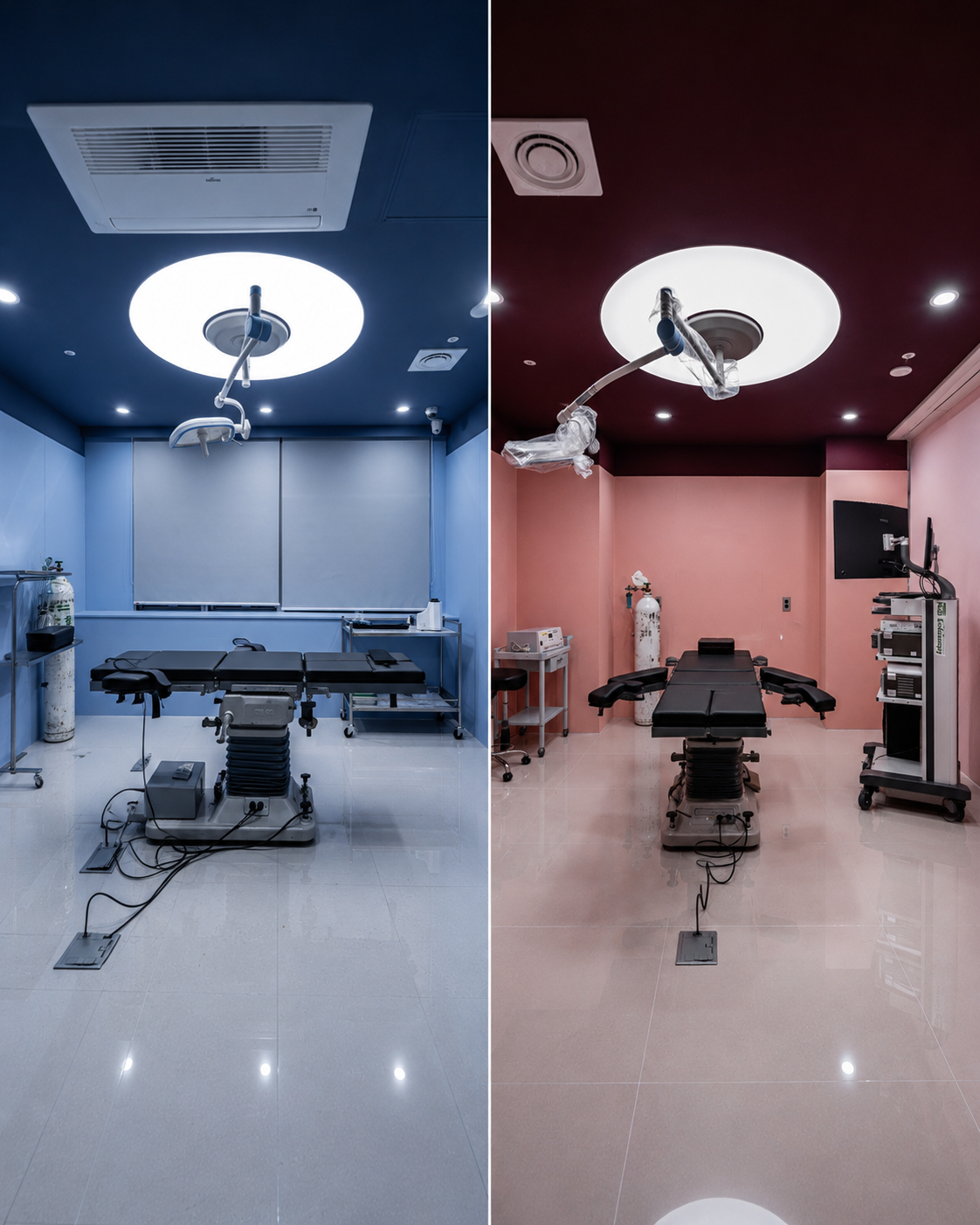
- 3 The procedure room. A dedicated space with controlled access, cleaned between patients, hand hygiene and gloving as protocol, surfaces that can be disinfected.
- 4 Patient preparation. Skin antisepsis before any incision or injection; antibiotic cover where the procedure warrants it; screening for infection, diabetes control and skin conditions beforehand.
- 5 The surgeon's discipline. The same sequence every time. Infection rates in surgery track adherence to protocol more than any equipment.
Each layer covers a gap the others leave. A clinic that has an autoclave but reuses a cannula, or single-use everything in a room with no access control, has four layers and a hole.
Sterilisation: what an autoclave does
An autoclave sterilises by pressurised steam at a temperature and for a duration that kills bacteria, viruses, fungi and spores — the standard for reusable surgical instruments worldwide. Instruments are cleaned, packaged, run through a logged cycle with chemical or biological indicators that confirm sterilising conditions were reached, and stored sealed until the moment of use. What a patient can reasonably see is the sealed, indicator-marked package being opened at the start of the procedure — the indicator having changed colour is the visible evidence that the cycle ran. Korean clinics performing procedures are subject to infection-control requirements under the Medical Service Act and to health-authority inspection; the specifics of a clinic's process are a fair question, and a confident clinic answers it.
Adult Circumcision in Busan
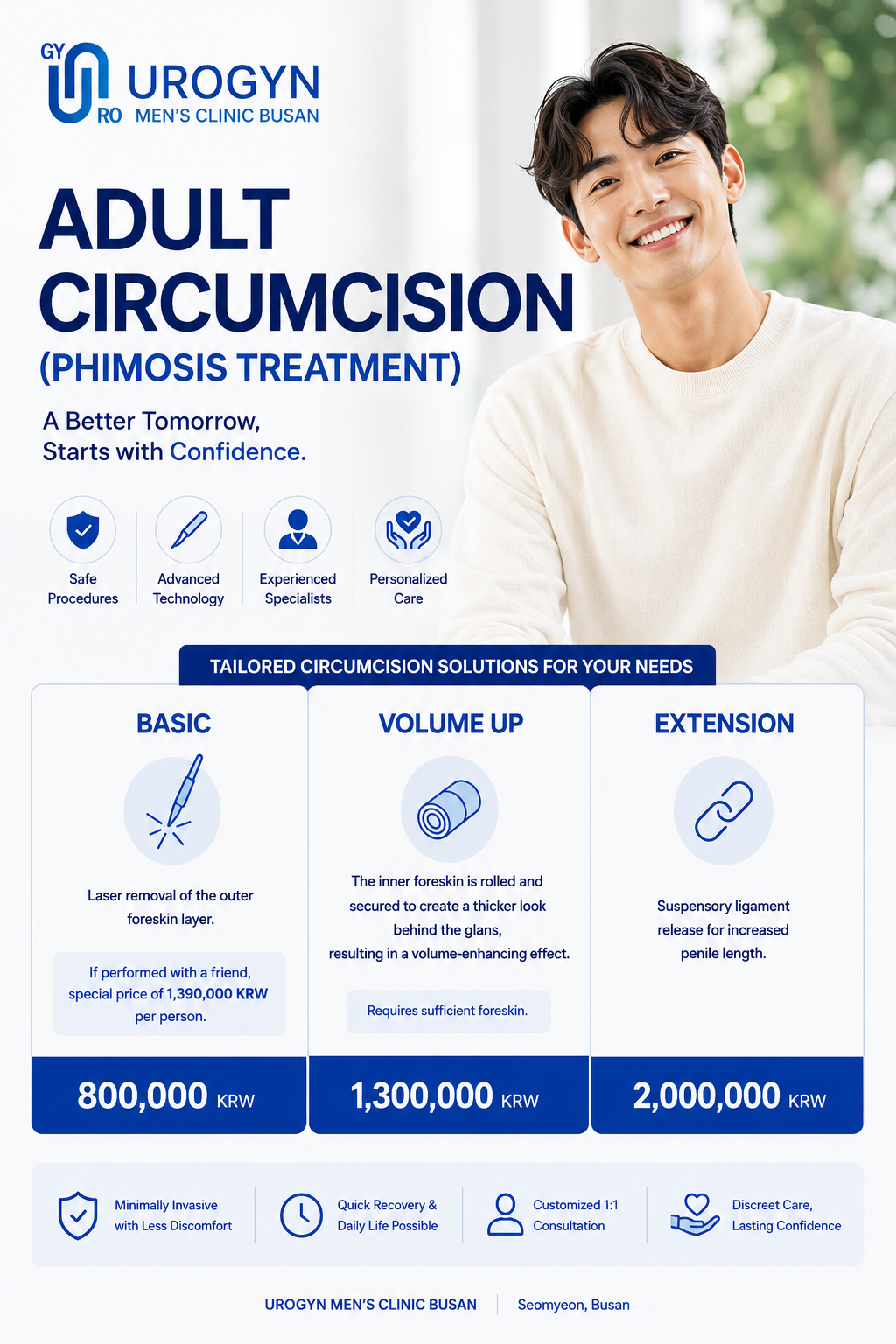
A same-day procedure from ₩800,000 in the clinic's own procedure room — and one where sterile single-use materials and skin preparation are what keep a fine suture line from becoming an infected one.
Read the circumcision page →Single-use: what should never be reused
Sealed, opened in front of you, discarded after. Reuse of any of these is not a cost saving; it is a risk.
Metal instruments designed for it, autoclaved between patients with a logged cycle and indicator.
Pre-filled syringes in sterile blister packs — the MFDS filler guide explains what the box shows.
Penile implants, dermal matrices and similar arrive sterile from the manufacturer for one patient and are never re-sterilised.
Urogyn uses sterile single-use materials for every item in the first category and manufacturer-sealed packaging for the third and fourth; the filler page and the implant page describe the product handling for each.
The procedure room and the surgeon
A clinic procedure room is not a hospital operating theatre, and for the procedures a men's clinic performs it does not need to be: local-anaesthetic and minor surgical procedures are performed safely in dedicated clinic rooms worldwide, provided the room is run as one — access limited during a procedure, surfaces disinfected between patients, hand hygiene and sterile gloving as protocol, and sharps disposed of at source. What the surgeon adds is sequence: skin antisepsis, draping, gloving, the same order every time. Implant surgery, the procedure with the highest stakes for infection, adds antibiotic cover, diabetic control checked beforehand, and a protocol the urologist discusses at consultation; the implant recovery guide explains why infection signs come first in that recovery.
Your part: what you can do
- Tell the clinic about diabetes, skin conditions, recent infections and antibiotics in your message — the what to bring guide lists what changes the plan.
- Shower the morning of the procedure with ordinary soap; do not shave the area yourself, which creates micro-cuts — the clinic clips if needed.
- Follow the aftercare on wound care exactly — showering, dressing, ointment, and no submersion until sealed. The recovery guides on this site set it out per procedure.
- Keep the antibiotic course if one is prescribed, to the end.
- Report early signs early — increasing pain after day three, fever, spreading redness, pus — by message, with a photograph, as the follow-up guide describes.
What you are entitled to ask to see
Any of the following, at any clinic, before a procedure: the sterile packaging of instruments and materials being opened in front of you; the sterilisation indicator on a reusable-instrument pack; the sealed box of a filler or the sealed packaging of an implant; the procedure room itself; and a plain answer to “what is single-use and what is sterilised here?” A clinic that treats these questions as normal is a clinic that has nothing to manage around them. A clinic that treats them as an insult has told you something. Ask Urogyn as readily as anyone; the booking guide explains how the first message works, and these questions fit in it.
What Urogyn in Busan shows you
Needles, sutures, blades, dressings and — for filler and implants — the manufacturer's sealed box.
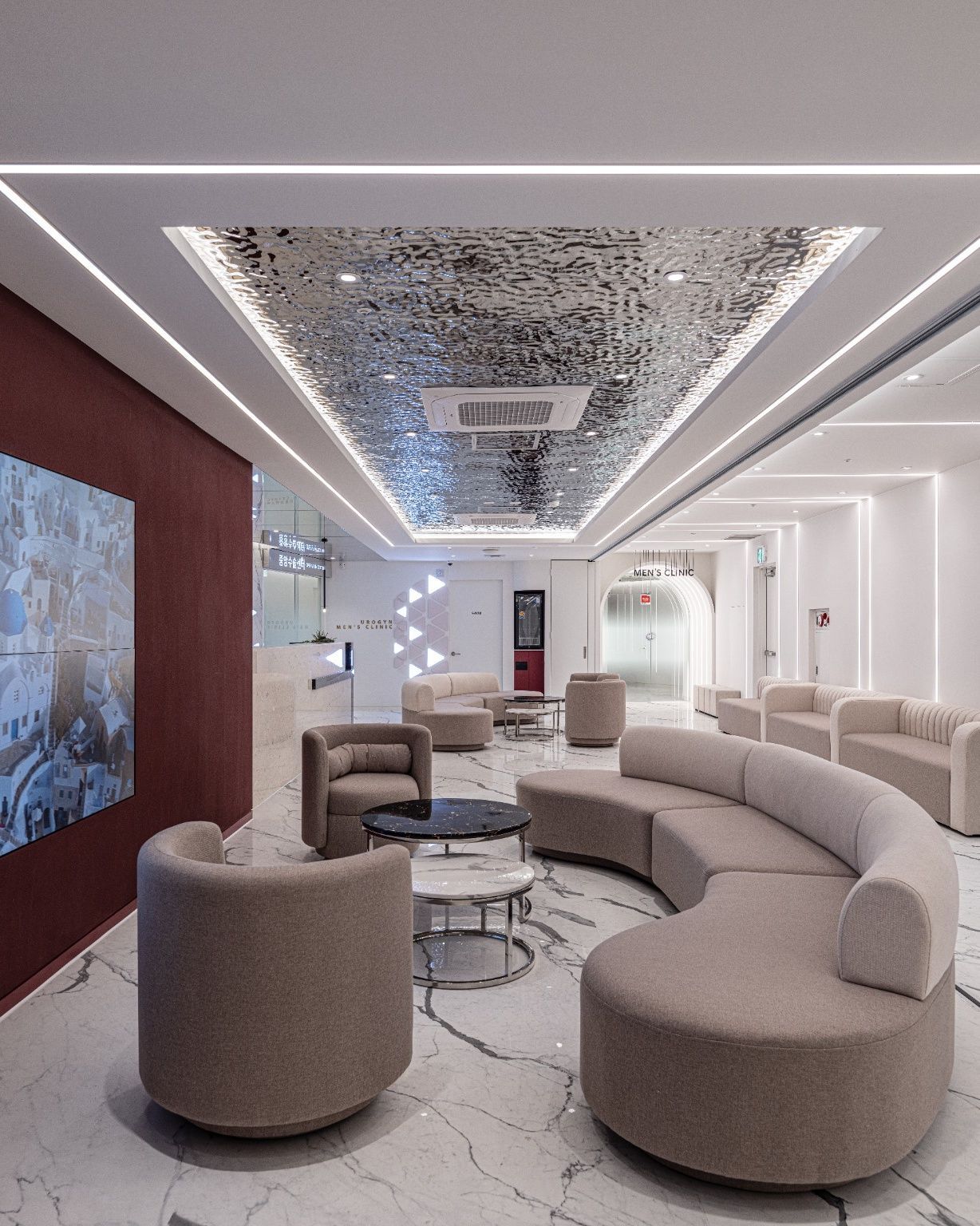
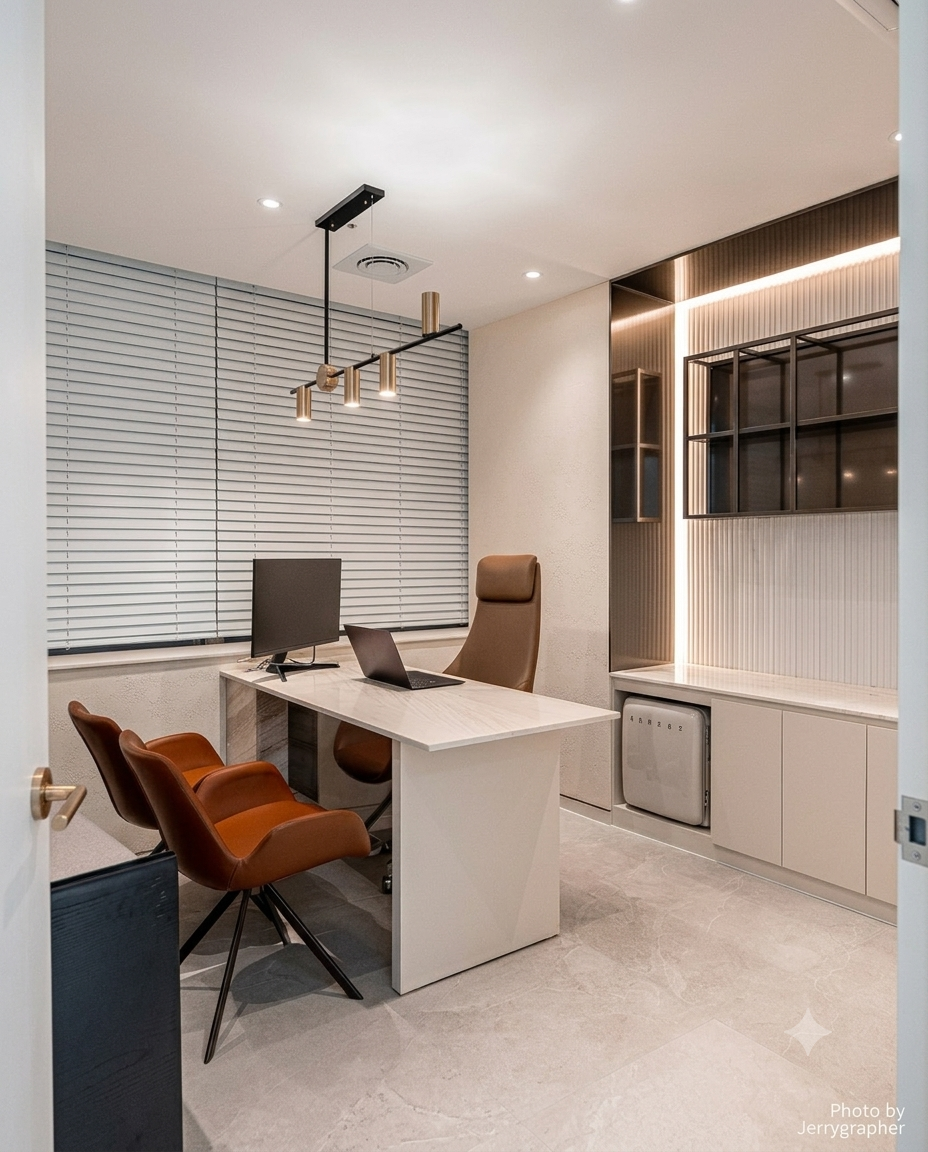
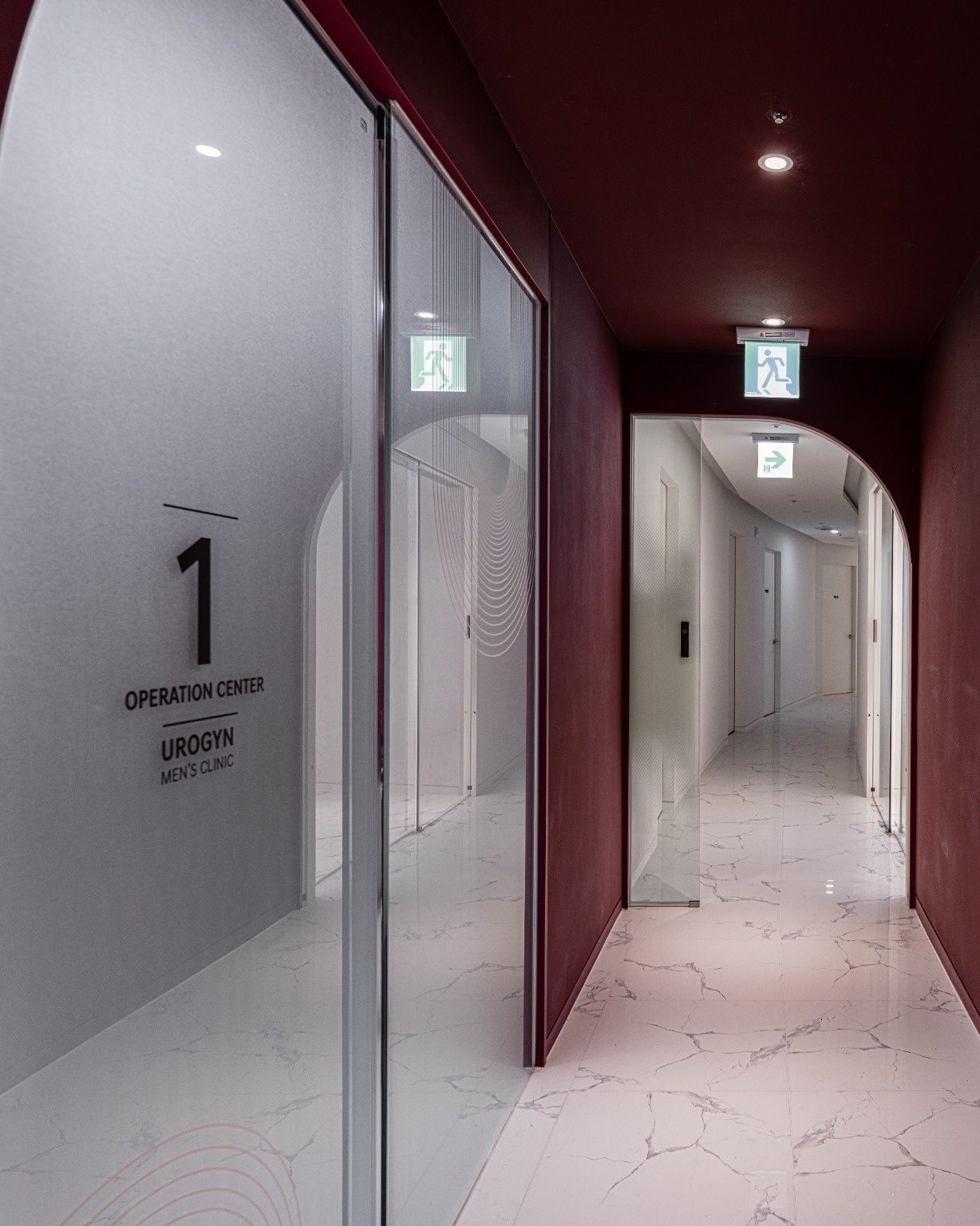
The dedicated room on the seventh floor where every procedure is performed, by the urologist who consulted with you.
What is single-use, what is sterilised, and what the protocol for your specific procedure involves — before you travel.
Protocol adherence tracks the surgeon. At Urogyn the surgeon is the one you met — see the who performs guide.
What no standard eliminates
Three honest points. No clinic anywhere has an infection rate of zero: sterile technique reduces the risk to a small number, and a patient's own skin flora, diabetes, smoking and aftercare account for much of what remains. Implant surgery carries a higher infection risk than a filler injection however well both are done, and an infected implant usually has to be removed — which is why selection and preparation matter as much as the room. And a website can describe a standard but cannot demonstrate it; the sealed pack opened in front of you can. Every procedure at our Busan clinic is priced from the published list, and none is scheduled without the conversation this page describes having been available to you first.
How it runs at our Busan Seomyeon clinic — and your next step
Message us with your travel dates and the procedure you are considering, and ask what is single-use, what is sterilised, and what the infection-control protocol for that procedure involves. The reply answers in plain English, from the urologist who would perform it. On the day, sealed packaging is opened in front of you, the procedure room is the one you can ask to see, and the surgeon is the one who wrote the reply. For the trip as a whole, the international patients guide; for the standard behind every page on this site, the why choose us page.
- Is a clinic procedure room safe enough for a penile implant? Implant surgery is performed in dedicated procedure rooms and day-surgery settings in many countries; what matters is the protocol — antibiotic cover, skin preparation, access control, the surgeon's sequence — more than the building. Ask the urologist what the implant protocol at Urogyn involves, and you will be told in detail at consultation.
- What if I have a skin infection or a cold on the day? Tell the clinic. An active infection at the site postpones a procedure; a cold usually does not, but the urologist decides. Postponing is a sign of a clinic that takes the room seriously, not a failure of the trip.
The urologists who perform your vasectomy.
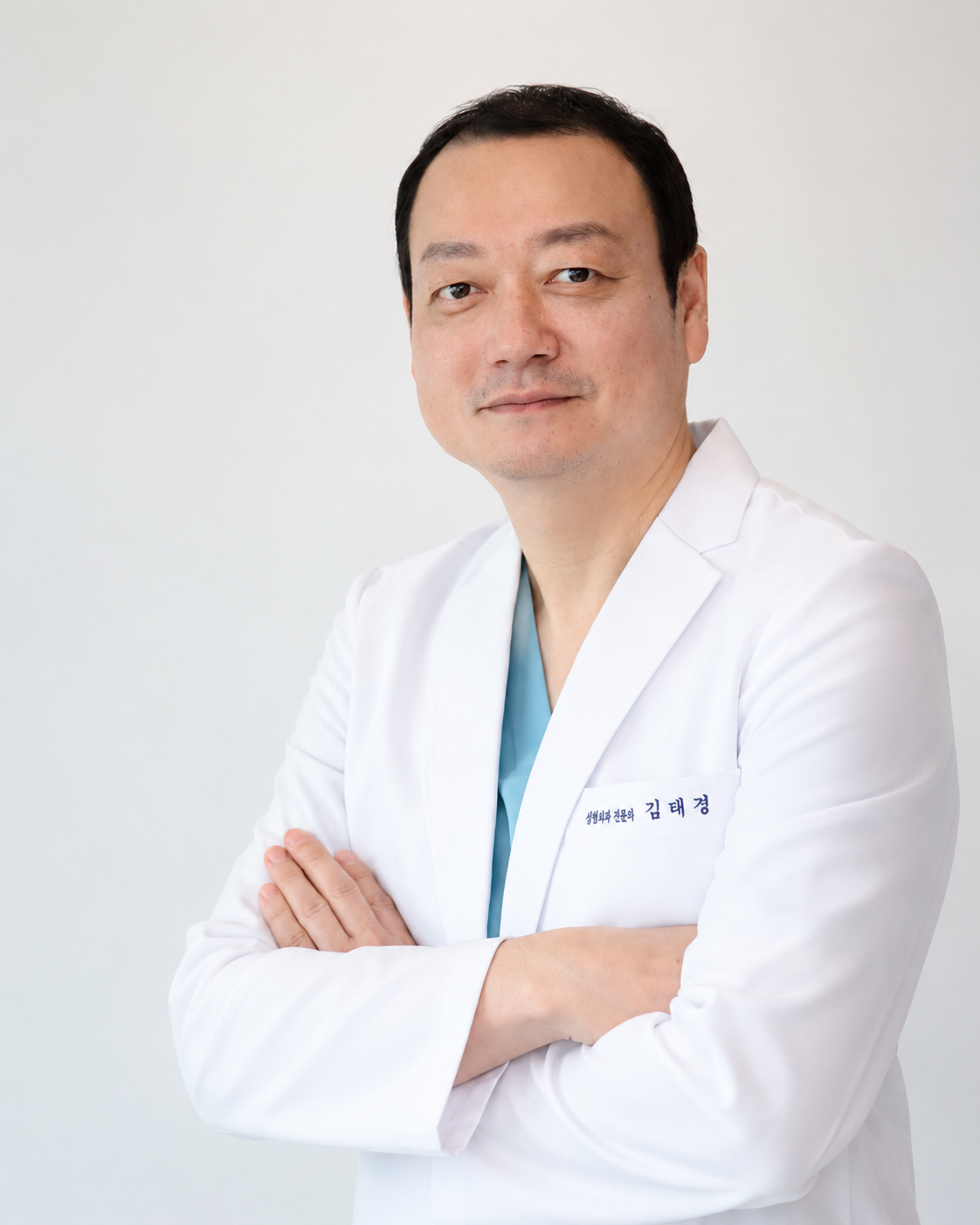
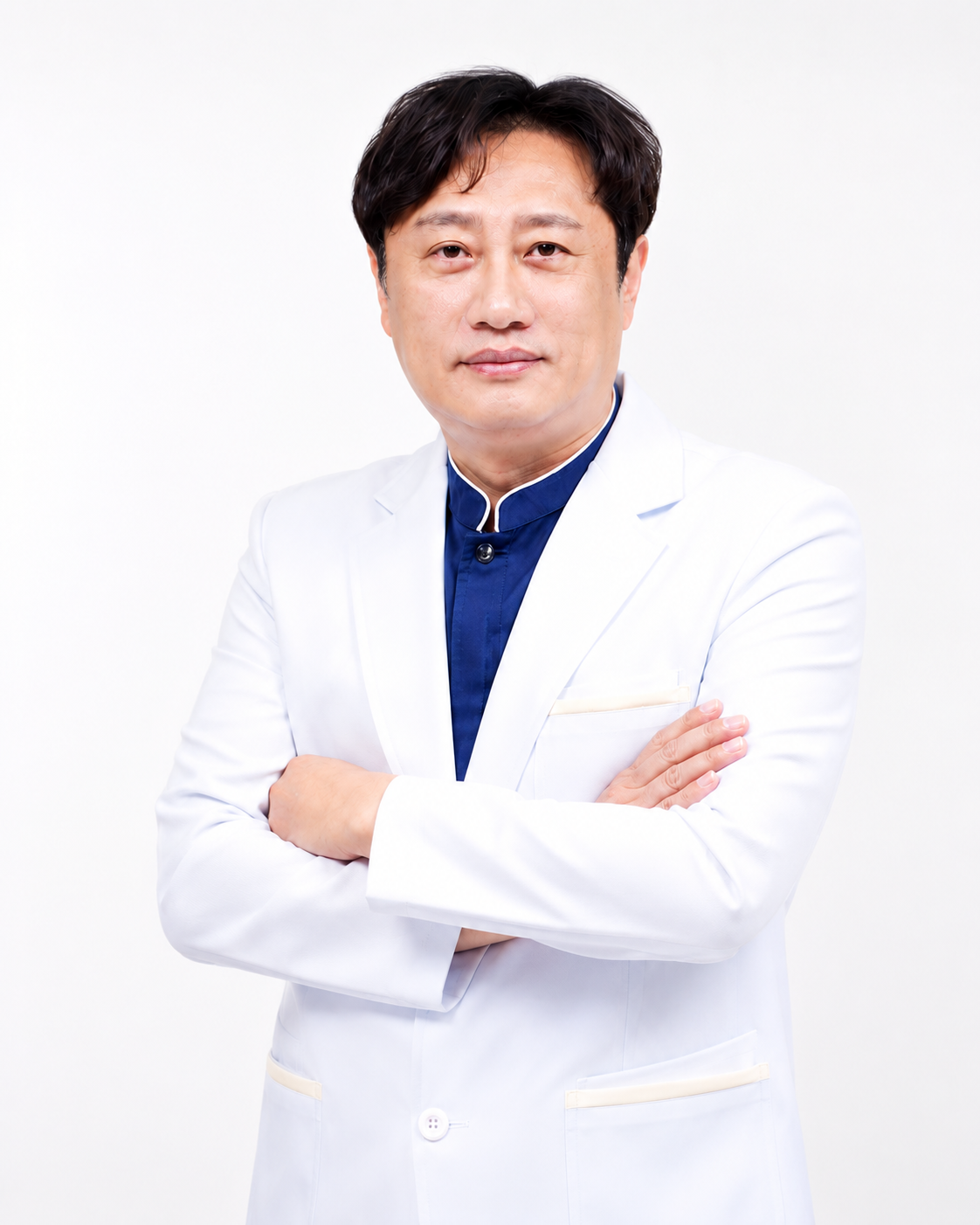
Every guide on this site is written and reviewed by the three board-certified urologists below. The doctor who consults with you is the doctor who operates and answers your follow-up — never a junior doctor or a different surgeon.

Sterilization & safety — FAQ
Related pages and next reads
Why Choose Urogyn
The four reasons — and the floor beneath them.
Who Performs Your Procedure
Protocol adherence tracks the surgeon — who yours is.
MFDS-Approved Filler
The sealed box, the label and the lot number.
Penile Implant Recovery
Why infection signs come first in the highest-stakes recovery.
Follow-Up After Flying Home
Reporting early signs early, from wherever you land.
Adult Circumcision in Busan
A same-day procedure in the clinic's own procedure room.
Urogyn Men's Clinic, Seomyeon
7F-702, Ion City Building, 74 Seomyeon-ro, Busanjin-gu, Busan 47299 — one minute on foot from Seomyeon Station Exit 7 (Lines 1 & 2).
Mon–Fri 10:00–18:00 · Sat 10:00–14:00 · Sun closed
부산광역시 부산진구 서면로 74 아이온시티빌딩 7층 702호 — show this to your taxi driver.
Ask what is single-use. Ask to see the pack opened.
Your dates and the procedure you are considering, with the questions from this page, return a plain written answer — what is single-use, what is sterilised, and the protocol for your procedure — in English, from the urologist who would perform it at our Busan Seomyeon clinic.