Gynecomastia surgery recovery and compression, explained.
The operation removes the fat and the gland; the compression vest decides how the skin settles over what is left. That is why the vest — worn for weeks, day and night at first — is the part of gynecomastia recovery our Busan Seomyeon clinic spends the most words on after the ₩5,000,000 combined procedure. This guide covers the vest, drains and scar care, when the gym and flying are safe, and what the chest looks like at each stage.
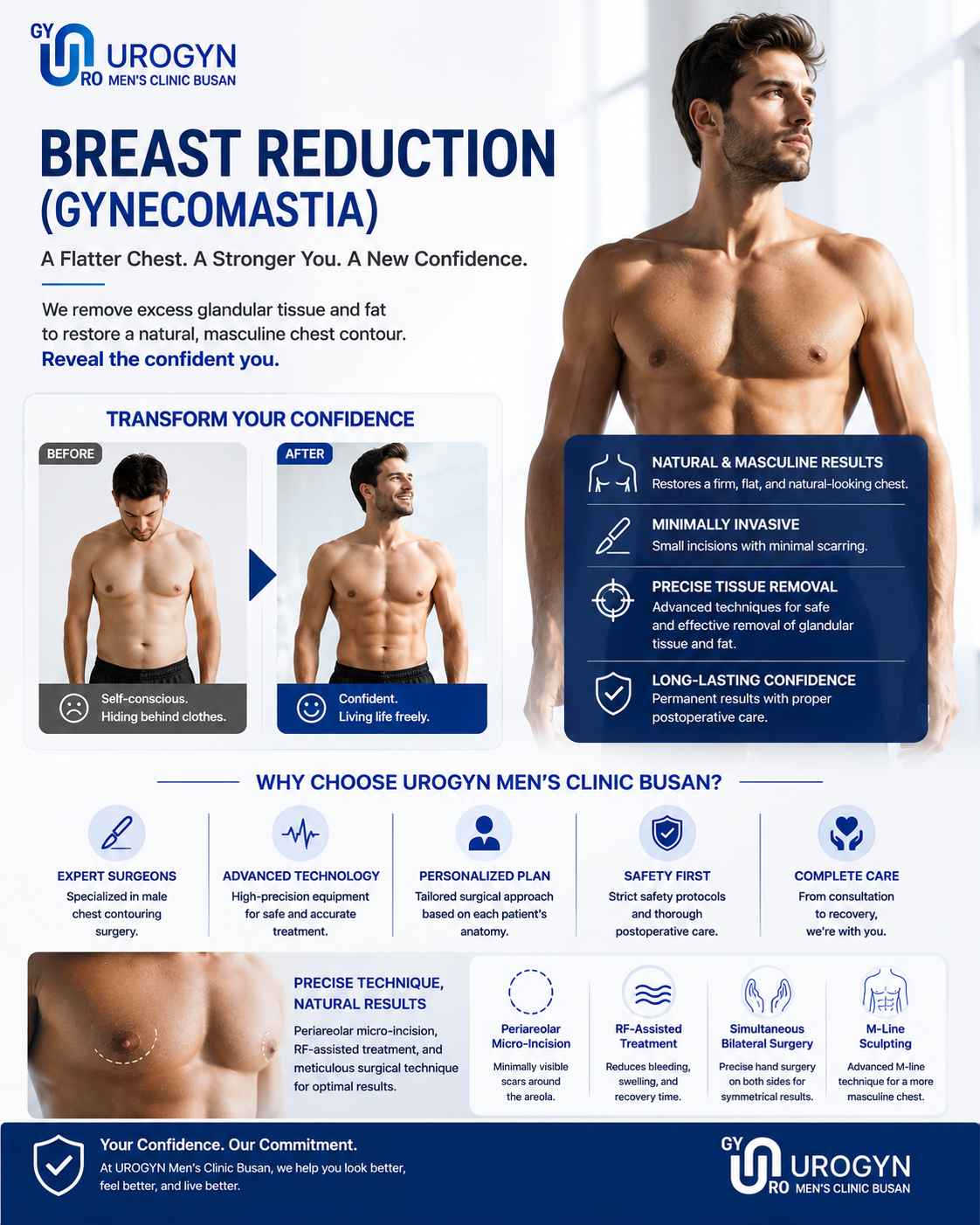
Gynecomastia Surgery in Busan
The clinical page behind this timeline — grades, the combined VASER and excision technique, scar placement and the ₩5,000,000 single price.
Read the gynecomastia page →- The compression vest: why, how long, how tight
- Day 0 and the first night
- Week 1: drains, dressings, showering
- Weeks 2–4: swelling, numbness, the vest by day
- Weeks 4–6: the gym, and the vest comes off
- Scar care: the areolar line
- What the chest looks like at each stage
- Flying home
- Warning signs, plainly
- How it runs here — and your next step
- How long do I really have to wear the vest?
- Will there be drains, and when do they come out?
- When can I lift weights again?
- Will the nipples be numb?
- When does the chest look like the final result?
Each is answered below, week by week, from the written aftercare you leave with.
The compression vest after gynecomastia surgery in Busan: why, how long, how tight
After gynecomastia surgery at Urogyn Men's Clinic in Busan Seomyeon — VASER liposuction with gland excision at a single price of ₩5,000,000 — a compression vest is worn continuously for the first two to three weeks, then during the day for a further three to four, as the written plan directs. It does three things: limits swelling and fluid collection, holds the loosened skin against the new contour so it retracts flat rather than settling loose, and supports the chest so movement does not pull at the incisions. It is the single most important thing a patient does for his own result.
The gynecomastia page covers the operation and the comparison guide why both techniques are combined; this page is the six weeks after, in the order they happen — and the vest runs through all of them.
Off only to shower. Firm but not painful; if it restricts breathing or leaves marks that do not fade, it is too tight — message the clinic.
Off at night. Continue through exercise once training resumes.
Folds and wrinkles press lines into healing skin. Adjust and smooth each time it goes on.
The vest is provided or its specification given in the reply to your message; do not buy one first.
Day 0 and the first night
The operation is performed under anaesthesia with same-day discharge in most cases; the surgeon states in advance whether your case is same-day or overnight. You wake in the vest, with dressings over the small liposuction entry points at the chest edge and over the short incision along the lower areola on each side, and sometimes with a small drain on each side. The chest feels tight and bruised rather than sharply painful; prescribed pain relief taken on schedule, sleeping propped up on pillows for the first nights, and a hotel within five minutes of the clinic — the hotel guide explains the criteria — make the first night straightforward. Arms stay low: no reaching, lifting or pushing.
Week 1: drains, dressings, showering
- 1 Days 1–2. Drains, if placed, are checked and usually removed at the first dressing change once output has fallen. Bruising across the chest and sometimes down the flanks is expected and dramatic.
- 2 Days 2–3. Showering resumes as instructed — vest off briefly, water over the dressings or with waterproof covers, patted dry, vest back on. No soaking.
- 3 Days 4–7. Swelling at its peak then beginning to settle. Walking freely, desk work from around day three to five, arms still kept below shoulder height. The chest feels firm and lumpy under the vest — normal.
Absorbable sutures at the areola need no removal; the liposuction entry points close on their own. The surgeon reviews photographs by message through the week and answers the question every patient asks around day four — whether the swelling is normal — usually with a yes.
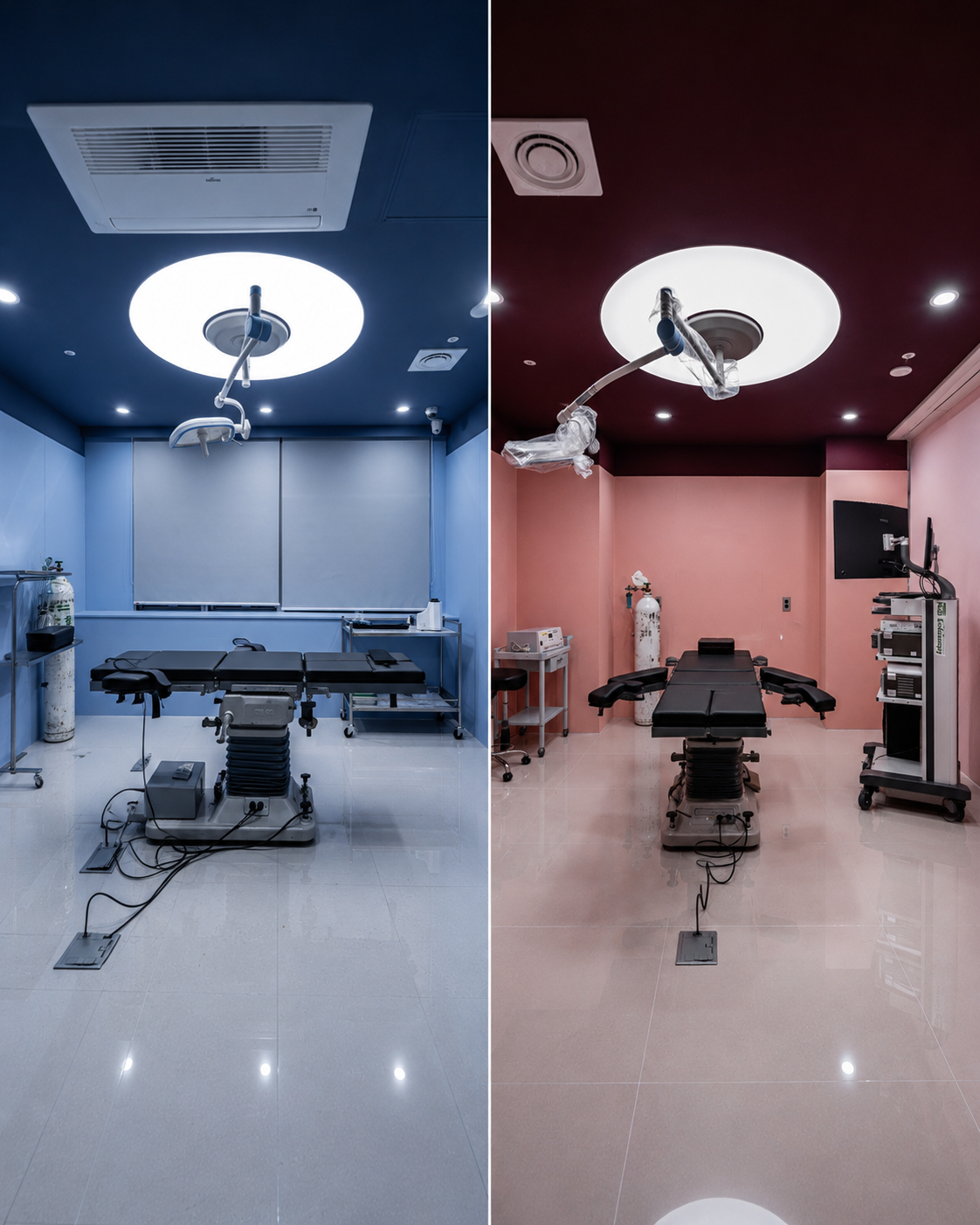
Liposuction vs Gland Excision
Fat responds to liposuction; gland does not — the comparison explains the combined operation this recovery follows, and why the vest matters after both.
Read the comparison →Weeks 2–4: swelling, numbness, the vest by day
Bruising fades over week two; swelling settles unevenly — reviewed by photograph from Busan — with firmer, lumpier areas — especially around the areola where the gland was removed — that soften over the following months. The nipples and the skin of the lower chest are often numb or oddly sensitive, because small sensory nerves were disturbed; sensation returns over weeks to months in most men and is one of the honest limits the surgeon states before the operation. The vest moves to daytime-only around week three as directed. Walking and light daily activity are unrestricted; lifting, pushing and any chest exertion remain off. Light cardio — a brisk walk, a stationary bike without gripping hard — is usually permitted from around week two.
Weeks 4–6: the gym, and the vest comes off
Upper-body training resumes around week four with the surgeon's confirmation, starting light and avoiding chest-isolation exercises — bench press, flyes, dips — until around six weeks, because they load exactly the tissue that is healing. Lower-body and cardio work return earlier. The vest is worn through training sessions until the surgeon says otherwise, and comes off entirely around week six. Swimming, bath and sauna wait until every incision is fully sealed — usually four weeks. The gynecomastia page repeats the restrictions; the written plan you leave with dates them for your case.
Unrestricted, arms low.
Brisk walk, stationary bike. No chest loading.
With confirmation. Vest on.
Bench, flyes, dips last. Start light.
Scar care: the areolar line, as our Busan surgeons advise
The gland-excision scar sits along the lower edge of the areola, where the colour change hides it; the liposuction marks are a few millimetres at the chest edge or armpit fold. Both are red and slightly raised for the first weeks, flatten over months, and fade toward the surrounding skin over a year. Care is simple: keep the line clean and dry until sealed, then apply silicone gel or sheets as the surgeon advises from around week three, and keep the chest out of direct sun — or under high-factor sunscreen — for the first year, because sun darkens a fresh scar permanently. Men prone to raised or keloid scars should say so before surgery; the surgeon adjusts the plan and the aftercare accordingly.
What the chest looks like at each stage
Day one, at our Seomyeon clinic: flat but swollen and bruised, under a vest. Week two: bruising gone, swelling uneven, the shape emerging but firmer and lumpier than final. Week six: vest off, most swelling gone, the contour recognisable as the result, residual firmness around the areola. Three months: the shape settled, scars flattening. Six months to a year: final — the last residual swelling resolved, scars faded, sensation largely returned. Photographs at each stage, kept with the surgeon, show the progression and are the honest answer to the week-two question of whether it worked. The surgeon says all of this before surgery, because a man who expects the six-week chest at week two is disappointed for no reason.
Flying home after gynecomastia surgery
Four to five nights in Seomyeon before a flight, with drains out, the first dressing change done, and the vest on for the journey. Aisle seat, hourly walking on long-haul, compression stockings, water rather than alcohol, pain relief taken before boarding — the flying guide covers each. The vest passes airport security without comment. Hand luggage should contain the written plan, the prescription, spare dressing material and the surgeon's contact for a doctor at home; the records guide explains the summary you carry. Follow-up photographs go to the surgeon by message from wherever you land.
Warning signs, plainly
- A one-sided, growing, hard and painful swelling — haematoma (blood) or seroma (fluid). Same-day message with a photograph; may need drainage.
- Fever, spreading redness, warmth, or pus at any incision — infection. Treated promptly.
- A gap opening in the areolar line — usually after early chest exertion. The surgeon judges from a photograph.
- A nipple that turns dark, dusky or blistered in the first days — a blood-supply concern; rare, and a same-day assessment.
- Vest marks that do not fade, or difficulty breathing — the vest is too tight. Loosen and message.
All are uncommon and treatable; every one is a reason to message the surgeon who operated rather than wait to see. The privacy guide explains how photographs sent by message are handled.
How it runs at our Busan Seomyeon clinic — and your next step
Message us with your travel dates, how long the enlargement has been present, any medication or supplement use, how long you can stay, and — if you are comfortable — photographs, which stay with the surgeon only. You will receive a reply in English with the surgeon's provisional grade, the ₩5,000,000 published price confirmed, the vest specification, and the nights to plan. On the day, the same surgeon examines, operates and hands you the written timeline this page is drawn from; through the six weeks, he answers your photographs and messages. For the operation, the gynecomastia page; for every figure, the full price list.
- Can the gynecomastia come back? Excised gland does not regrow. Fat can return with weight gain, and hormonal causes — certain medications, anabolic steroids — can stimulate what gland remains. Keeping weight stable and avoiding the cause are the long-term aftercare; a hormone test is sometimes advised before surgery for this reason.
- My nipples look slightly different from each other at week three — will they even out? Usually. Swelling settles at different rates on each side and asymmetry at three weeks is common. Judge at three months; if asymmetry persists then, the surgeon reviews by photograph and discusses options honestly.
The urologists who perform your vasectomy.
Every guide on this site is written and reviewed by the three board-certified urologists below. The doctor who consults with you is the doctor who operates and answers your follow-up — never a junior doctor or a different surgeon.



Gynecomastia recovery — FAQ
Related pages and next reads
Gynecomastia Surgery in Busan
The operation this recovery follows — grades, technique, scars and price.
Liposuction vs Gland Excision
Why both techniques are combined — and why the vest matters after both.

Flying After Urology Surgery
Four to five nights, then the seat measures.
Hotels Near the Clinic
A room to sleep propped up in, five minutes from Exit 7.

Men's Health Clinic in Busan
Hormone testing when a cause needs ruling out before or after surgery.
Records & Prescriptions
The written summary to carry home for a local doctor.
Urogyn Men's Clinic, Seomyeon
7F-702, Ion City Building, 74 Seomyeon-ro, Busanjin-gu, Busan 47299 — one minute on foot from Seomyeon Station Exit 7 (Lines 1 & 2).
Mon–Fri 10:00–18:00 · Sat 10:00–14:00 · Sun closed
부산광역시 부산진구 서면로 74 아이온시티빌딩 7층 702호 — show this to your taxi driver.
The surgeon removes it. The vest shapes it. Six weeks with this page.
Your dates, a short history, how long you can stay and a photograph are enough for a written plan — provisional grade, the ₩5,000,000 published price, the vest specification and the nights to plan — in English, from the surgeon who would operate at our Busan Seomyeon clinic.