
Elevated PSA: what a Busan urologist checks next before anyone says "cancer".
A PSA above the reference range is a reason to look further, not a diagnosis. Most elevated results in men who come to Urogyn, Busan Seomyeon, turn out to be an enlarged prostate, inflammation or a timing artefact. This guide explains what raises PSA besides cancer, when to repeat the test, and how ultrasound and the free-PSA ratio decide the next step.

Prostate Care in Busan
The hub behind this guide — PSA screening at ₩150,000, the full prostate check-up, BPH treatment and prostatitis care in Seomyeon.
Read the prostate hub →- My PSA is 5 — does that mean cancer?
- Why repeat the test instead of going straight to a biopsy?
- Can an infection really push PSA that high?
- What is the free-PSA ratio and why does it matter?
- If you don't do biopsies, why should I come to a clinic?
Each is answered below, the way our prostate urologist answers it at the Seomyeon clinic.
The short answer: what an elevated PSA means at our Busan clinic
PSA — prostate-specific antigen — rises with prostate cancer, but it also rises with benign enlargement, prostatitis, a recent ejaculation, a long bicycle ride, a urinary infection or a catheter. At Urogyn in Busan Seomyeon an elevated result is followed by a repeat test under the right conditions (₩150,000), a free-PSA ratio, a urine test for infection and a transrectal ultrasound to measure volume (₩200,000). Only after those does anyone talk about biopsy — and most men do not reach that conversation.
The order matters because each step removes a benign explanation. A result that normalises on repeat was an artefact. A high PSA in a very large prostate may be proportionate to its size. A free-PSA ratio above about 25% points away from cancer. What is left after those filters is a smaller group of men for whom imaging and biopsy at a hospital are the right next step, and we refer them promptly. The prostate hub lists every test with its price.
Under controlled conditions: no ejaculation 48 hours, no cycling, no infection. Free-to-total ratio adds discrimination.
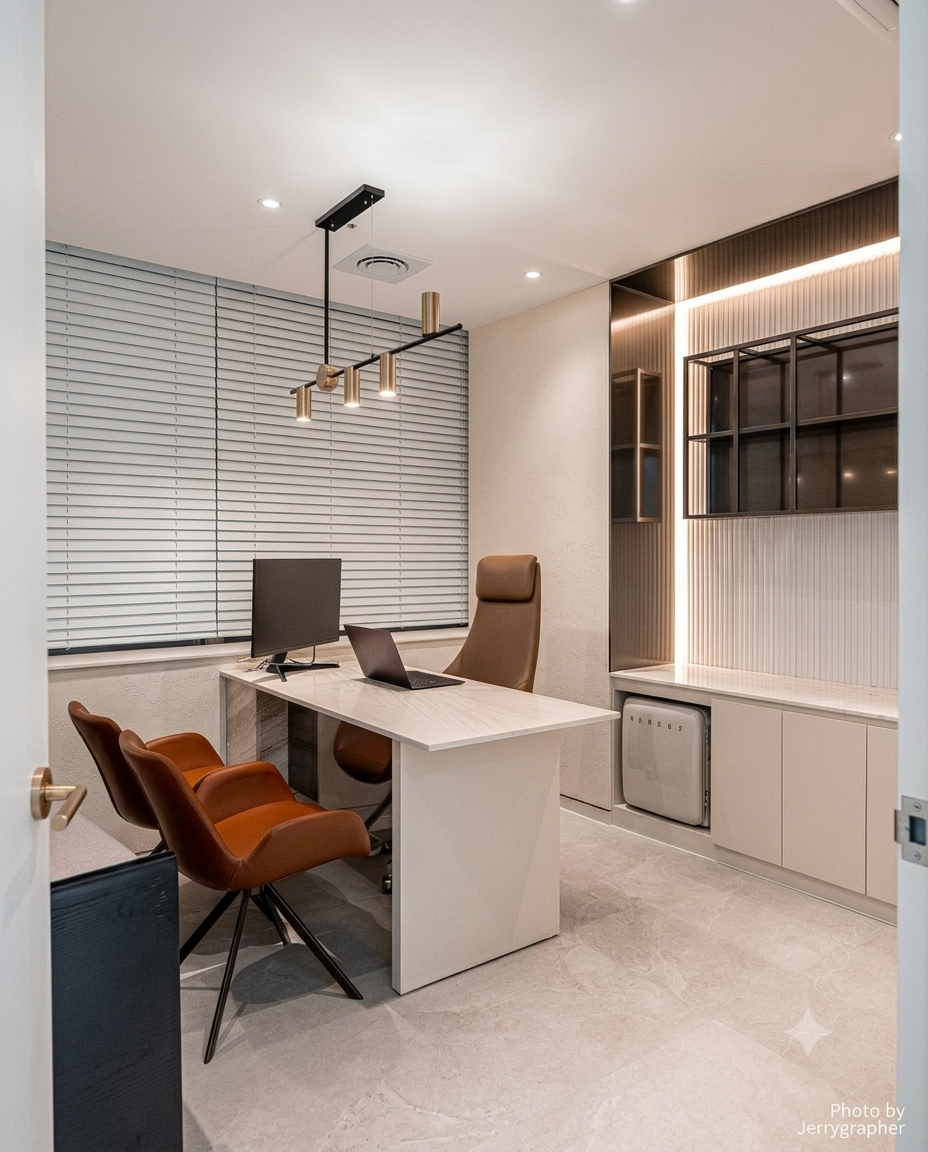
Volume for PSA density, texture, median lobe. Explains most "high" results in large glands.
Infection and inflammation. Prostatitis is a common cause of a sudden PSA jump.
What raises PSA besides cancer — the list a Busan urologist runs through first
Benign prostatic enlargement is the commonest cause: more prostate tissue makes more PSA, which is why a value of 5 ng/ml in a 90 ml gland means something different from 5 ng/ml in a 25 ml gland. Prostatitis — bacterial or inflammatory — can push PSA up sharply and bring it back down within weeks of treatment; our prostatitis page covers the types. Ejaculation within the previous day or two raises it modestly. Cycling, a digital rectal examination immediately before the blood draw, a urinary infection and recent catheterisation all do the same. Age raises the expected range. And some men simply run a higher baseline all their lives.
- 1 Size. Large benign gland → proportionately higher PSA. Ultrasound volume turns PSA into PSA density, a far more useful number.
- 2 Inflammation. Prostatitis or urinary infection → sudden rise, often with symptoms. Treat, then repeat in 6–8 weeks.
- 3 Timing. Ejaculation, cycling, examination → small rise. Repeat under controlled conditions.
- 4 Medication. 5-alpha-reductase inhibitors halve PSA; the true value is double the measured one. Tell us what you take.
When and how to repeat the test
A single elevated PSA is repeated before anything else, usually four to eight weeks later, under conditions that remove the artefacts: no ejaculation for forty-eight hours, no cycling for a few days, no active urinary symptoms, and the blood drawn before any rectal examination. If there is any sign of infection or prostatitis, that is treated first and the repeat waits until it has settled. At our Seomyeon clinic the repeat includes the free-PSA fraction, because the ratio of free to total PSA helps separate benign enlargement from cancer in the grey zone between about 4 and 10 ng/ml. A value that returns to normal needs no further action beyond routine follow-up; a value that stays up moves to the next step.
What the ₩200,000 ultrasound adds
Transrectal ultrasound at our Busan clinic measures prostate volume precisely, which converts PSA into PSA density — PSA divided by volume. A density below about 0.15 ng/ml per ml is reassuring; above it, less so. The scan also shows the texture of the gland, the presence of calcifications that suggest old inflammation, a median lobe, and the bladder residual, which together explain most of the symptoms that brought the man in. What ultrasound at a clinic does not do reliably is detect cancer itself; that is the role of multiparametric MRI at a hospital, which is the next step for men whose numbers remain concerning after the filters above.

Dr. Kim Tae-kyung — prostate focus
Director of the Busan branch, MD and MS from Pusan National University, adjunct professor at Ulsan University Hospital. Reads every prostate ultrasound himself and refers for MRI and biopsy when the numbers call for it.
Read the prostate hub →When MRI and biopsy are the right next step — and where they happen
A persistently elevated PSA with a low free ratio, a high PSA density, a suspicious texture on ultrasound, an abnormal rectal examination or a rapid rise is referred for multiparametric MRI and, if the MRI shows a target, biopsy. These are hospital procedures and Urogyn does not perform them; we refer to a Busan university hospital or provide the full work-up in English for a hospital at home. The referral and the written summary are not charged. What we do not do is skip the filters and send every elevated PSA for biopsy, because biopsy carries infection and bleeding risks and finds, in some men, low-grade disease that would never have harmed them.
If it is "just" a big prostate: what happens next
For many men in their fifties and sixties, the elevated PSA turns out to be proportionate to a large benign gland, and the real question becomes the urinary symptoms — weak stream, night-time urination, incomplete emptying. That conversation moves to the BPH treatments on the prostate hub: medication first, then UroLift, Progator or Rezum for the right anatomy. Our BPH warning signs guide explains which symptoms mean the bladder is under strain, and UroLift vs Rezum covers the procedures. PSA monitoring continues yearly regardless of treatment.
PSA and testosterone treatment: why the two are checked together
Men considering or already on testosterone replacement have their PSA checked before starting and at three months and yearly afterwards, because testosterone can unmask or accelerate prostate cancer. An elevated PSA in a man on testosterone is handled the same way as any other — repeat, ratio, ultrasound — but with a lower threshold for referral. Our testosterone injection guide covers the monitoring schedule, and the men's health clinic covers the hormone panel.
Signs that change the pace — when the stepwise work-up is skipped
The structured approach above assumes an isolated, moderately elevated PSA in a man who is otherwise well. A few findings move faster. A PSA above about 20 ng/ml, a hard or nodular prostate on examination, bone pain in the back or hips, unexplained weight loss, or blood in the urine alongside the raised value are each a reason to refer for MRI and biopsy without waiting for a repeat. So is a strong family history — a father or brother diagnosed before sixty — or known carriage of a BRCA mutation, where the threshold for referral is lower at every step. At our Busan clinic these are asked about in the first message, and a man with any of them is told plainly that the clinic's role is a rapid work-up and a same-week referral rather than observation. Our blood in semen or urine guide covers the haematuria overlap.
Fitting a PSA work-up into a trip to Busan
The repeat PSA, free ratio, urine test and ultrasound can all be done in a single morning visit at our Seomyeon clinic, with results the same day or the next. Men who already have a repeat value from home can skip straight to the ultrasound and the discussion. If prostatitis is found, treatment starts here and the repeat PSA can be done at home with our written plan. If a referral for MRI is the outcome, we say so before you leave Busan, with the report in hand.
How it runs at our Busan Seomyeon clinic — and your next step
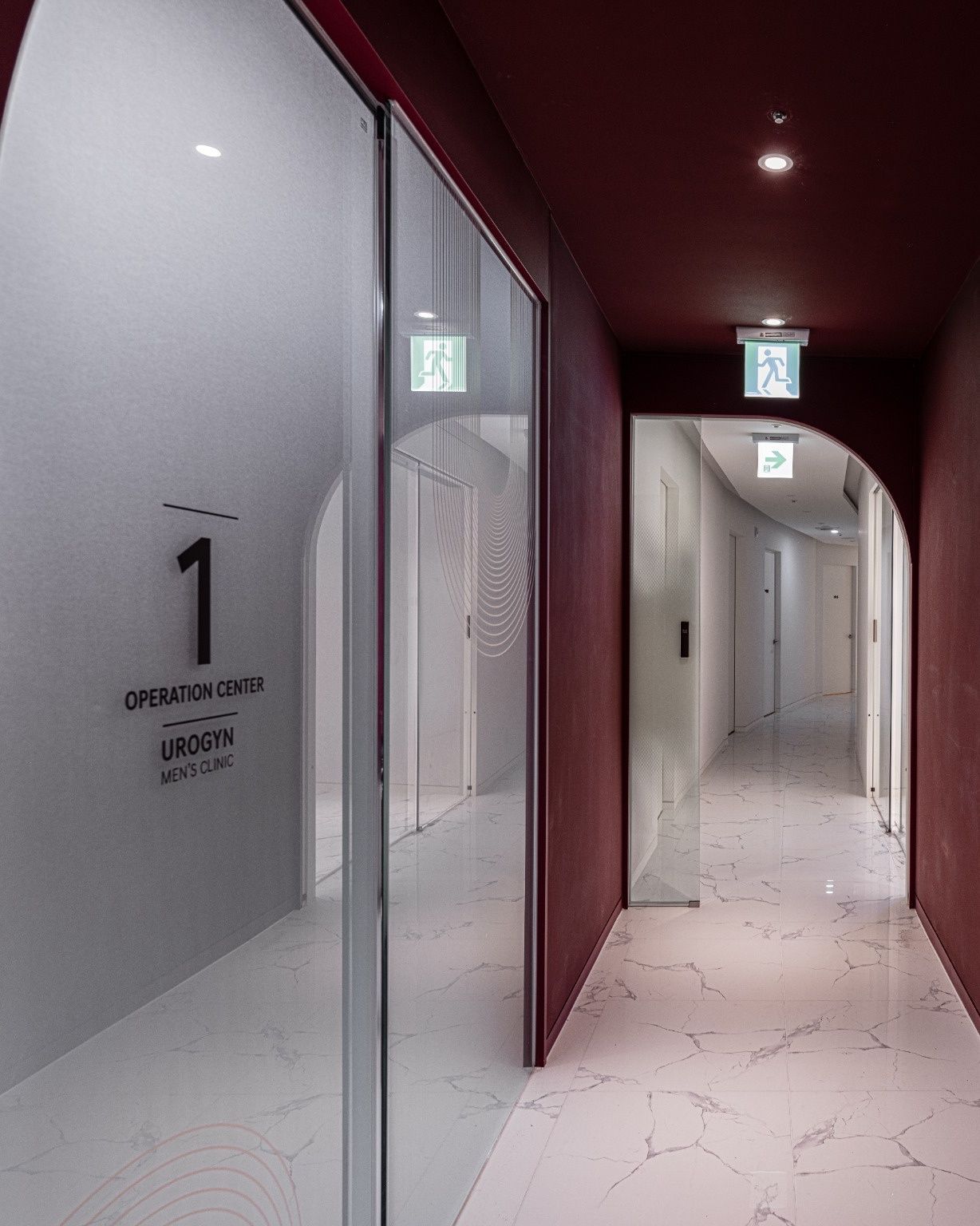
Message us with your PSA value and date, any previous values, your age, urinary symptoms, and medication. We reply in writing with which benign causes look likely, which tests we would do on arrival, and whether anything in your numbers suggests moving faster. Nothing is booked until you confirm and no deposit is taken. The clinic is one minute from Seomyeon Station exit 7; the contact page has directions.
- Does a normal PSA rule out cancer? No. Some cancers produce little PSA, and a value within range in a small gland can still be relatively high for its size. This is why the rectal examination and, where symptoms suggest, the ultrasound are done alongside the blood test.
- I take finasteride or dutasteride — does that change my result? Yes. These drugs roughly halve PSA, so the true value is about double the measured one. A "normal" 2.5 on finasteride is really 5. Tell us what you take so the number is read correctly.
The urologists who assess PSA results in Busan.
Every guide on this site is written and reviewed by the three board-certified urologists below. The doctor who consults with you is the doctor who operates and answers your follow-up — never a junior doctor or a different surgeon.


Elevated PSA — FAQ
Related pages and next reads
Prostate Care in Busan
PSA screening, the full check-up and BPH treatment with every price.

Prostatitis Treatment in Busan
The commonest cause of a sudden PSA jump.
BPH Warning Signs
When urinary symptoms, not PSA, are the real problem.

UroLift vs Rezum
If the answer is a large benign gland — the procedures.

Testosterone Injection Cost
Why PSA is monitored alongside testosterone treatment.

Blood in Semen or Urine
Another symptom that often arrives with a PSA question.
Urogyn Men's Clinic, Seomyeon
7F-702, Ion City Building, 74 Seomyeon-ro, Busanjin-gu, Busan 47299 — one minute on foot from Seomyeon Station Exit 7 (Lines 1 & 2).
Mon–Fri 10:00–18:00 · Sat 10:00–14:00 · Sun closed
부산광역시 부산진구 서면로 74 아이온시티빌딩 7층 702호 — show this to your taxi driver.
Send your PSA value and date. Get the plan in writing.
Your PSA with its date, any earlier values, your age and your medication are enough for our prostate urologist in Busan to say which benign causes look likely and which tests to do first.