UroLift and Rezum recovery: catheter, flying home and the 3-month mark, from Busan.
Two procedures for the same problem with two very different first weeks. UroLift usually sends you back to your Seomyeon hotel without a catheter and feeling better within days; Rezum sends you back with a catheter and feeling worse before you feel better. This guide from Urogyn, Busan Seomyeon, gives both timelines honestly, including when you can fly and what to message us about.

Prostate Care in Busan
The hub behind this recovery guide — UroLift, Rezum and Progator, the full check-up, and the BPH ladder in Seomyeon.
Read the prostate hub →- Will I have a catheter, and for how long?
- Why does Rezum feel worse before it feels better?
- When can I fly home after each one?
- When do I stop taking the prostate tablets?
- What should make me message you rather than wait?
Each is answered below, day by day, the way our BPH urologist explains it before the procedure at our Seomyeon clinic.
The two timelines side by side — what recovery in Busan looks like
After UroLift at Urogyn in Busan Seomyeon, most men leave without a catheter, pass urine the same evening with burning for a few days, notice easier flow within one to two weeks, and are flying home after about three days. After Rezum, a catheter stays in for several days, urination is often worse than before for the first two weeks as the treated tissue swells, improvement starts at around four weeks and continues to three months, and the flight home waits until the catheter is out and voiding is reliable — typically five to seven days. Both are listed from ₩10,000,000 and both preserve ejaculation in most men.
Knowing which curve you are on before the procedure is the single most useful thing in this guide. Men who choose Rezum expecting a UroLift-style week are the ones who message us worried on day four; men who were told what day four would feel like message us to confirm it is normal. The UroLift page and the Rezum page set the expectation; this guide fills in the days.
Usually no catheter · burning 2–5 days · better flow by week 1–2 · fly day 3 · full effect by 4–6 weeks.
Catheter several days · worse weeks 1–2 · improving from week 4 · fly day 5–7 · full effect by 3 months.
Day 0: the procedure day at our Seomyeon clinic
Both procedures are done under local anaesthesia with sedation and take about an hour. You arrive fasted, the pre-procedure checks are done, and you recover for an hour or two afterwards. After UroLift you are asked to pass urine before leaving; most men do, and go back to their hotel without a catheter. After Rezum a catheter is placed before you wake fully, because the vapour-treated tissue swells over the next days and would otherwise block the flow; you leave with it in place, a leg bag, and written instructions. A mild painkiller and an alpha-blocker are prescribed for both. Our anaesthesia guide covers the sedation and the fasting rules.
Days 1–7: burning, urgency and the catheter
UroLift. Expect burning on urination, some urgency and a little blood in the urine for two to five days. Flow is often already easier than before because the lobes are held open from the moment the implants are placed. Most men are walking around Seomyeon on day one and working from the hotel on day two. The clinic check on day three confirms voiding, and flying is reasonable after it.
Rezum. The catheter stays in for several days — the exact number is set by prostate size and how much vapour was used, and is written down before you leave. Expect a feeling of fullness, some bladder spasms, and pink urine. When the catheter comes out at the clinic, the first voids are slow and burning; this is the swollen tissue, not a failure. Alpha-blockers help. Flying is reasonable once you have passed urine reliably for a day after removal — usually day five to seven.
- 1 Normal for both. Burning, urgency, pink urine, small clots, frequency at night for the first week.
- 2 Message us. Fever over 38°C, inability to pass urine for six hours after catheter removal, heavy bleeding with large clots, severe pain not eased by the prescribed painkiller.
- 3 Go to an emergency department. Complete retention with a painful, distended bladder; fever with shaking chills.
Weeks 2–6: the point where the two curves cross
By week two a UroLift patient usually feels most of the benefit and is tapering off the alpha-blocker. A Rezum patient at week two is often at the low point: the treated tissue has swollen, flow is slower than before the procedure, night-time frequency is up, and the man wonders whether it worked. It has — the body has simply not yet reabsorbed the treated tissue. From week three or four the Rezum curve turns upward, and by week six most men are clearly better than before the procedure. Both groups fill in a symptom score at six weeks by message, and we compare it with the baseline from the pre-procedure assessment.

Dr. Kim Tae-kyung — BPH focus
Director of the Busan branch, MD and MS from Pusan National University, adjunct professor at Ulsan University Hospital. Performs UroLift and Rezum at the Seomyeon clinic and reads the six-week and three-month symptom scores himself.
Read about Rezum in Busan →The three-month mark: when the result is judged
Three months is when both procedures are assessed properly. UroLift has usually plateaued by six weeks and three months confirms it. Rezum reaches its full effect at about three months as the last of the treated tissue is reabsorbed, which is why we ask Rezum patients not to judge the result earlier. The three-month review is a symptom score, a question about medication, and for men still in Busan or returning, a flow test and residual measurement at the clinic. Men who are not improving as expected at three months are reassessed for the reasons — a median lobe, a larger gland than estimated, or a bladder that had already weakened — and the next step is discussed honestly, as our Rezum vs TURP guide explains.
Sex, exercise and work: when each resumes
Desk work resumes within a day or two for UroLift and once the catheter is out for Rezum. Walking is encouraged from day one for both. Heavy lifting and cycling wait about two weeks for UroLift and three to four for Rezum, because straining and perineal pressure provoke bleeding from the treated area. Sexual activity can resume when burning has settled and urine is clear — typically two weeks for UroLift, three to four for Rezum. The first few ejaculations may be slightly discoloured; this is expected. Neither procedure is intended to affect ejaculation, and the UroLift vs Rezum comparison covers the sexual function evidence.
Medication: when the BPH tablets stop
Most men stop alpha-blockers two to four weeks after UroLift and six to eight weeks after Rezum, once the symptom score shows the procedure is doing the work. 5-alpha-reductase inhibitors, if you were on them, are usually stopped at three months. The stopping schedule is written into your plan, and the records and prescriptions guide explains what to take home for a doctor there. PSA is rechecked at six months, because both procedures can transiently alter it.
Flying home: the honest timing for each
UroLift: after the day-three check, if voiding is comfortable. Rezum: not with a catheter in place unless arranged, and not until you have voided reliably for a full day after removal — in practice day five to seven. On the flight itself, drink normally, walk the aisle hourly, and sit on the aisle so that frequent trips are easy. Carry your written summary and the clinic's WhatsApp number; our flying after surgery guide and the follow-up from home guide cover the general rules and how the remote reviews work.
How it runs at our Busan Seomyeon clinic — and your next step
If you are planning a procedure, message us with your travel window and we will tell you which curve you would be on and how many nights to book. If you have already had UroLift or Rezum with us and something in this guide does not match what you are experiencing, message us with the day number and the symptom; we reply during clinic hours and sooner for anything on the "message us" list above. The clinic is one minute from Seomyeon Station exit 7; the contact page has directions and hours.
- Is blood in the urine for two weeks normal? Pink urine and small clots for one to two weeks are normal for both procedures, more so for Rezum. Heavy bleeding with large clots or difficulty passing urine because of clots is not, and should be messaged the same day.
- Can I take my usual blood thinner? This is agreed before the procedure, not after. Some are paused for a few days around it; some are continued. Tell us everything you take when you first message, and follow the written plan exactly.
The urologists who perform and follow up BPH procedures in Busan.
Every guide on this site is written and reviewed by the three board-certified urologists below. The doctor who consults with you is the doctor who operates and answers your follow-up — never a junior doctor or a different surgeon.


UroLift & Rezum recovery — FAQ
Related pages and next reads
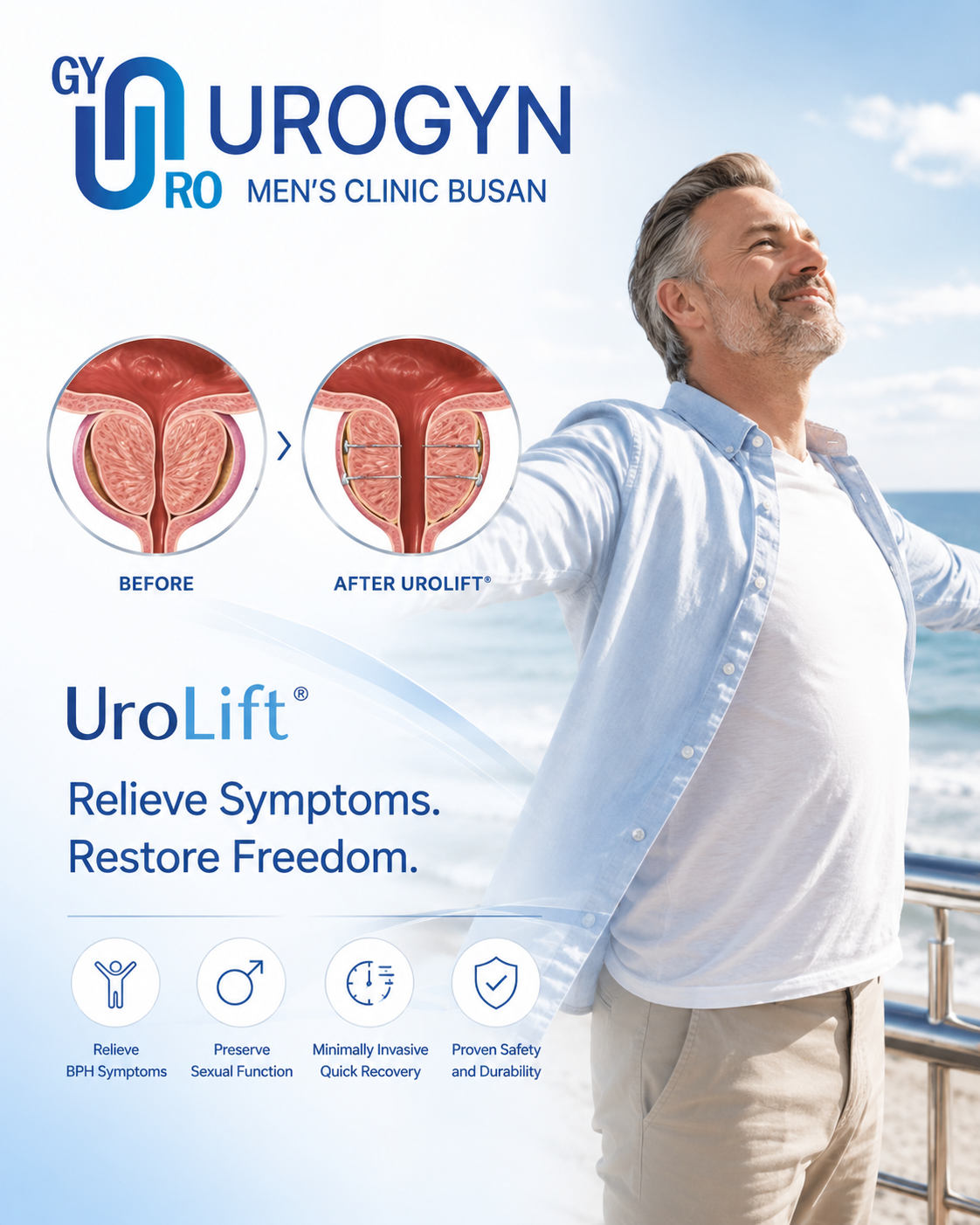
UroLift in Busan
The procedure, who it suits and the fast recovery curve.
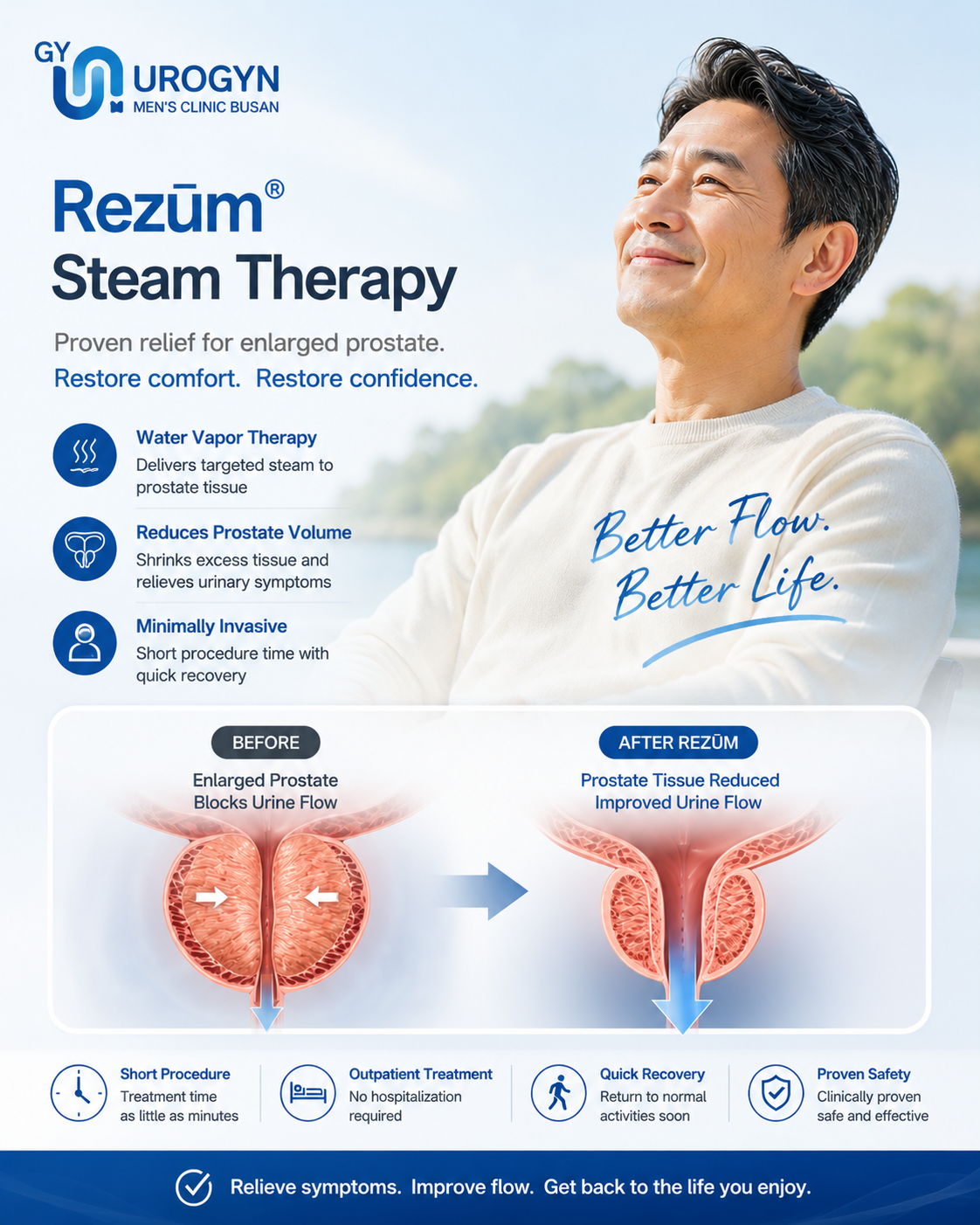
Rezum in Busan
Water-vapour therapy and the honest three-month timeline.
UroLift vs Rezum
How the choice is made before recovery is even discussed.
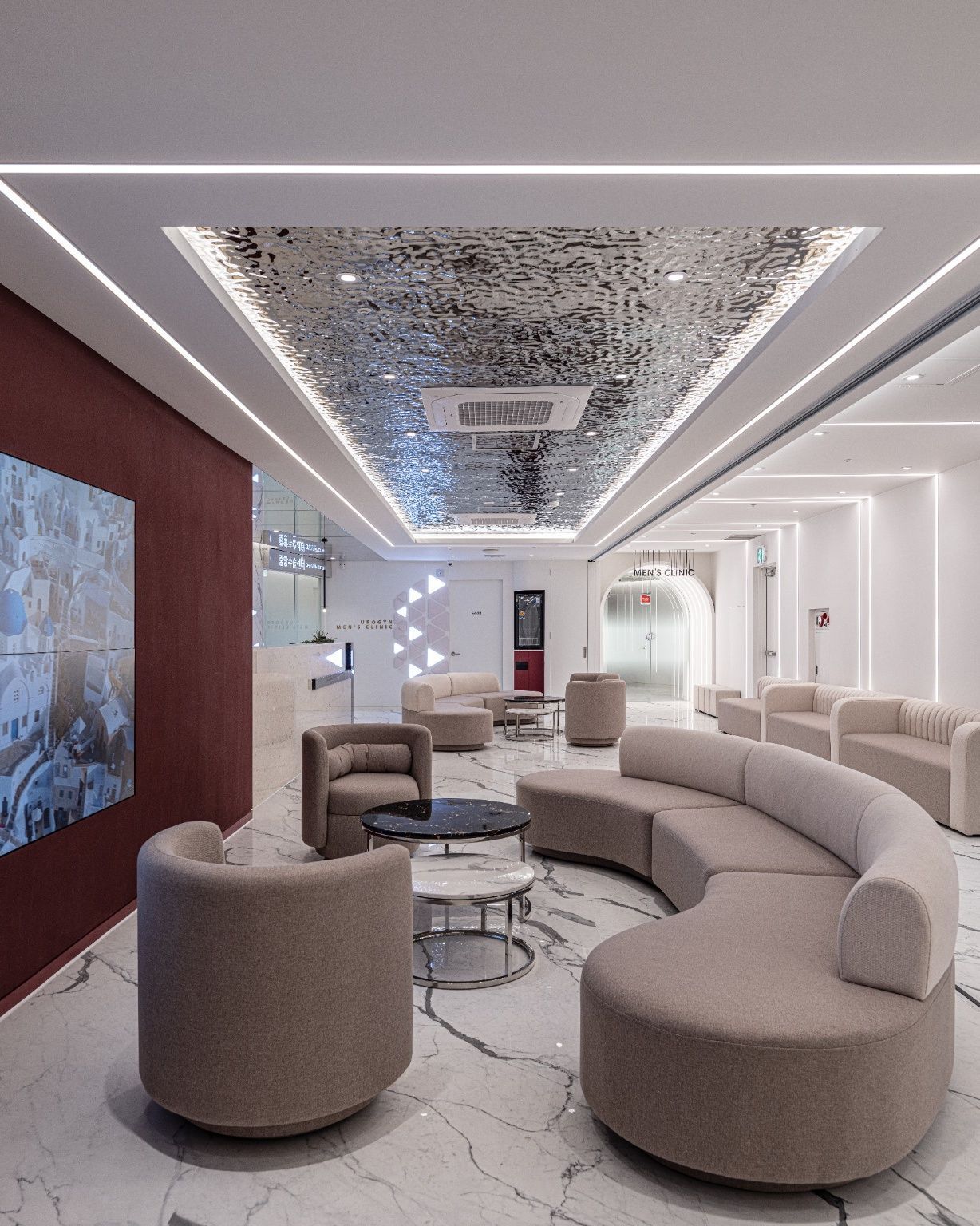
Flying After Surgery
Procedure-by-procedure timing for the flight home.

Follow-Up From Home
How the six-week and three-month reviews work remotely.
Prostate Care in Busan
The hub — BPH, PSA screening and prostatitis with every price.
Urogyn Men's Clinic, Seomyeon
7F-702, Ion City Building, 74 Seomyeon-ro, Busanjin-gu, Busan 47299 — one minute on foot from Seomyeon Station Exit 7 (Lines 1 & 2).
Mon–Fri 10:00–18:00 · Sat 10:00–14:00 · Sun closed
부산광역시 부산진구 서면로 74 아이온시티빌딩 7층 702호 — show this to your taxi driver.
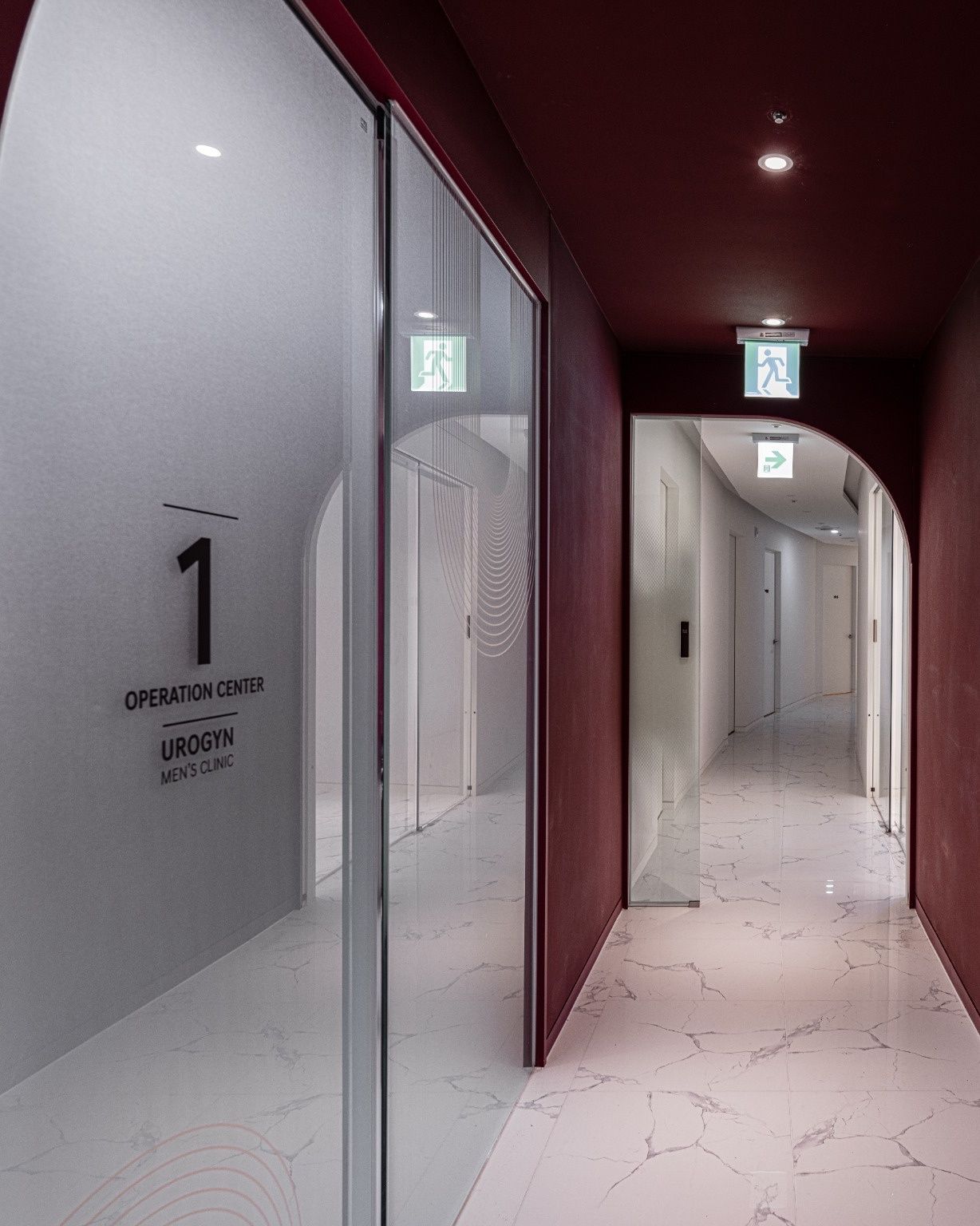
Planning the procedure? We will tell you which curve you are on.
Your travel window and the procedure you are considering are enough for us to say how many nights to book in Seomyeon, when you can fly, and what the first week will honestly feel like.