Painful ejaculation: prostatitis, infection or nerve — how Busan tells them apart.
Pain at or after ejaculation has three usual sources — an inflamed prostate, a sexually transmitted infection, or a tense pelvic floor — and they look similar from the outside but are treated differently. This guide from Urogyn, Busan Seomyeon, explains how each presents, which test finds which, and why a ₩200,000 urine test comes before a course of antibiotics.
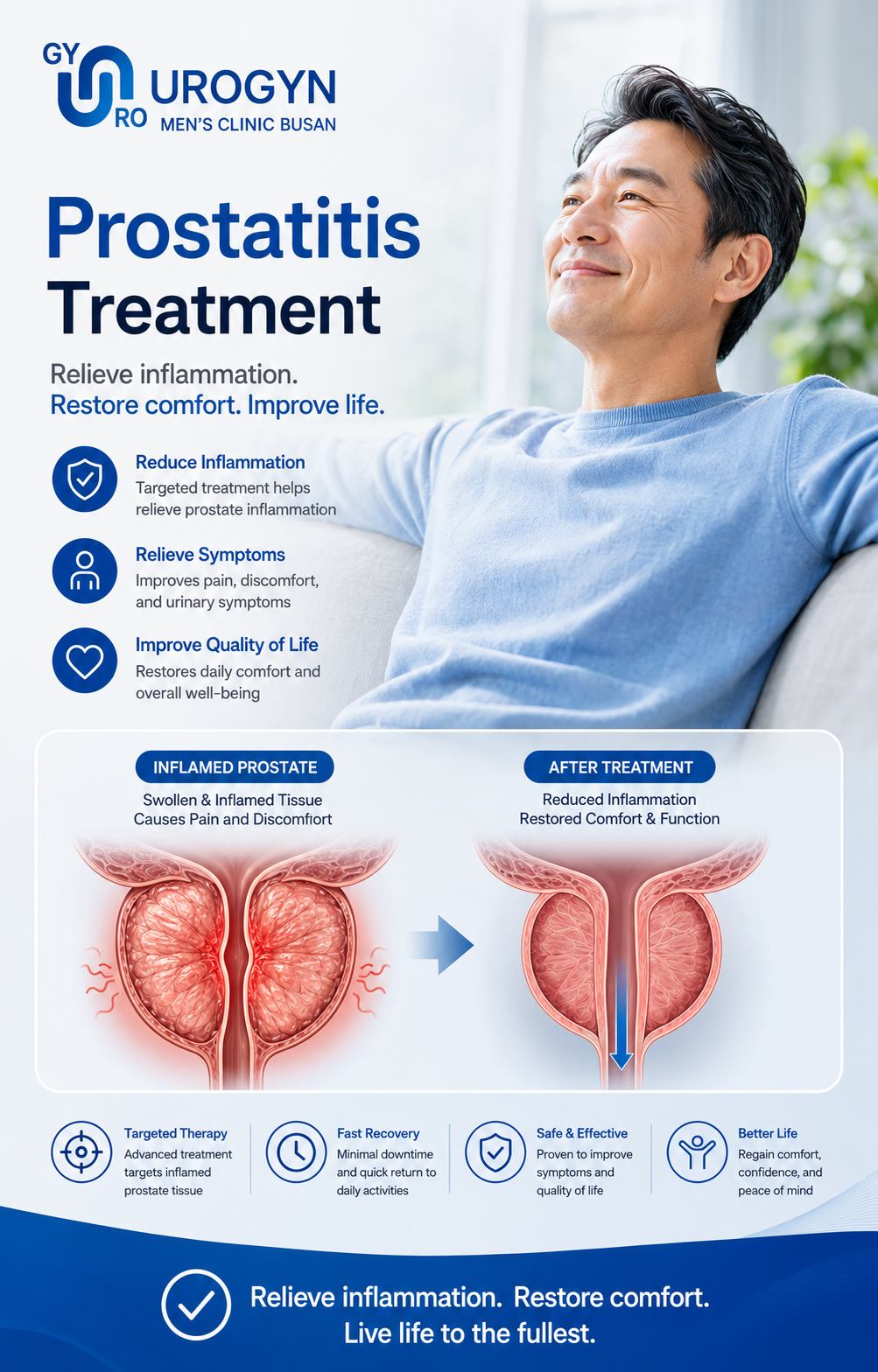
Prostatitis Treatment in Busan
The page behind this guide — the four prostatitis types, why type III is not an infection, and the 6–12 week programme in Seomyeon.
Read the prostatitis page →- I have had three courses of antibiotics and the pain keeps coming back — why?
- How do you tell prostatitis from an STI without guessing?
- Can tight muscles really cause pain with ejaculation?
- Is the pain making me ejaculate early, or the other way round?
- Can this be sorted out in one visit?
Each is answered below, the way our prostate urologist answers it at the Seomyeon clinic — starting with the antibiotic question.
The short answer: three causes, three different treatments — as sorted at our Busan clinic
Painful ejaculation is most often prostatitis — inflammation of the prostate, which contracts during ejaculation — and in most adult men that inflammation is not bacterial. The second cause is a sexually transmitted infection in the urethra or epididymis. The third is pelvic floor tension, where the muscles that fire during orgasm are already tight and cramp. At Urogyn in Busan Seomyeon the ₩200,000 urine test and a prostate examination separate the three before anything is prescribed, because antibiotics help only one of them.
That last point is why this guide exists. Many men have had two or three courses of antibiotics from different doctors for the same pain, with brief relief and recurrence, because the pain was assumed to be infection and never tested. The prostatitis page explains the four types and why type III — the commonest — has no bacterium to kill. The sections below walk through how the three causes are told apart.
Pain at ejaculation plus perineal ache, frequency, flares with sitting or stress. Urine sterile. Not antibiotic-responsive.
Burning, discharge, recent new partner, or fever. Urine or STI panel positive. Antibiotics — the right one.
Cramping pain, often after orgasm, tender pelvic muscles, worse with stress. Physiotherapy, not drugs.
Prostatitis: the commonest cause, and why most of it is not infection
The prostate contracts to expel its fluid during ejaculation, and an inflamed prostate hurts when it does. Of the four types of prostatitis, acute bacterial (type I) is a fever-and-emergency presentation and chronic bacterial (type II) is uncommon; the great majority of men with painful ejaculation have type III — chronic prostatitis / chronic pelvic pain syndrome — in which the prostate is inflamed but no bacterium is found. Type III produces pain at ejaculation, a dull ache in the perineum or testicles, urinary frequency, and flares with long sitting, cold, alcohol or stress. It is managed over six to twelve weeks with anti-inflammatories, alpha-blockers, pelvic floor work and lifestyle change, and tracked with a symptom score — not with repeated antibiotics. Our chronic pelvic pain guide covers the pattern in detail.
- 1 Urine test ₩200,000. White cells without bacteria → inflammation; bacteria → culture and targeted antibiotic.
- 2 Prostate examination and massage ₩100,000. Tenderness, texture, and expressed fluid for analysis.
- 3 Prostate ultrasound ₩200,000. Calcifications, size, seminal vesicle changes; excludes stones and abscess.
When it really is infection: STI and bacterial causes
Chlamydia, gonorrhoea and, less often, mycoplasma inflame the urethra and can spread to the prostate and epididymis, producing pain with ejaculation alongside burning, discharge or testicular tenderness. The history usually points there — a new partner, symptoms starting within days to weeks — but not always, which is why the ₩250,000 thirteen-panel urine test at our Seomyeon clinic is done in any man under about forty with this symptom, and in older men with any risk. A positive result gets the right antibiotic for the right duration, and the partner is treated too. A negative result closes the door on infection and stops the antibiotic cycle. Our STI testing page covers the panel and when to test explains the window periods.
Pelvic floor tension: the overlooked cause
The muscles of the pelvic floor contract rhythmically during orgasm. In a man whose pelvic floor is chronically tight — from stress, from long hours sitting, from guarding against earlier pain — those contractions cramp, and the pain is felt in the perineum, the base of the penis or the rectum, often peaking just after ejaculation and lasting minutes to hours. The urine is sterile, the prostate may be only mildly tender, and the examination finds tight, tender pelvic muscles. This responds to pelvic floor physiotherapy, stretching, heat and sometimes muscle relaxants, and not to any antibiotic. It frequently coexists with type III prostatitis, which is why the two are managed together in the prostatitis programme.
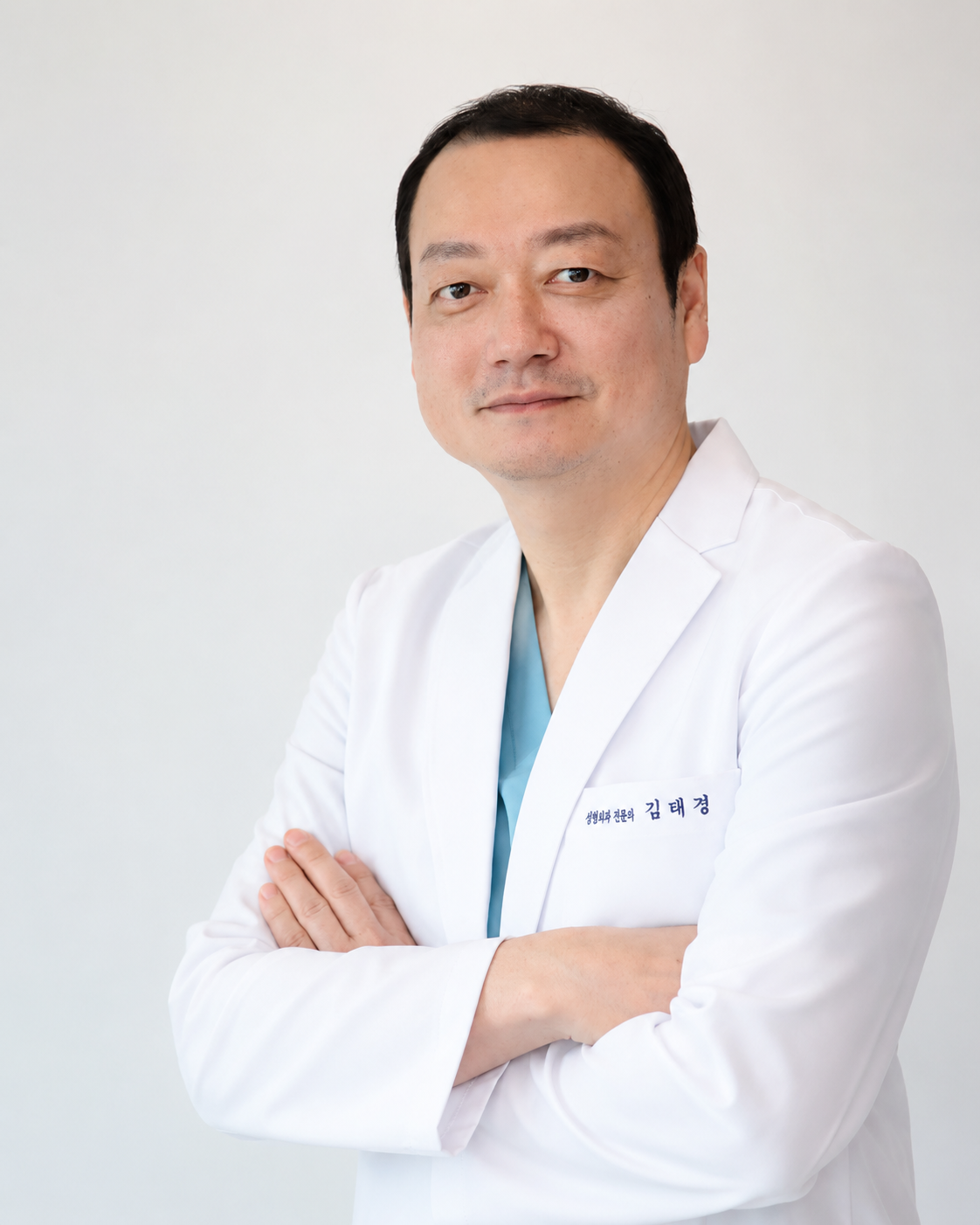
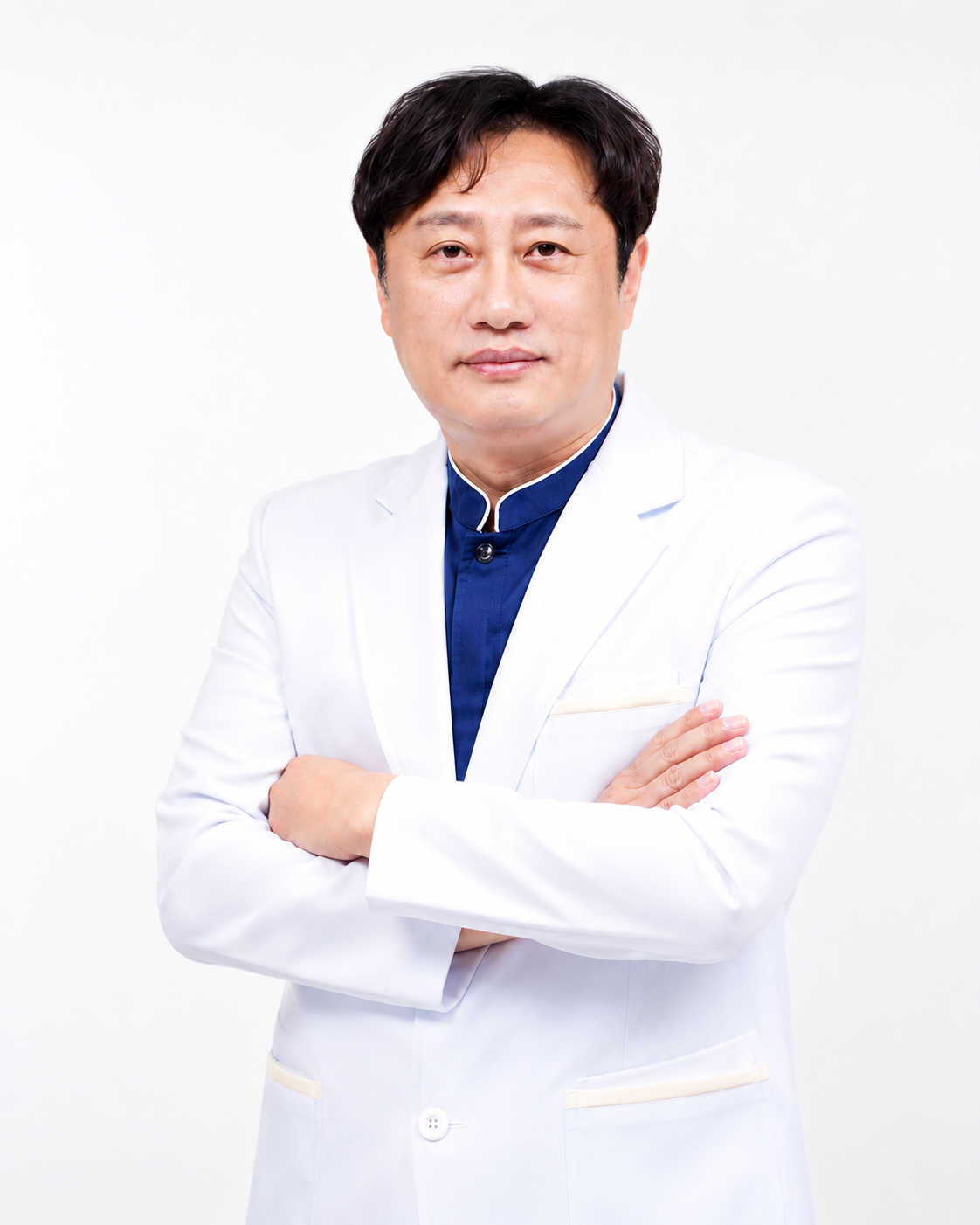
Dr. Kim Tae-kyung — prostate focus
Director of the Busan branch, MD and MS from Pusan National University, adjunct professor at Ulsan University Hospital. Runs the prostatitis programme at the Seomyeon clinic and reads the urine and ultrasound findings himself.
Read the prostatitis page →Pain and premature ejaculation: when one causes the other
Men with painful ejaculation sometimes develop acquired premature ejaculation — rushing to finish before the pain, or ejaculating early because the inflamed prostate is hypersensitive. The reverse also happens: a man treated for PE whose pain was never addressed. At our Busan clinic the pain is treated first, because acquired PE driven by prostatitis often resolves when the inflammation does, and a PE procedure would be the wrong treatment. The PE definition guide explains the acquired type.
Rarer causes worth excluding once
A stone in the ejaculatory duct, a cyst of the seminal vesicle, a stricture of the urethra, medication side effects (some antidepressants cause painful or difficult ejaculation), and — rarely — a prostate tumour complete the list. The ultrasound at our Seomyeon clinic covers most of these in the same fifteen minutes, and the PSA (₩150,000) is added in men over forty. Pain accompanied by blood in the semen follows the same work-up.
What the six-to-twelve-week prostatitis programme actually involves
Men hear "six to twelve weeks" and assume it means waiting. It does not. The programme set out at our Busan clinic for type III prostatitis and pelvic floor tension has four components run together: an anti-inflammatory course to settle the gland, an alpha-blocker to relax the bladder neck and prostate so urination and ejaculation stop provoking spasm, daily pelvic floor stretching and relaxation work — taught in the room and provided in writing — and the removal of known triggers such as long sitting without breaks, cold, excess alcohol and caffeine. Progress is measured with the NIH-CPSI symptom score at the start, at four weeks and at twelve, so that both you and we can see whether the plan is working rather than guessing. Men who plateau are reassessed; a minority need additional measures. The expectation set from the start is improvement, not a cure in days. The prostatitis page describes the programme in full.
Fitting the assessment into a trip to Busan
Urine test, STI panel, prostate examination and ultrasound can be done in one visit at our Seomyeon clinic, with results the same or next day. If infection is found, treatment starts immediately and finishes at home. If the diagnosis is type III prostatitis or pelvic floor tension, the six-to-twelve-week programme is set out in writing with the medication, the exercises and the symptom score to track, and reviewed by message. Men returning to Busan for other care are reviewed in person. The prostate hub lists every test with its price.
How it runs at our Busan Seomyeon clinic — and your next step
Message us with where exactly the pain is felt, whether it is during or after ejaculation, how long it lasts, any urinary symptoms, discharge or fever, any new partner, and any antibiotics already taken. We reply in writing with which of the three causes sounds most likely and which tests we would do first. Nothing is booked until you confirm and no deposit is taken. The clinic is one minute from Seomyeon Station exit 7; the contact page has directions.
- Should I avoid ejaculation while this is being treated? No. Regular ejaculation is generally helpful for prostatitis — it clears the gland. Avoidance tends to make the pelvic floor tighter. Reduce only if a single episode is severely painful, and tell us.
- Could it be cancer? Painful ejaculation is very rarely the presenting symptom of prostate cancer. In men over forty we add PSA and the prostate examination because the work-up is the same, not because cancer is expected.
The urologists who treat prostatitis and pelvic pain in Busan.
Every guide on this site is written and reviewed by the three board-certified urologists below. The doctor who consults with you is the doctor who operates and answers your follow-up — never a junior doctor or a different surgeon.
Painful ejaculation — FAQ
Related pages and next reads
Prostatitis Treatment in Busan
Four types, why type III is not infection, and the programme.
Chronic Pelvic Pain in Men
The flare-and-remit pattern and what drives it.
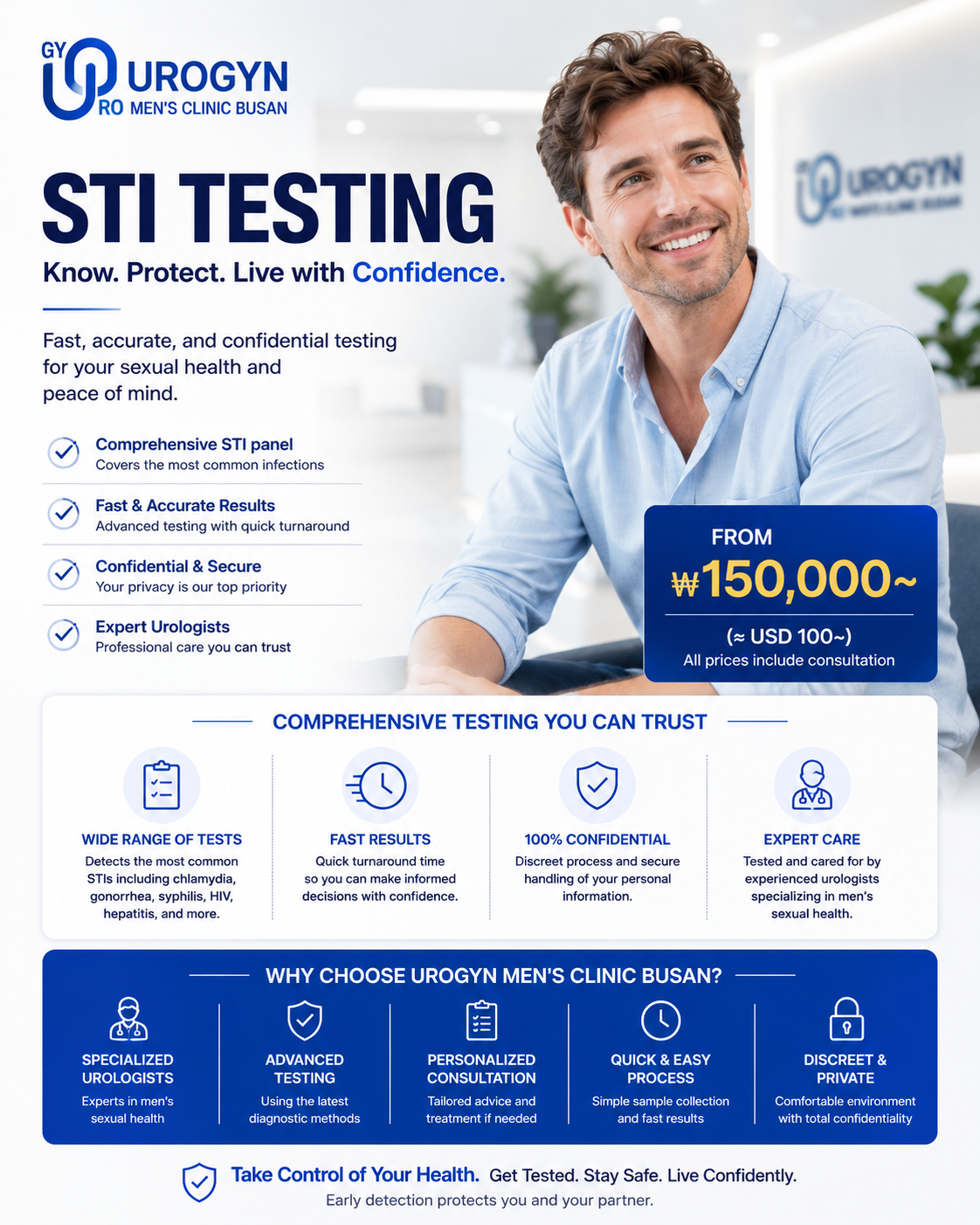
STI Testing in Busan
The thirteen-panel test that rules infection in or out.
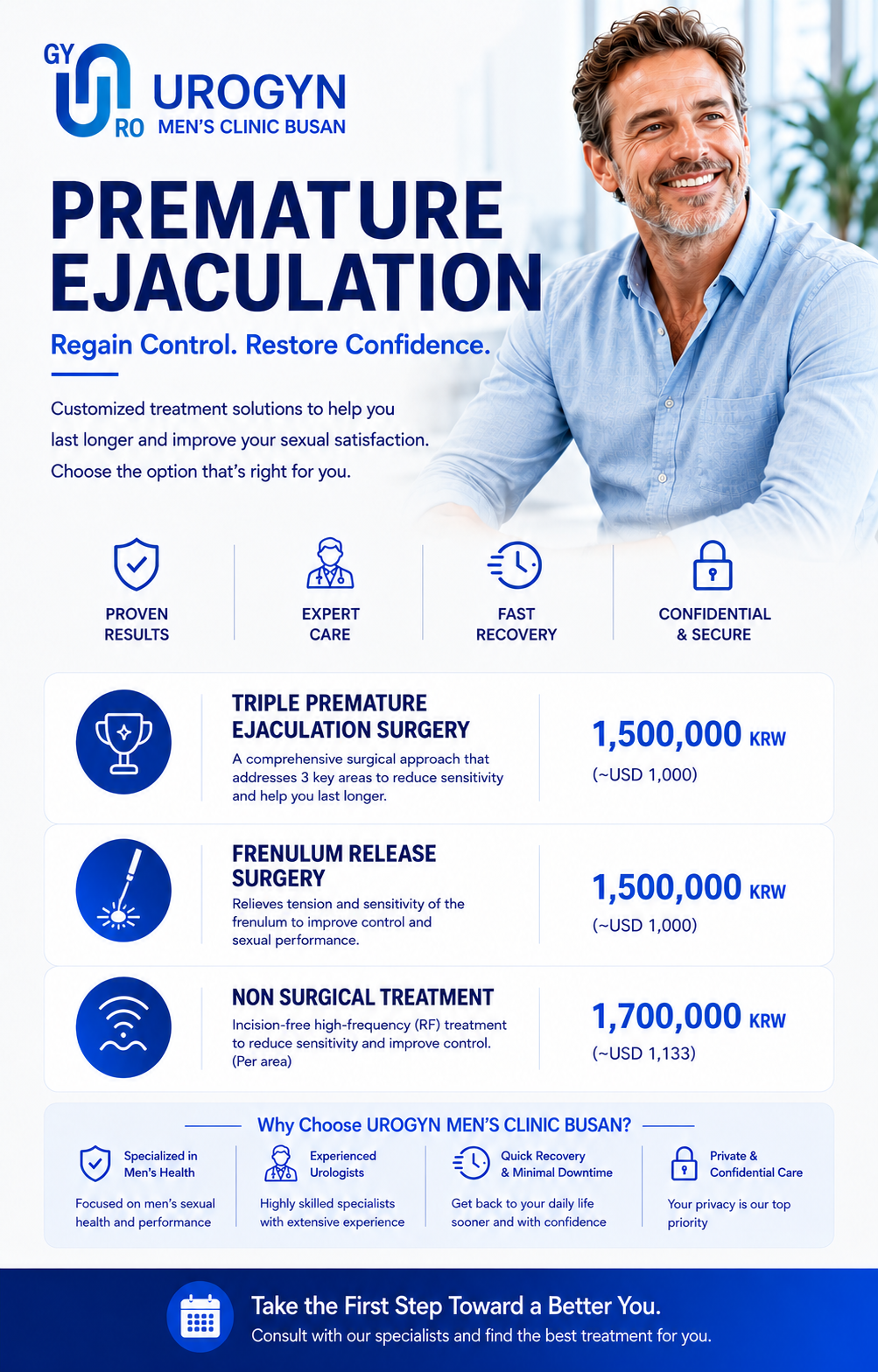
Premature Ejaculation in Busan
When pain and acquired PE travel together.
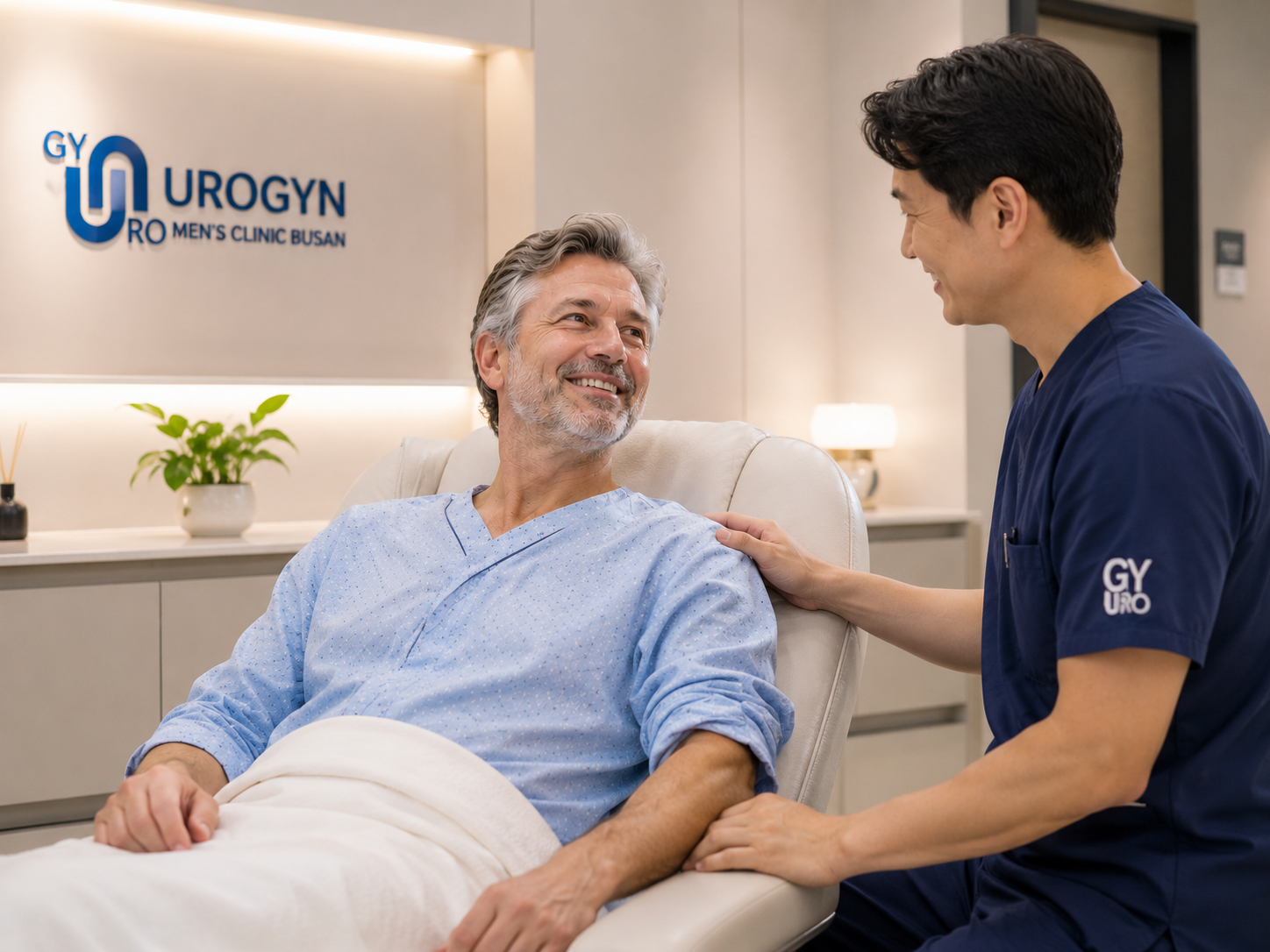
Blood in Semen or Urine
A companion symptom with the same work-up.
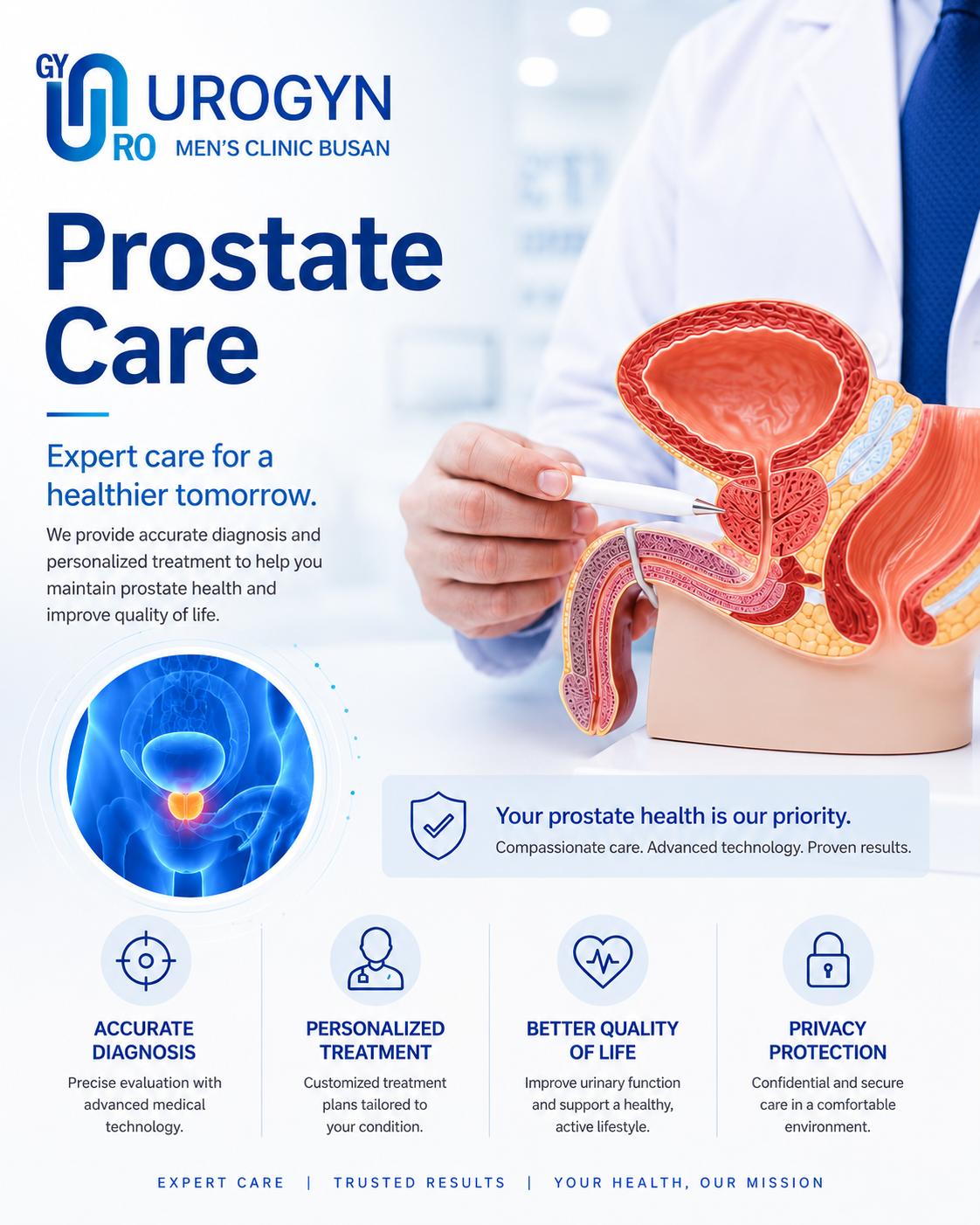
Prostate Care in Busan
The hub — every test and treatment with its price.
Urogyn Men's Clinic, Seomyeon
7F-702, Ion City Building, 74 Seomyeon-ro, Busanjin-gu, Busan 47299 — one minute on foot from Seomyeon Station Exit 7 (Lines 1 & 2).
Mon–Fri 10:00–18:00 · Sat 10:00–14:00 · Sun closed
부산광역시 부산진구 서면로 74 아이온시티빌딩 7층 702호 — show this to your taxi driver.
Describe the pain. We will say which cause it sounds like.
Where it is felt, during or after, how long it lasts, any urinary symptoms or discharge, and any antibiotics already taken are enough for our prostate urologist in Busan to say which of the three causes is likely and which tests come first.