Peyronie's disease treatment cost in Busan — injections, plication or grafting.
Peyronie's disease has a cost structure shaped like the disease itself: a cheap, essential ultrasound first, non-surgical treatment while the curve is still changing, and surgery — from ₩3,000,000 at Urogyn, Busan Seomyeon — only once it has stabilised. This guide puts a figure on each stage and explains why the order matters more than the price.

Peyronie's Disease Treatment in Busan
The page behind this cost guide — active and stable phases, injections and PRP, plication and grafting, and who each suits.
Read the Peyronie's page →- Why won't you just quote a surgery price for my curve?
- Do injections actually straighten the penis, or just stop it getting worse?
- Will plication make me shorter?
- What if I also have weak erections?
- Can I have the assessment on a short trip and the surgery later?
Each is answered below, the way the urologist would answer it in the consultation room at our Seomyeon clinic.
The short answer: what Peyronie's treatment costs in Busan
At Urogyn in Busan Seomyeon, assessing Peyronie's disease starts with a ₩200,000 penile ultrasound. Non-surgical treatment in the active phase — injections and PRP — is quoted at consultation by course. Surgical correction of a stable curve is listed from ₩3,000,000, with plication at the lower end and plaque incision with grafting above it. Which stage you are in decides which of these figures applies, and the ultrasound is what tells us the stage.
Most men who search for a Peyronie's price are in the active phase, where the honest answer is that surgery is not yet appropriate at any price. The guide below is organised the way the disease runs: assessment, the waiting phase, then surgery — with what each costs and what would make a man skip or combine steps.
Penile ultrasound to map the plaque, plus curvature measurement. Decides phase and method.
Injections and PRP to limit progression while the plaque is still forming. Surgery waits.
Plication for moderate curves; incision and grafting for severe or hourglass deformity. Stable phase only.
Why the phase of Peyronie's — not the curve — sets the price
Peyronie's disease has two phases. In the active (inflammatory) phase, usually the first six to eighteen months, the plaque is still forming, the curve is still changing and there is often pain with erection. In the stable phase, pain has settled and the angle has not changed for several months. Surgery in the active phase is the commonest mistake in Peyronie's care: the curve can keep changing after the operation, and a second surgery follows. So at our Busan clinic the stage decides the treatment, and therefore the cost, before the angle does.
The Peyronie's treatment page explains both phases with the treatment beside each. For men unsure whether their curve even counts as Peyronie's, our guide on when a curved penis needs a urologist covers the difference from congenital curvature, which has no plaque and no waiting phase.
The ₩200,000 ultrasound: the one cost every man needs
The penile ultrasound at our Seomyeon clinic maps the plaque — size, position, calcification — and, with an induced erection, measures the angle and checks blood flow. Calcification suggests a mature, stable plaque; a soft plaque suggests activity. Blood flow matters because men with Peyronie's often have coexisting erectile dysfunction, and if erections are weak the surgical plan changes: a graft needs good erections to work, and some men are better served by an implant that straightens and stiffens at once. The ED hub covers that overlap.
- 1 Soft plaque, changing angle, pain. Active phase → non-surgical course, reassess in months.
- 2 Calcified plaque, stable angle under about 60°, good erections. Plication.
- 3 Severe angle, hourglass or hinge, good erections. Plaque incision with grafting.
- 4 Any curve with poor erections. Implant discussion rather than straightening alone.
Active-phase treatment: injections and PRP, quoted by course
During the active phase the aim is to limit progression and pain. Intralesional injections into the plaque and platelet-rich plasma are the options used at Urogyn, given as a course over weeks to months, and priced per course at consultation because the number of sessions depends on plaque size and response. Oral medication and traction are discussed alongside. The honest statement is that non-surgical treatment reduces progression and modestly improves angle in some men; it does not reliably straighten a curve that is already established. Its value is in the waiting period, not as a substitute for surgery.
For international patients a course is difficult to complete on one trip. We often start treatment in Busan, provide the protocol in writing, and coordinate continuation with a urologist at home, then reassess by video.
Surgical correction from ₩3,000,000: plication versus grafting
Once the curve is stable, surgery is the reliable way to straighten it. Plication shortens the longer side with sutures to match the shorter side; it is predictable, preserves erections well, and costs the same loss of length that the plaque already caused — typically a centimetre or so. Plaque incision with grafting cuts the plaque and patches the defect, preserving length; it is a larger operation with a longer recovery and a higher chance of some erectile weakening afterwards. The published "from ₩3,000,000" covers plication; grafting is quoted above it depending on the graft material and extent, and we give the figure before booking. Our Peyronie's surgery recovery guide compares the two recoveries.
Moderate curves, good erections. Day surgery or one night. Accepts a small length loss for a reliable result.
Severe angle or hourglass. Preserves length; longer recovery; more follow-up.
What the surgical figure includes — and what would be extra
The surgical price includes the operation at our Seomyeon theatre, anaesthesia (sedation with local for plication; general for grafting), the first dressing changes and photo follow-up after you fly home. Separate items are the ₩200,000 ultrasound, the comprehensive blood test before anaesthesia (₩200,000, or ₩100,000 with other tests) and, if erections are weak, the ₩200,000 vascular ultrasound. Everything is on the full price list; nothing is added on the day without your agreement, and there is no foreigner surcharge.
Questions to ask any clinic before you pay
Peyronie's is a condition where the wrong clinic can cost you two operations, so ask these five questions anywhere you are quoted. Will you measure the curve and map the plaque on ultrasound before quoting? Will you operate in the active phase? Which method — plication or grafting — and why for my curve? What length change should I expect? And how will erections be assessed first? A clinic that quotes a surgery price from a photo alone has skipped the step that matters most. At Urogyn in Busan the ultrasound comes first, every time, and the written plan states the phase before it states a figure.

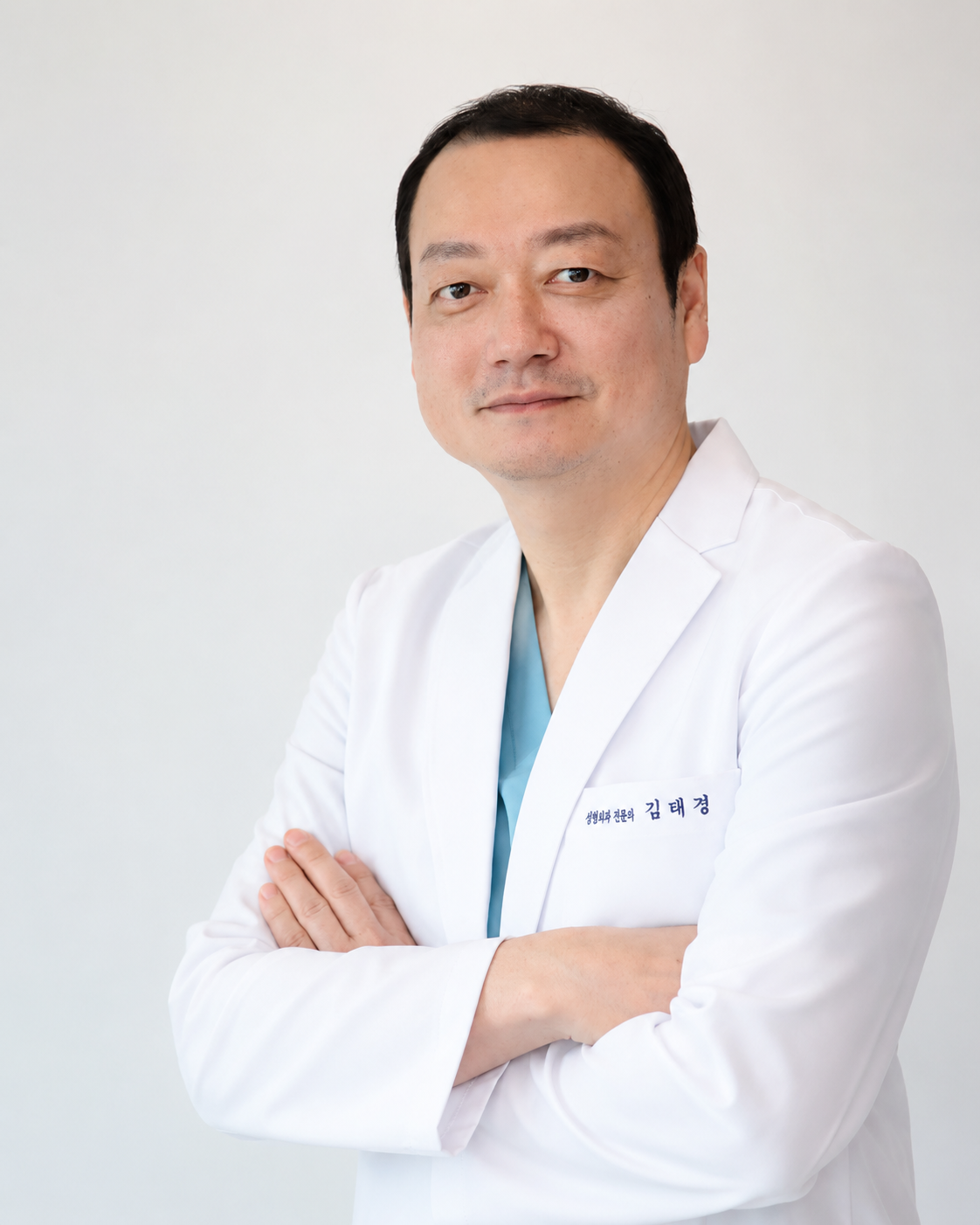
Dr. Moon Hyeon-chang — reconstructive men's surgery
Director of Urogyn, board-certified urologist in Seomyeon with fifteen years in men's surgery including curvature correction and reconstruction. Consults in English.
About the clinic →Fitting Peyronie's care into a trip to Busan
For assessment alone, one visit is enough and can be combined with a sightseeing trip; many men do the ultrasound, receive a written plan and go home to wait out the active phase. For surgery, plan five to seven nights in Seomyeon: consultation and ultrasound on arrival, surgery within a day or two, a wound check before flying. Intercourse waits about six weeks, which is after you are home; we follow up by photo. See flying after surgery for timing.
How it runs at our Busan Seomyeon clinic — and your next step
Message us with when the curve started, whether it is still changing, whether erections are painful, and how firm they are. A photograph of the erect curve from above and from the side, taken against a plain background, lets us estimate the angle. We reply in writing with the likely phase, what we would do at this stage, and the figure that follows. Nothing is booked until you confirm, and no deposit is taken. The clinic is one minute from Seomyeon Station exit 7; the contact page has directions.
- Can the curve come back after surgery? After surgery in the stable phase, recurrence is uncommon. Operating in the active phase is the main cause of a second curve, which is why we wait.
- Is my curve Peyronie's or was I born with it? Congenital curvature has no plaque, no pain and has been present since puberty; it is corrected whenever you choose, with no waiting phase. The ultrasound settles the question in minutes.
The urologists who treat Peyronie's disease in Busan.
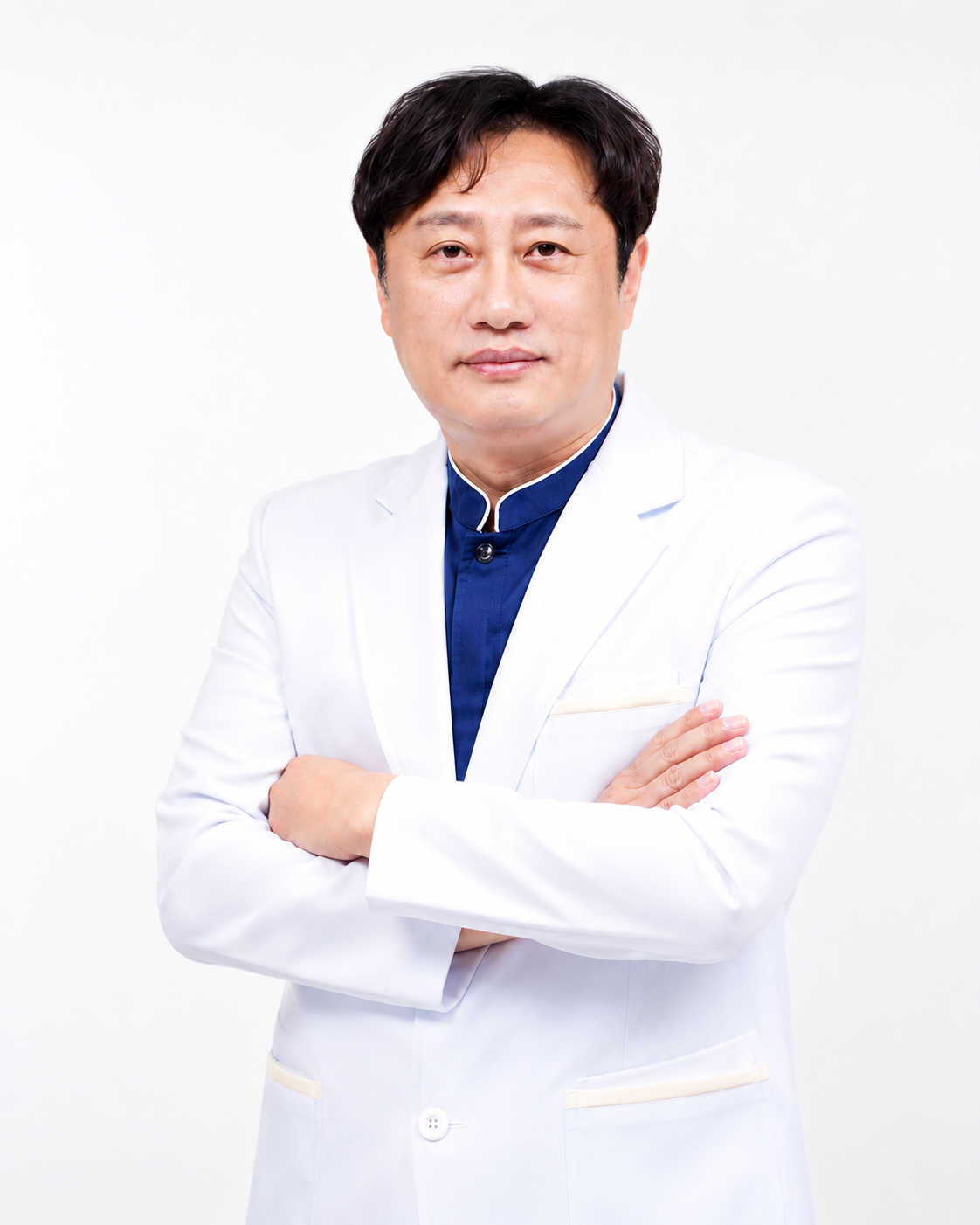
Every guide on this site is written and reviewed by the three board-certified urologists below. The doctor who consults with you is the doctor who operates and answers your follow-up — never a junior doctor or a different surgeon.
Peyronie's treatment cost — FAQ
Related pages and next reads
Peyronie's Disease in Busan
Active and stable phases, injections, plication and grafting.
Curved Penis: When to See a Urologist
Normal curvature, congenital curve and Peyronie's told apart.

Peyronie's Surgery Recovery
Plication vs grafting recoveries, and when erections return.
Erectile Dysfunction in Busan
When Peyronie's and ED overlap, and what changes.

Men's Health Clinic in Busan
The six men's health services under one roof in Seomyeon.
Flying After Surgery
Procedure-by-procedure timing for the flight home.
Urogyn Men's Clinic, Seomyeon
7F-702, Ion City Building, 74 Seomyeon-ro, Busanjin-gu, Busan 47299 — one minute on foot from Seomyeon Station Exit 7 (Lines 1 & 2).
Mon–Fri 10:00–18:00 · Sat 10:00–14:00 · Sun closed
부산광역시 부산진구 서면로 74 아이온시티빌딩 7층 702호 — show this to your taxi driver.
Send a photo of the curve. Get the phase and the figure in writing.
When it started, whether it is still changing, and two photos of the erect curve are enough for us to say which phase you are likely in, what we would do now in Busan, and what it would cost.